“Fascinated by a Blob.” (by Prof. Kristien Hens)
Kristien Hens is Full Professor in bioethics at the department of Philosophy of the University of Antwerp (UA). Besides teaching about ethics, biology and the environment, prof. Hens is actively involved in multidisciplinary research regarding these topics while having also performed influential work in the combined fields of the philosophy of psychiatry, mental health and neurodiversity.

An interview with prof. Hens in the print version of my newspaper De Morgen on 19 April 2025 attracted my attention. It was an interview about her newest book, called “Denken met microben”, that was published in March 2025 by Belgian publishing house Letterwerk.
Note: The interview as well as the book are in Dutch. Not having given it too much thought, I would intuitively translate the title of her book, described as an ‘essay’ also given its length and format, as “Thinking Microbes”.
The interview left me with high expectations and the determination to read the book. By coincidence, later that day, our son shared having noticed an interview with one of his lecturers in the online edition of my newspaper. He studies Philosophy at the University of Antwerp. The lecturer of the course “Japanese Philosophy and the Environment” that he was referring to is…prof. Hens. I shared my enthusiasm about the book with him and went out to buy it the next (working) day. Despite having tons of books I have and aspire reading, I decided to give priority to this one. Well, honestly, another reason might have been the prospect of meeting prof. Hens in person at an excursion that she was organizing for my son’s class by the end of April.

I actually read the book while prof. Hens, my son and the rest of the class were visiting the Japanese gardens in Hasselt. It totally lived up to my expectations. I found it insightful and inspiring as well as exhibiting a strong form of social commitment, the will to help create a better society and world. Although I am obviously active in a very different domain, I totally relate to this drive as I call myself an independent Scrum Caretaker on a journey of humanizing the workplace (with Scrum). Furthermore, I found the essay to be clear, well articulated and straight forward in terms of style and content, albeit subtle, multi-layered and nuanced at the same time. I feel it holds important insights, scientifically as well as philosophically, that counter the many overly simplistic ideas and opinions that circulate in society around evolution, life and what it means to be human.
I totally support how prof. Hens wants to help her readers overcome the all too simplistic understanding and interpretations of Darwin and the theory of evolution he unleashed unto the world. In one of her mails prof. Hens stated that Darwin’s views and texts actually display a highly nuanced, and even ecologically modern, view on life on our planet. His ideas are so much richer than the traditional and simplistic reductionist representation of ‘evolution’ as sexual reproduction and the power of the strongest.

Although prof. Hens seems rightfully critical to me about the closed stance of Richard Dawkins (as a scientist) regarding new insights on what drives human beings, I felt she does re-enforce the main message that I retained from reading “The Selfish Gene” by Dawkins. The essential message is that there are much more different and diverse tactics to ‘survive’ than is typically acknowledged. Prof. Hens playfully helps her readers transcend the false idea of life as merely a competition and a battle for dominance—a zero-sum game—and come to see life as a social network of relationships, creative alliances, co-operations and experiments.
On a personal side note, I don’t read Richard Dawkins’ message in “The Selfish Gene” as one saying that our bodies are merely mechanistic vehicles for our genes. His views on epigenes as well as on the evolution and survival of ‘memes’ (cultural genes) contradict that for me. From a philosophical point of view, it also would be an alternative to the overly simplistic dualistic debate on “body vs. brain” (or alike terms). In her book, Prof. Hens playfully (again) makes her readers think about our microbiome in that regards: is it a part of us or is it a separate organism residing in us allowing both parties to benefit from the symbiotic co-habitation? In that regard, prof. Hens also reminds us in her book about the close entanglement between our brain, our intestinal flora (and gut microbiota) and our identity and personality.
When I did indeed met prof. Hens in person briefly after the mentioned excursion, I asked her permission to translate a part of her book. While autographing my copy she granted me that permission and later on also assured me of her publisher’s agreement.
I am humbled that Prof. Hens allowed me to translate her words into English to share it with my network of readers and followers. I see this translation as in line with my recent translation of the newspaper article “Trans women are women. Not a different species, not a threat, just…women.” of prof. Hoebeke. Both translations serve to share insights with my global network of readers and followers that I consider as really important in overthrowing ingrained, established cliches.
In the specific effort of translating the words of prof. Hens, some selfishness played a role too. I decided to translate the article “Fascinated by a Blob” (pages 43-46) because it is about self-organization in nature, in particular that of slime moulds (or slime molds). Anyone familiar with my work knows that I consider ‘self-organization’ to form Scrum’s DNA together with ’empiricism’. The fact that the sex life of slime moulds connects nicely to my translation of the article regarding the rights of trans women of prof. Hoebeke is a ‘nice to have’. I have extended my translation of that chosen paragraph however with elements from the next paragraph of the essay, “Minakata Kumagusu and a Different View on Science” (pages 46-49).
As headline for the interview with prof. Hens, the newspaper quoted her saying (my translation):
When you die, your microbiome lives on. Life goes on in cycles of connections and transformations. It’s beautiful.
That in turn reminded me of a quote of the character Dom (“Endomandiovizamarondeyaso” in full) on planet Gaia in the novel “Foundation’s Edge” of Isaac Asimov (Del Rey Publishers, 1982 & 2001):
But all things recycle. We must eat, and everything we can eat, plant as well as animal—even the inanimate seasonings—are part of Gaia. […] Then too, what is eaten remains, after all, part of the planetary consciousness. […] When I die, I, too, will be eaten—even if only by decay bacteria—and I will then participate in a far smaller share of the total. But someday, parts of me will be parts of other human beings, parts of many.
Enjoy reading
Gunther
Your independent Scrum Caretaker
Once you start thinking like American evolutionary biologist Lynn Margulis [1] and her bacteria, you will find that, besides competition, collaboration is fundamental for the coming into existence of both specific species as well as life in general. Margulis however was not the only scientist who allowed microscopically tiny forms of life to lead toward new insights. More researchers developed fresh and refreshing perspectives by observing what might seem as futile organisms, like slime moulds.
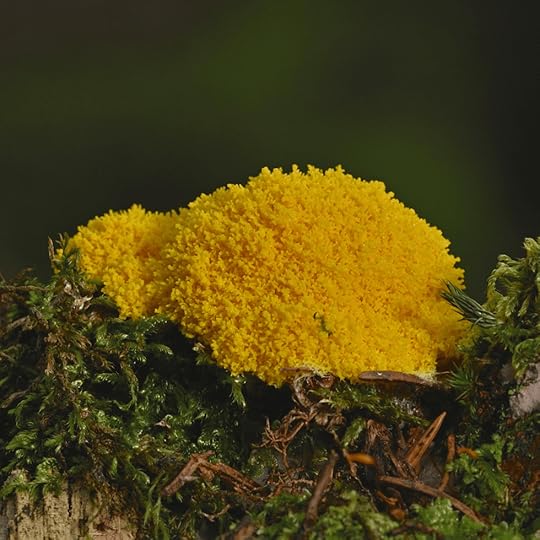
Who knows, maybe during a walk in nature you have seen a slime mould, like the strikingly yellow coloured species that goes by the name of “scrambled egg slime” (Fuligo septica is the Latin name), a blob-like organism that can emerge in a very short span of time. Although they reproduce via spores they are not categorised as fungi, animals or plants. It is difficult to correctly classify them. It proves already difficult to even consider them as either unicellular or as multicellular because it depends on your point of view. Some slime moulds form what is called a ‘plasmodium’, an agglutination of cells that look like a moving blob of slime. Cellular slime moulds on the other hands lump together while, at least partially, retaining a sense of individuality.
Slime moulds appear to be deceptively simple. While not having a brain or a central nervous system, experiments show that they are surprisingly intelligent. They navigate effectively through the environment in which they live, find sources of food through chemical detection and take complex decisions. They are able to find the shortest route to food through a maze or labyrinth—and are even more efficient at it than human beings are. They also construct ingenious networked structures to transport food in a phenomenon that is called the ‘Paris Syndrome’. The created structure visually resembles the underground Paris metro system. In a remarkable endeavour of bio-engineering, a group of scientists even built on the slime mould’s ability to create efficient networks to simulate and design Tokyo’s rail system.
On top of that, slime moulds show much versatility. In times of drought they shrink, to re-emerge later. Their sex life is not less remarkable: some slime mould species can take on up to 720 genuses. Their genital cells appear in many different combinations that define which individuals can mate. Overall, their intelligence as well as their reproductive ways are fascinating, although much remains unknown of slime moulds. The way that they cut through existing ideas on genus, intelligence and classification offers important insights and lessons regarding life—insights and lessons that are too beautiful to leave unexplored.
Evelyn Fox Keller, an American physicist and science philosopher, was one of those scientists who was open to be inspired by slime moulds. At the beginning of her career, Keller operated at the intersection of physics and biology. Gradually she expanded her focus towards research by female scientists that was often taken less seriously and remained underhighlighted, despite the fascinating findings and results. Keller emphasized the importance of the work of Barbara McClintock. McClintock was a groundbreaking geneticist, who had discovered and described in the 40s and 50s of the previous century how certain genes in corn could move through the genome—so-called transposons. At first, the findings of McClintock were ignored and even rejected, as they did not fit the by then ruling genetic paradigm. But, ultimately, in 1983 she was granted the Nobel Prize in Physiology or Medicine for that discovery of genetic transposition. To date, she remains the only woman who has received an unshared Nobel Prize in that category.
Keller went through similar experiences in her research of slime moulds. During and following her graduation in molecular biology, she became fascinated by the way that these organisms organized themselves. To dig deeper she started to collaborate with mathematician Lee Segel on it [2]. Slime moulds tend to live as unicellular organisms when the circumstances are more harsh, but clump together when the circumstances change. They then purposefully aggregate into a sort of blob, a structure that is somewhere in between what we would call an individual on the one hand or a community on the other hand.
For a long time scientists around the world believed that a small number of ‘pacemaker’ cells coordinated this clumping phase by sending out signals to the other cells. Yet, despite thorough research and investigations, the existence of such bossy cells was never established. Keller and Segel therefore suggested a different explanation. What if these unicellulars organized themselves, using local interactions and capitalizing on the right circumstances? What if this process requires no central steering, via pacemakers or otherwise?
Mathematical models that show how simple units can self-form into complex shapes without central steering or coordination already existed. For many biologists, the application of this idea in nature was beyond their comprehension and belief. Yet, bottom-up self-organization became an accepted concept in many disciplines, including biology. It changed our views of complex systems—systems exhibiting complex behaviors—and how such systems become.
A major insight resulting from the work of Keller and Segel is that complex systems do not necessarily need a leader, a boss or any form of centralized coordination. This is not just relevant for biology, but it also offers an inspiring metaphor for human behavior. It shows that individuals and communities can independently grow and flourish, without the prerequisite of centralised internal or external control—a hopeful thought in times when group dynamics are often considered only through the lens of polarisation and conflict, which is the core belief of the neodarwinist movement.
Next to the work of Lynn Margulis, Barbara McClintock en Evelyn Fox Keller I have been much inspired by Minakata Kumagusu, a Japanese naturalist and mycologist living during the Meiji Restoration period. I owe it to Japanese philosopher Eiko Honda that I got to know this fascinating scientist. After his return from studying and working in the US, Kumagusu developed a more open view on science and civilization by integrating ideas and beliefs from Asian philosophy and history. He considered slime moulds to be a great example of fluidity, adaptability and transcendence of pigeonholing, thereby showing how life does not fit rigid, binary categories. Kumagusu saw in slime moulds the confirmation of life as a holistically and symbiotically interwoven whole, which was closely connected to his belief on what science should be: a collaborative process integrating both human as well as non-human players.
It helps us transcend the idea that evolution and survival are only achieved through competition, exclusion or replication of genes. Not all activities or events need have such a strict utilitarian purpose. Activities or events that lack a clear reproductive purpose can easily be seen as important for re-enforcing relationships, networks, pleasure, mutual benefits and—ultimately, even as a creative expression of life in itself. Fascinating examples of such type of activities—not easily fitting into mechanistic views on evolution—are the development of language and the female orgasm.
Slime moulds challenge us to re-think what life is and how life can be organised. They show us that simplicity and complexity exist in each other’s vicinity even when we are not aware of it. And, ultimately, they might teach us that life does not just advance through battle and competition, but prospers through connection, creativity and shared success—even in a bright yellow blob.
[1] Lynn Margulis and Dorian Sagan, “Gaia and Philosophy” (Londen, Terra Ignota, 2023).
[2] Evelyn Fox Keller and Lee A Segel, “Initiation of slime mold aggregation viewed as an instability” (Journal of Theoretical Biology. 26 (3): 399–415., 1970)

Kristien Hens is a Full Professor at the Department of Philosophy of the University of Antwerp (UA). She holds a PhD in Biomedical Sciences (bioethics) and a PhD in Philosophy.
She is recognised for her contributions to bioethical debates where she draws from her extensive interdisciplinary work in the fields of the ethics and philosophy of neurodiversity (particularly autism and ADHD), genetics, reproductive medicine, disability studies, feminism, and biological concepts, complemented with insights from Asian philosophy.
Kristien Hens has authored and edited several books, including “Towards an Ethics of Autism” (2021), “Chance Encounters” (2022) and “Denken met microben” (2025). She has authored or contributed to several publications.