Knowledge Management Thought Leader 112: Karl-Erik Sveiby
Karl-Erik Sveiby is Professor Emeritus at Hanken Business School. His research interests are knowledge management, collective and distributed forms of organizing and leadership, and the dark unintended consequences of innovation.
Karl was one of the first to define the fundamental concepts of knowledge management and intangible assets, and the first to recognize the need to measure human capital. He pioneered accounting practices for intangible assets, testing them in his own company. Sveiby Knowledge Associates (SKA) helps corporations and other organizations transform themselves from traditional industrial era organizations to businesses that create high value from their intangible assets.
Karl-Erik’s Areas of SpecialtyHere are definitions for five of Karl-Erik’s specialties:
Innovation : The process by which an idea translates into a good or service for which people will pay. Intellectual Capital : The sum of everything everybody in a company knows that gives it a competitive edge. A metric for the value of intellectual capital is the amount by which the enterprise value of a firm exceeds the value of its tangible (physical and financial) assets. It includes human, structural, and relational capital.Intellectual Property: Any intellectual creation, such as literary works, artistic works, inventions, designs, symbols, names, images, computer code, and documents.Knowledge Assets: An organization’s accumulated intellectual resources. Types of knowledge assets include information, learning, ideas, understanding, insights, memory, technical skills, and capabilities. Knowledge assets reside in documents, databases, software, patents, policies and procedures, and more.Knowledge Flow: How knowledge moves through organizations, including creation, identification, collection, review, sharing, access, and use.Karl-Erik created the following content. I have curated it to represent his contributions to the field. For more about Karl-Erik, see Profiles in Knowledge.
 Books by Karl-Erik Sveiby
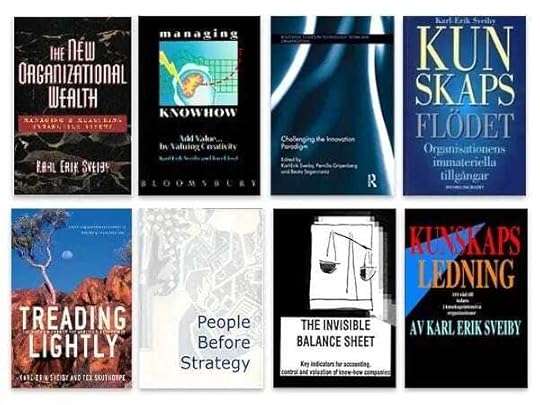 A knowledge-based theory of the firm to guide in strategy formulation
 The Invisible Balance Sheet: Key indicators for accounting, control and valuation of know-how companies
Four Types of Know-How Company
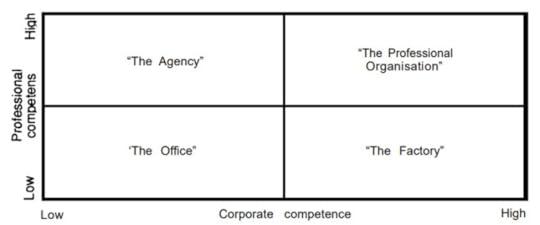
The agency is a pleasant workplace for professionals, but they cannot survive in the long run. The office has both professional and general competence. The factory has no individuals with high problem-solving capability. The professional organization is an ideal state with a combination of long-term survival and enduring, creative problem solving.
Four General Business Concepts
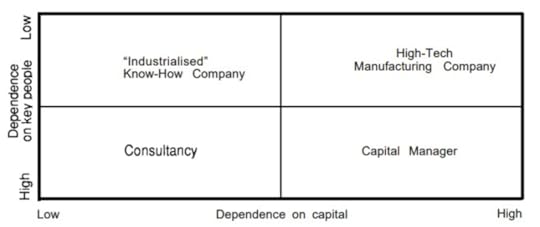
The business concepts of know-how companies can be more or less dependent on key persons or capital. The consultancy concept makes the company very dependent on its key people and less dependent on capital, while a capital manager uses its staff’s competence to manage capital (property companies, stockbrokers, investment companies, etc.) and is less dependent on key people.
Knowledge Management — Lessons from the PioneersMyths and Reality about KM
1. KM is the same thing as learning
No, learning is a means to an end — KM must have a business focus.
2. KM is a series of procedures which are to be implemented
No, KM is a fundamental shift in strategic paradigm.
3. KM is to capture knowledge kept in the heads of people
No, KM concerns how to create environments for people to create, leverage and share knowledge.
4. KM is a question of ensuring information is sent to everyone
No, central push tends to fail. Catering for demand is much more effective.
5. KM is a simple add-on to business as usual
No, KM requires deep rooted behavioral and strategic change.
6. KM is a function to be delegated to HR or IT
No, KM requires top management involvement; it is a fundamental shift in strategic perspective.
7. KM is just a matter of investing in IT
No, IT is a tool for information exchange, but can never drive change.
[image error]