Part 3 : Python Data Types: The Big Picture
Python is renowned for its simplicity and readability, but beneath that elegant surface lies a powerful engine built on its core data types. In Python, every value is an object, and these objects are instances of various data types that determine how they behave, interact, and are stored in memory. This article takes a high-level look at Python’s data types and why they matter.
 1. The Role of Data Types in Python
Data types are the foundation of any programming language. In Python, they define not only the kind of data you’re working with (numbers, text, collections, etc.) but also the operations you can perform on that data. Because Python is dynamically typed, variables don’t have a fixed type — the type is associated with the object itself. This dynamic nature is what makes Python both flexible and expressive.
Everything is an ObjectOne of the key concepts in Python is that everything is an object. Whether it’s a simple integer or a complex user-defined class, every entity in Python carries both data and behavior. This uniformity simplifies the language and allows for powerful operations like introspection and dynamic modification.
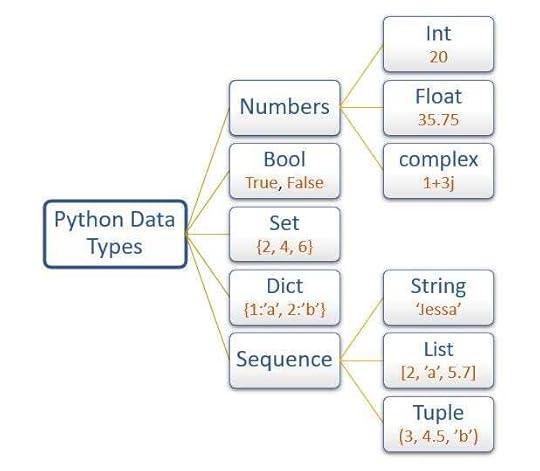
2. Built-In Data Types: The Core CategoriesPython’s built-in data types can be broadly classified into several groups. Here’s a big-picture overview:
Numeric TypesIntegers (int): Whole numbers of unlimited precision.Floating-Point Numbers (float): Numbers with a fractional component.Complex Numbers (complex): Numbers with a real and imaginary part.These types enable all standard mathematical operations. Python’s handling of numbers — especially its support for arbitrary-precision integers — is one of the features that sets it apart.
Sequence TypesStrings (str): Immutable sequences of Unicode characters.Lists (list): Ordered, mutable collections that can contain elements of different types.Tuples (tuple): Ordered, immutable collections often used to group related data.Ranges (range): Immutable sequences commonly used for looping a fixed number of times.The immutable nature of strings and tuples versus the mutability of lists has significant implications for performance, memory usage, and how these objects can be used (for example, as keys in dictionaries).
Mapping TypesDictionaries (dict): Unordered collections of key-value pairs. Because keys must be immutable (and hashable), dictionaries are central to how Python manages namespaces and object attributes.Set TypesSets (set): Unordered collections of unique elements.Frozen Sets (frozenset): Immutable versions of sets that can be used as dictionary keys.Sets are especially useful when you need to test membership or perform mathematical operations like unions and intersections.
3. Mutable vs. Immutable: Why It MattersA critical aspect of Python’s data types is whether they are mutable or immutable.
Immutable ObjectsImmutable objects, such as numbers, strings, and tuples, cannot be changed once they are created. When you perform an operation that modifies an immutable object, Python actually creates a new object in memory. For example:
a = 10print(id(a)) # e.g., 140352304745776
a += 5
print(id(a)) # a different id, since 15 is a new object
This behavior leads to benefits in terms of safety and predictability. Immutable objects can be freely shared between parts of a program without fear of accidental modifications.
Mutable ObjectsMutable objects like lists, dictionaries, and sets can be changed in place. This allows for efficient updates but also means you must be cautious — especially when using mutable default arguments or sharing objects across functions. Consider:
my_list = [1, 2, 3]print(id(my_list))
my_list.append(4)
print(id(my_list)) # Same id, since the object is modified in place
Understanding this distinction is crucial because it affects function behavior, memory management, and even the use of objects as keys in dictionaries.
4. Dynamic Typing and Type ConversionPython’s dynamic typing means that the type of a variable is determined at runtime, not in advance. This offers great flexibility but also requires you to be aware of the types of the objects you’re working with. When necessary, Python provides built-in functions like int(), float(), and str() to convert between types. However, implicit conversion happens only in certain situations—being explicit with conversions often leads to clearer code.
5. The Big Picture: Why Data Types Are Central to PythonUnderstanding data types in Python is more than an academic exercise. It directly impacts:
Memory Usage: Immutable objects can be shared and reused, leading to optimized memory usage, while mutable objects allow in-place modifications.Performance: Knowing when objects are mutable or immutable helps in writing more efficient code.Program Behavior: Decisions about data types affect debugging, function design, and how your program interacts with external systems.By grasping the big picture of Python’s data types, you lay a strong foundation for writing robust and efficient code.
ConclusionPython’s data types are the building blocks of the language, and understanding them is key to harnessing Python’s power. From the immutable safety of numbers and strings to the dynamic flexibility of lists and dictionaries, every type has its role. Recognizing whether an object is mutable or immutable helps you write safer functions, optimize performance, and avoid common pitfalls. This exploration offers a high-level perspective that can guide both beginners and seasoned developers in mastering Python’s core concepts.
What are your experiences with Python’s data types? Share your insights and questions in the comments below!
[image error]Part 3 : Python Data Types: The Big Picture was originally published in DXSYS on Medium, where people are continuing the conversation by highlighting and responding to this story.