Could not find Kindle Notes & Highlights for that user.
Knowledge Management Thought Leader 95: Matt Moore
Originally posted 09-Jan-25
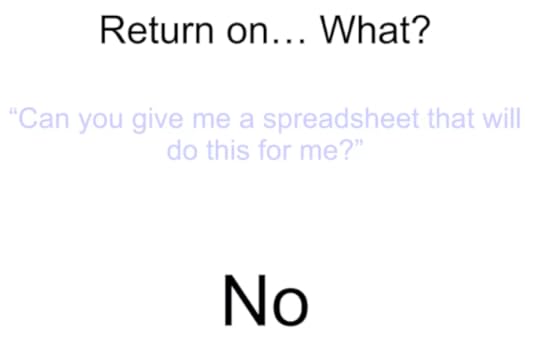
 Showing the Value of KMROI
 Metrics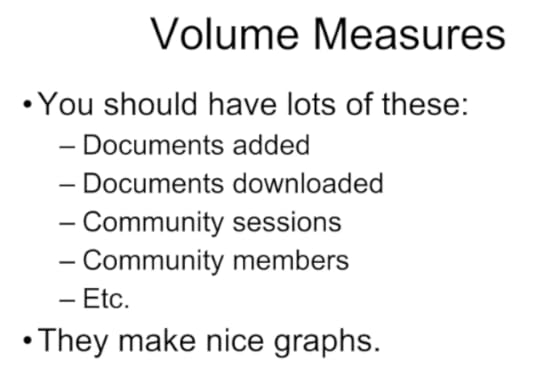
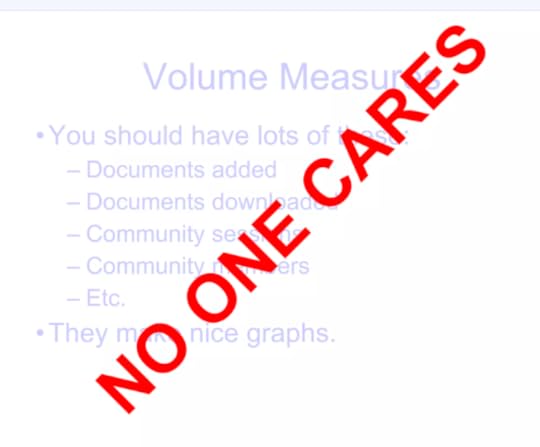 Value Drivers
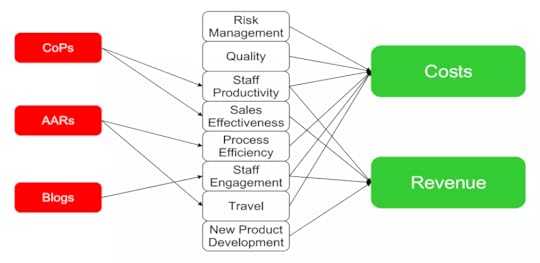 The Seven Deadly Sins of KMPride: “We don’t need to learn from anyone else, our operation is unique.”Envy: “XYZ’s KM, CoP, SNA program has just appeared in a news article. We would like one too.”Wrath: “I don’t want to WASTE time with any planning. Just do it!!!”Sloth: “I want all you underlings to share what you know. But don’t bother me about it.”Avarice: “Damn right I want to get organizational benefits. Invest to get them? Never…”Gluttony: “I want a million documents in the database. No! Make that a billion. More is better!”Lust: “I just love messing around with vendors & consultants. Meetings, workshops, everything. Just don’t hang around in the morning.”Attributes of a Good Community ManagerPASSIONATE about the domain & the development of a communityA PRACTITIONER of the domain themselvesRespected & liked by their PEERSAware & prepared for the organizational POLITICS they will encounterSkilled in facilitation PROCESS (be it virtual or real)Willing to PERSEVERE on this for months rather than daysKnowledge Management Vision
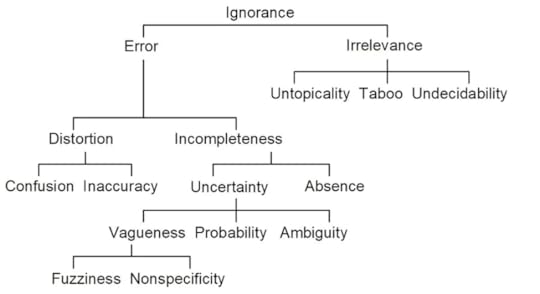 Untopicality
refers to things we feel we don’t need or want to know.
Taboo
refers to matters that are forbidden to us. I would split this between explicit and implicit taboos.
Undecidable
matters cannot be determined to be true or false.
Confusion
is mistaking something for something else.
Inaccuracy
amounts to misestimating something.
Absence
is missing information.
Probability
is uncertainty about whether something is true or whether an event will happen.
Ambiguity
refers to distinct possible states.
Fuzzy Vagueness
refers to fine-graded distinctions and blurry boundaries and is specific.
Nonspecific Vagueness
is simply as it says. Extra vague vagueness.Part 3: Scandignorance
Untopicality
refers to things we feel we don’t need or want to know.
Taboo
refers to matters that are forbidden to us. I would split this between explicit and implicit taboos.
Undecidable
matters cannot be determined to be true or false.
Confusion
is mistaking something for something else.
Inaccuracy
amounts to misestimating something.
Absence
is missing information.
Probability
is uncertainty about whether something is true or whether an event will happen.
Ambiguity
refers to distinct possible states.
Fuzzy Vagueness
refers to fine-graded distinctions and blurry boundaries and is specific.
Nonspecific Vagueness
is simply as it says. Extra vague vagueness.Part 3: Scandignorance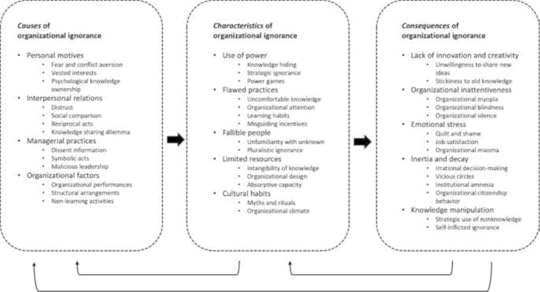 [image error]
Matt Moore is a project/program manager, blogger, presenter, webinar host, and deep thinker. He has worked in the knowledge management field for over 20 years.
Matt developed knowledge management strategies, implemented content management systems, facilitated communities, developed classroom and eLearning programs, and developed marketing programs for corporations, government agencies and non-profits.
Here are definitions for five of Matt’s specialties:
Communities : Groups of people who share an interest, a specialty, a role, a concern, a set of problems, or a passion for a specific topic. Community members deepen their understanding by interacting on an ongoing basis, asking and answering questions, sharing their knowledge, reusing good ideas, and solving problems for one another. Content Management : Creating, managing, distributing, publishing, and retrieving structured information–the complete lifecycle of content as it moves through an organization. E-learning : Tools that enable the delivery and tracking of online training courses.Project Management: The discipline of planning, organizing, securing, managing, leading, and controlling resources to achieve specific goals. Strategy : A set of guiding principles that, when communicated and adopted in the organization, generates a desired pattern of decision making. The way that people throughout the organization should make decisions and allocate resources in order accomplish key objectives. A strategy provides a clear roadmap that defines the actions people should take (and not take) and the things they should prioritize (and not prioritize) to achieve desired goals.For more about Matt, see Profiles in Knowledge.
Showing the Value of KMROIMetricsValue DriversThe Seven Deadly Sins of KMPride: “We don’t need to learn from anyone else, our operation is unique.”Envy: “XYZ’s KM, CoP, SNA program has just appeared in a news article. We would like one too.”Wrath: “I don’t want to WASTE time with any planning. Just do it!!!”Sloth: “I want all you underlings to share what you know. But don’t bother me about it.”Avarice: “Damn right I want to get organizational benefits. Invest to get them? Never…”Gluttony: “I want a million documents in the database. No! Make that a billion. More is better!”Lust: “I just love messing around with vendors & consultants. Meetings, workshops, everything. Just don’t hang around in the morning.”Attributes of a Good Community ManagerPASSIONATE about the domain & the development of a communityA PRACTITIONER of the domain themselvesRespected & liked by their PEERSAware & prepared for the organizational POLITICS they will encounterSkilled in facilitation PROCESS (be it virtual or real)Willing to PERSEVERE on this for months rather than daysKnowledge Management VisionI’m interested in what people complain about, because when things are working well, no one says anything. What would I like people to complain about? For example:
People can find me too easily. And they seem to know what I’m good at and what my experiences have been. It’s unnerving.We can quickly identify gaps in our information base — and I don’t like finding gaps.We seem to be sharing a lot of our IP among ourselves — and sometimes with our customers and partners. I’m worried about the leakage risks.Ignorance ManagementPart 1: Taxonomy & IrrelevancePart 2: Error
Untopicality
refers to things we feel we don’t need or want to know.
Taboo
refers to matters that are forbidden to us. I would split this between explicit and implicit taboos.
Undecidable
matters cannot be determined to be true or false.
Confusion
is mistaking something for something else.
Inaccuracy
amounts to misestimating something.
Absence
is missing information.
Probability
is uncertainty about whether something is true or whether an event will happen.
Ambiguity
refers to distinct possible states.
Fuzzy Vagueness
refers to fine-graded distinctions and blurry boundaries and is specific.
Nonspecific Vagueness
is simply as it says. Extra vague vagueness.Part 3: Scandignorance[image error]


No comments have been added yet.