Routines vs. Goals: Keeping the Machine Running
When you decide to focus on a goal in one area of life, a common challenge arises: how do you maintain progress in other areas?
Today, I would like to discuss a strategy for successfully addressing different weaknesses in your life while keeping everything else running smoothly.
If you’ve read my book Redeeming Productivity, you know I’m not fond of mechanical analogies for human productivity. I typically avoid comparing life to an assembly line or the mind to a hard drive. We’re organic creatures, meant to be fruitful like trees, not productive like factories. However, today I’m breaking my own rule because I believe a mechanical analogy can be helpful in this context.
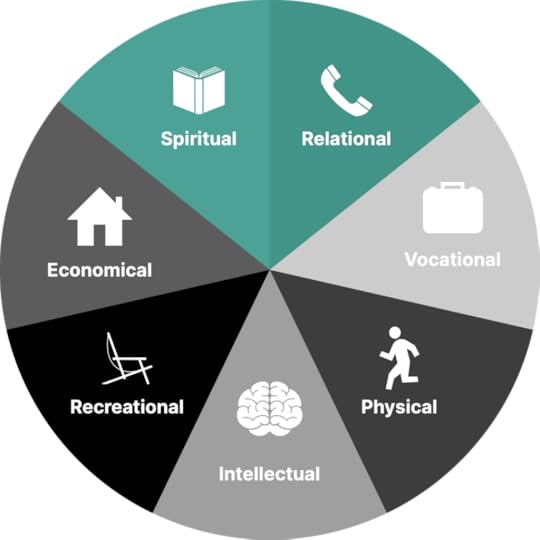
I want to explore the concept of âkeeping the machine running,â as an analogy for balancing our various domains of stewardship. How do you focus on improving one area of life while ensuring youâre not neglecting others that the Lord has given you to steward? How can you do both simultaneously?
As believers, we want to approach life as a stewardship, which requires intentionality. As Jonathan Edwards once said:
“A true and faithful Christian does not make holy living an accidental thing. It is his great concern. As the business of the soldier is to fight, so the business of the Christian is to be like Christ.”
The machine analogy is helpful here because it helps us understand that we need to do two things simultaneously: maintain the areas of life weâre growing in and optimize areas with the intention of becoming more faithful in every aspect of life.
The Maintenance SideWhen I talk about keeping the machine running, Iâm referring to routines and habits. Just as you perform routine maintenance on your carâchanging the oil, replacing windshield wipers, rotating the tiresâwe need similar routines to keep our lives running smoothly.
This is where practices like weekly reviews, morning and evening routines, house cleaning schedules, and various habits come into play.
For instance, I have daily habits of exercising and reading the Bible daily as part of my âPOWER Morningâ routine. These are the simple, repeated activities that help me maintain a life of faithful stewardship. But sometimes certain domains need a little more sustained attention than a mere habit can give them.
The Optimization SideWhile maintenance is crucial, we also want to optimize. This is where goals and projects come in. We might focus on a specific area, metaphorically pulling a component out of the machine to improve it. For example, you might ask, âHow can I better steward my intellectual life?â or âHow can I improve my walk with the Lord?â
Optimization involves setting goals to improve specific parts of your life. You do this systematically and intentionally, striving to grow in Christlikeness in every area of life. For example, this past quarter, I had the specific goal of improving my physical health. That was a domain of stewardship Iâd been lacking in, so I set a God-honoring goal to give focused effort toward growing in faithfulness in that one area.
But this is precisely where the tension between maintenance and optimization can arise. If we arenât careful, our goals can become the enemy of our habits.
The Balancing ActThis is where tension often arises. In our goal-setting workshops at the âRedeeming Productivity Academyâ, people often ask, âYouâre saying to set just one goal in one domain of stewardship? But I have so many goals I want to pursue!â But we caution people against taking on too many goals because it makes them much more likely to lose focus on the other domains of stewardship.

Weâve all known a person who becomes obsessed with things and neglects the rest of their life. Faithfulness doesnât look like neglecting your family so you can focus on work or ignoring your walk with the Lord so you can have more time for exercise. We want to grow, but weâve got to take it slow. The key to balance is understanding that you should really only optimize one piece of the machine at a time.
While focusing on one area, your routines and maintenance habits keep the other parts running. You donât want to lose focus on your overall stewardship while pursuing a single goal. Instead, it would be best to remember that you are simply paying particular attention to one area for a season to ensure it will run more smoothly.
A Framework for Intentional GrowthTo apply this âlife as a machineâ analogy, I use a âGet Clear, Get Organized, Get Consistent” framework.
1. Get ClearCould you decide on an area in which you want to grow in faithfulness? I do a âquarterly self-evaluationâ, rating myself from 1 to 5 in various areas of stewardship. This helps me identify where Iâm falling short.
2. Get OrganizedOnce youâve identified an area for growth, create a plan. Work backward from what faithfulness would look like in that area and develop a strategy to achieve it in Godâs power using His resources.
3. Get ConsistentThis is the habit-forming stage. Develop habits that help you grow during your focused season and maintain that growth afterward. An optimization season should conclude with establishing new maintenance habits that keep the machine running well even after shifting your focus.
ConclusionAll of this requires patience. Growth in the Christian life is very often a slow, methodical experience. But that slowness should not stop us from being intentional in our habits and goals. Faithfulness doesnât happen by accident.
The post Routines vs. Goals: Keeping the Machine Running appeared first on Redeeming Productivity.