The Raid, Investigation, and the Trial

“Guilty, guilty, guilty!”
In thirty minutes the defendants in the “Lucky” Luciano mob trial, all nine of them, heard those words 549 times. They were all going to prison.
Mae Foley, NYPD policewoman seconded to the District Attorney’s office heard those words too and breathed a sigh of relief. Finally she could stop babysitting the female witnesses, forty prostitutes and madams. There were about a dozen more, including bookies and male madams.
But her time was done. She hoped.
In his 1939 book, Lucky Luciano: His Amazing Trial and Wild Witnesses, New York newspaper reporter Hickman Powell laid out the whole story of District Attorney Thomas Dewey’s investigation into Luciano’s crime organization, “The Combination,” the arrests of Luciano and his co-defendants, and the lengthy spectacle that was the trial itself.
.stk-0449242{background-color:var(--stk-global-color-14950,#273891) !important}.stk-0449242:before{background-color:var(--stk-global-color-14950,#273891) !important}.stk-c099d8b{margin-bottom:0px !important}.stk-c099d8b .stk-img-wrapper{width:82% !important;height:500px !important}
Lucky Luciano’s mugshot from 1931
By way of background, he covered a lot of the territory of Manhattan’s crime history.
In the early days of the 20th century, it was a territory divided into gang territories, a fact the young Mae knew well. By the time she had grown up on the lower East Side, and joined the NYPD as a policewoman in 1923, the city was in the throes of dealing with a major crime surge, the result of the new law known as Prohibition. The dance halls, the speakeasies, and the clip joints flourished.
Fresh from her first assignment with the Masher Squad, Mae enjoyed her time with the task force charged with raiding and shutting down the illicit trade in alcohol. She never knew Luciano was one of the bootleggers.
Prohibition was never fully successful. Eventually the law was repealed and Mae transferred from Manhattan to the 103rd Precinct, thinking this new location would be a better place to raise her teenage daughters.
She was quickly brought on board and assigned as part of a task force that sought out a serial killer. She later took part in any number of sting operations.
But in 1936 she was seconded to the office of the New York District Attorney, Thomas Dewey. And found herself embroiled in the world of the mob.
As Powell tells it, the prostitutes were a varied lot, “harsh-voiced madams from Eastern Europe with black mustaches,” madams both blowsy and stringy, some beautiful blondes, dark and soulful brunettes, spinsters, and young girls who still appeared fresh and innocent. They came from all over, with only a few hailing from New York.
.stk-aaa21c4{background-color:var(--stk-global-color-14950,#273891) !important}.stk-aaa21c4:before{background-color:var(--stk-global-color-14950,#273891) !important}.stk-3f0423d{margin-bottom:2px !important}.stk-3f0423d .stk-img-wrapper{width:59% !important;height:499px !important}
1931 New York skyline from the shore of the East River
One was an eighteen-year-old girl named Margaret (some of Powell’s names of the witnesses don’t match other accounts I’ve found).
Margaret had lied to her mother about her sordid profession and was afraid to face her. Once arrested it seemed her mother wanted to visit but Margaret was afraid. The DA’s office decided to help her out. Margaret rented a hotel room, and accompanied by a ‘middle-aged, motherly: policewoman (most likely Mae Foley) she arranged to meet with her mother.
The visit went well and Margaret remained a compliant witness throughout the trial and once Luciano was convicted she vowed to ‘go straight’ and married a nice, average young man,
Mae Foley, though, was busy throughout the trial, escorting the witnesses, protecting them from some of Luciano’s cohorts bent on revenge, and keeping them out of the kind of trouble they seemed likely to seek out on their own.
Once the trial began, a newspaper article stated the girls were not nice ladies because none of them wore gloves. After that, Mae’s charges all made certain they had their hands nicely covered when they were in court. Mae hadn’t counted on shopping for the witnesses as one of her duties.
Some of the witnesses stayed in the House of Detention in Manhattan. Others were permitted to stay in apartments, usually two of them together. Still others, who were the ones offering the most damning testimony against Luciano, were housed far away from downtown, in a safe house.
All of the women had been offered immunity from prosecution and looked forward to life after the trial.
After months of interviews, preparing testimony, and Dewey reviewing the prosecution’s case, the trial began on May 11, 1936 in the County Courthouse in Foley Square, Manhattan. Dewey had four assistants with him and his entire office was involved in preparing for the trial.
Over two weeks over 28 witnesses had testified, one of them the madam Cokey Flo brown spent nine hours on the stand.
.stk-8d2760a{background-color:var(--stk-global-color-14950,#273891) !important}.stk-8d2760a:before{background-color:var(--stk-global-color-14950,#273891) !important}.stk-5dc5869{margin-bottom:2px !important}.stk-5dc5869 .stk-img-wrapper{width:59% !important;height:499px !important}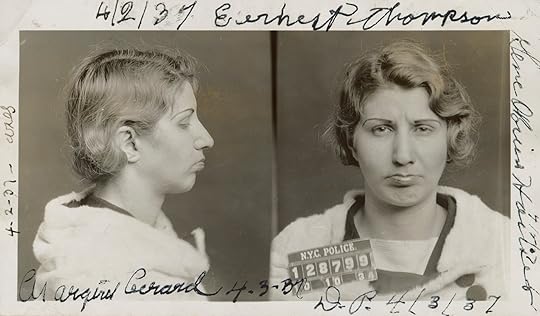
Cokey Flo Brown was a heroin addict and one of the main witnesses in the Luciano trial. She testified that he told her he wanted to run his string of brothels like a department store chain.
According to Powell, a woman named Mildred Harris was the last prostitute to testify. She too spent over nine hours in the witness box.
In Mae Foley’s story the last woman to testify was Molly Leonard, aka Molly Glick, and she identified Lucky Luciano clearly.
As Mae later told the story, she was driving Molly back to the safe house in Queens when they were followed by a sedan packed with dark, shadowy men carrying machine guns. It was only due to their evasive maneuvers that all survived.
Mae was grateful to hear the guilty verdicts and know the trial was over. But she still had more adventures in Mr. Dewey’s office to come.
Enjoyed this post? Get my newsletter delivered to your inbox so you don’t miss the next one! I send out one mailing a month most months and promise zero spam.
The post The Raid, Investigation, and the Trial appeared first on Benson's ReView.