
THE SAME SMALL STAR
AFFINITY
By R.S. Thomas
Consider this man in the field beneath.
Gaitered with mud, lost on his own breath,
Without joy, without sorrow,
Without children, without wife.
Stumbling insensitively from furrow to furrow,
A vague somnambulist; but hold your tears,
For his name also is written in the Book of Life.
Ransack your brainbox, pull out the drawers
That rot in your heart’s dust, and what have you to give
To enrich his spirit or the way he lives?
From the standpoint of education or caste or creed
Is there anything to show that your essential need
Is less than his, who has the world for church,
And stands bare-headed in the woods’ wife porch
Morning and evening to hear God’s choir
Scatter their praises? Don’t be taken in
By stinking garments or an aimless grin;
He also is human, and the same small star,
That lights you homeward, has inflamed his mind
With the old hunger, born of his kind.
I’m on an R.S. Thomas kick. 1913-2000. Welsh poet, Anglican priest, major curmudgeon, deeply private. Not seemingly cut out to be a pastor–few people skills. Suffered, obviously. Considered to be in the top tier of contemporary Welsh poets.
Read a wonderful biography of him a while back: The Man Who Went Into the West, by Byron Rogers.
His work cuts me to the quick.
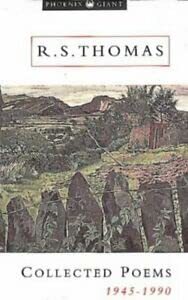
When I read “Affinity,” I thought Yes. That is who I write for.
Not the erudite, the intellectually self-sufficient, the preeners and self-congratulators.
But those who are on their knees weeping, not even so much out of gratitude or reverence or awe, but from sheer exhaustion. From utter poverty of spirit.
Interesting piece on the Flying Wallendas, trapeze artist family, in the most recent issue of The Current, the newsletter of Rhode Island’s Portsmouth Abbey. The abbey is dear to my heart–I’ve visited a couple of times and have dear friends there. I’m also terrified of heights and am fascinated by people who devote their lives to walking on wires or sheer cliff faces high above the earth. Must expore further.
Also read Dwell Time: A Memoir of Art, Exile and Repair, by Rosa Lowinger, a Jewish-Cuban art conservator, based loosely in LA. “How, I wondered, was it possible that non one in my family had ever told me that Havana, the place where we were from, was so closely aligned to my work? More importantly, how had I managed to reencounter this ornately decorated, sagging city at the precise moment when I was beginning to see a link between restoration of the materlal world and personal healing?”
“Dwell time,” by the way, is a term of art.
“In art conservation, we avoid…harsh processes. We are the masters of the slow and steady, using only methods and materials that do their job without inflicing damage. This takes many different forms, but in cleaning, the measure of how long it takes for a product to work on a substrate is called dwell time. Dwell time can also mean the total time a person spends at an airport, or looking at a web page, or the time a family lingers at a border, waiting to get into a country, or the time you live in a city before moving on.”
Additional interesting fact: “The earliest surviving Christian paintings were made at a time when adherence to the religion was punishable by death” (via scholar Joachim Gaehde).
And here’s my latest YouTube: a little reflection on Alfred Hitchcock’s evil-comes-to-a-small-town masterpiece, and Monsignor Romano Guardini’s The Rosary of Our Lady.


