
Influential power players struck from history
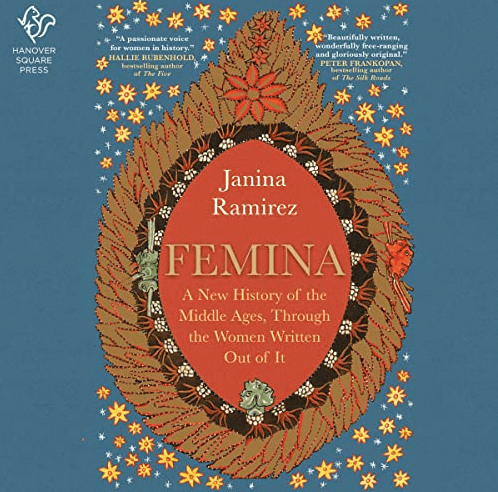
In the Middle Ages, influential power players were struck from history with the word FEMINA (woman) put beside them. Naturally the “weaker” sex was not worthy of (male) attention.
But now it is 2021, and Oxford historian Janina Ramirez is determined to set the record straight.
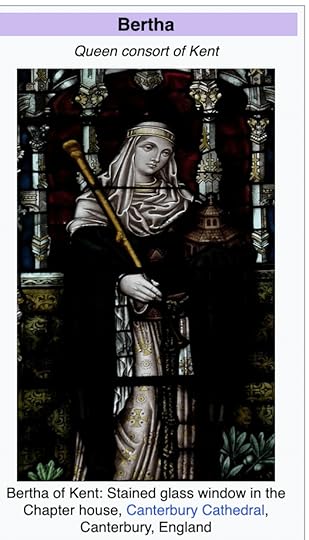
And so we learn about Bertha of Kent (565-601), a Christian Princess from Tours, who married Æthelberht of Kent in 580. Æthelberht himself was pagan, and so the marriage took place on condition that Bertha be allowed to practice her religion. And so the 15-year-old girl brought her chaplain Liudard with her to England in 580. At that time, the Romans had been gone from England for about 130 years, and so there was a Roman church available outside the city walls of Canterbury. Bertha and Liudard re-consecrated the site and dedicated it to St Martin of Tours, the patron saint of their home. It is now a UNESCO world heritage site, being the oldest church in the English-speaking world which has had continuous services since 580 CE.
When Pope Gregory the Great sent Saint Augustine to England in 596, with the mission of restoring Christianity to England, he was pleasantly surprised by the welcome give them by Queen Bertha. And so Christianity gained a firm foothold in England.
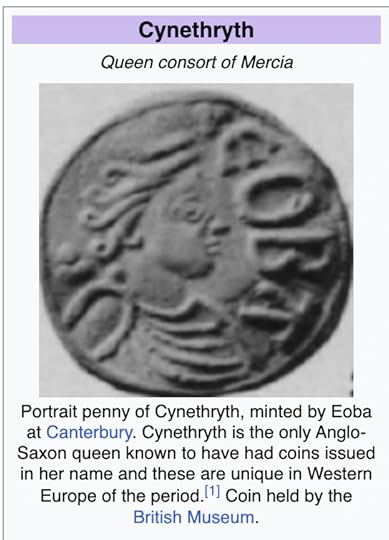
Then there is Cynethryth of Mercia (died after 798) who was the only Anglo-Saxon Queen to have had coins minted in her own name, suggesting she was co-ruler of Mercia with her husband King Offa (reigned 757-796) who built Offa’s Dyke, a border of sorts between England and Wales.
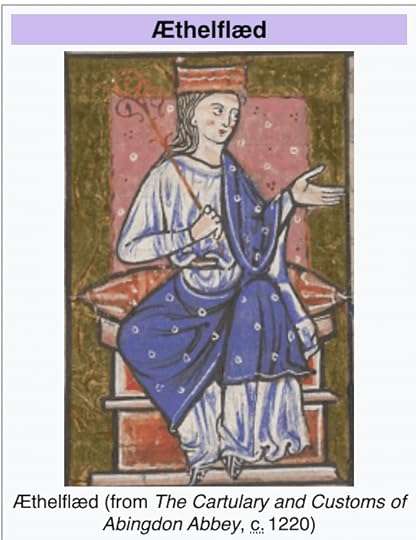
Next we meet Æthelflæd (870-918), the eldest daughter of Alfred the Great. At that time, England was being besieged by Viking hordes, and so Alfred, King of the West Saxons sealed a strategic alliance with the enormous kingdom of Mercia (which ran all the way from the Humber down to the north bank of the Thames, including the City of London) by marrying his eldest daughter to Æthelred of Mercia in the mid 880s, when she would have been in her teens.
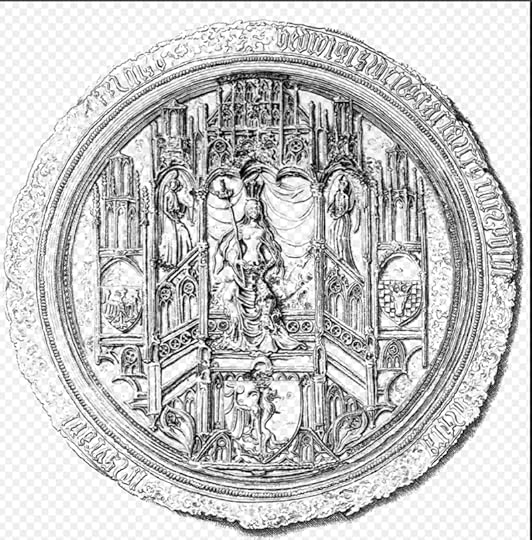 Jadwiga’s Seal
By around 900 CE, Æthelred’s health had declined so much that his wife ascended to the throne of Mercia. She was responsible for the victory against the Danes at Derby in 917, which was the first part of the Danelaw to fall to the English. In 918, Leicester surrendered without a fight and shortly afterwards, the Viking leaders of York offered to surrender to her. Unfortunately, she died on 12 June 918 and was unable to take up their offer. But what a remarkable woman Æthelflæd must have been to convince the Vikings of the largest city in Danelaw to surrender to her! Of course I had never heard of her before.
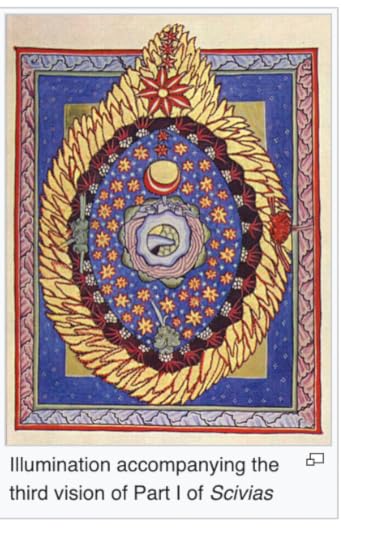
And so we go on down the ages, meeting Hildegard of Bingen (the author of Scivias), Queen Jadwiga of Poland (the only Polish Queen who ruled as a King), Margery Kempe, Juliane of Norwich and Bridget of Sweden.
If you love reading about strong female characters who you’ve never heard of, this is the book for you! Five stars.
 The post Influential power players struck from history appeared first on Cynthia Sally Haggard.


Cynthia Sally's Blog

- Cynthia Sally Haggard's profile
- 129 followers

