
British-Indian relations simmer just before the end of the Raj
I had never heard of Dinah Jefferies before, but when I was visiting England and enjoying myself perusing a bookshop in Marlborough, her title caught my eye, maybe because the cover was so beautiful. (I am a very visual person.)
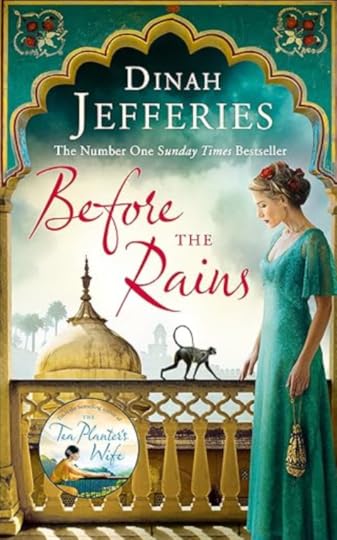
In any event, I have now finished this remarkable novel and can whole-heartedly recommend it. It concerns British-India relations in the early part of the 20th century, and is written by an English author.
For those of you who are neither British nor East Indian, you may not realize just how complex these relationships were. On the one hand, the British were offended by the polytheism, the polygamy and suttee (the practice of burning widows alive.) On the other hand they were fascinated by this vibrant culture with its spices, colors, ancient wisdom and most of all a much more natural relationship with emotions than is typical of Northern European societies. People, who up until then had been so tense with a corset of repressed emotion, would come to India and discover the freedom of expressing themselves. They fell in love with the people there. They learned Sanskrit and Pali. They began to imbibe Indian wisdom traditions. They became less stuffy.
 Mount Abu in Rajasthan
This novel concerns Eliza Fraser, whose father was high up in the British vice-royalty that governed India before it gained independence in 1947. The novel opens with ten-year-old Eliza witnessing the death of her father, when someone lets off a bomb during a parade. Eliza is absolutely devastated, but interestingly enough a young Indian boy is there with her, trying to comfort her as she holds her dying father in her arms.
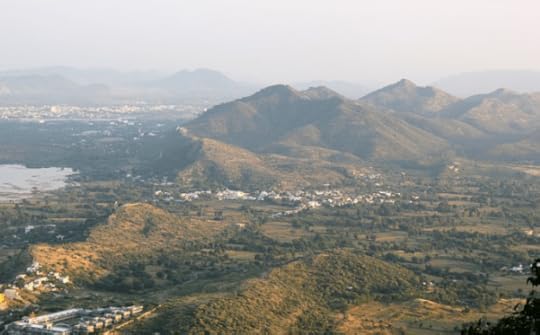 Udaipur and the Araveli Hills
Eighteen years later, Eliza returns to India by herself. Now she is an accomplished photographer (quite a feat for a young woman in the 1930s) and she has been given a commission to photograph all the members of the Royal Family in Rajputana, as well as to obtain some local color.
Although Eliza grew up in Delhi, she hasn’t been there in nearly twenty years, and so when she arrives, she behaves exactly as one would expect a liberated woman from England to behave. She wears trousers. She doesn’t take orders. She wants to roam around by herself, shooting photos of the local people.
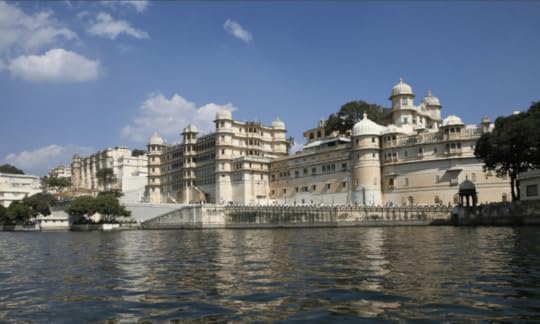 City Palace of Udaipur
It doesn’t take her long to realize that none of this is really possible. She has to be escorted everywhere. She has no privacy at the palace where she is a guest of the Maharaja of Rajputana. And she has the constant feeling that she is being spied on.
All of this would be intolerable were it not for the Maharaja’s younger brother. “Jay” (his real name is much longer) has been educated at Eton, speaks flawless English and understands the British very well. He takes a liking to Eliza and becomes her escort. Of course they fall in love and of course they begin a relationship.
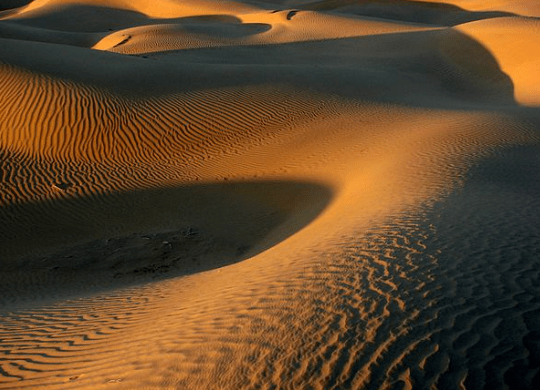 The Thar Desert
But East Indians in the 1930s of the stature of the Maharaja and his family do not marry for love. They do not marry the English (whom they detest.) And worst of all, they don’t marry widows, for widows are perceived to bring bad luck into the family. And so poor Eliza has three strikes against her.
What follows next is the emotional highs and lows of any couple who are passionate about each other, but continually thwarted by society’s expectations.
If you love this sort of thing, you will adore this book. Five stars.
The post British-Indian relations simmer just before the end of the Raj appeared first on Cynthia Sally Haggard.

Cynthia Sally's Blog

- Cynthia Sally Haggard's profile
- 129 followers

