You Need Rejection To Become a Better Writer
What I learned from getting 20 rejection letters for my short stories this year
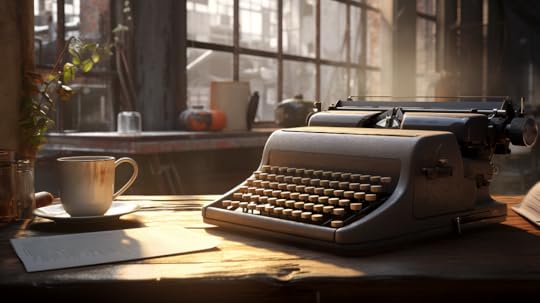 Typerwriter on a desk with some coffee
I received 20 rejection letters for my writing in 2023 (all short fiction) after submitting to about 40 places. Some of you might think that’s a ton while others will say “that’s not even close to enough.” Unfortunately, a lot of places will never reply or will take over a year! My short story “The Shtriga” was published at Leading Edge Magazine in 2021 after being submitted in 2019.
Although I’ve had a story traditionally published, I feel strongly that the stories I was submitting this past year were much better. I’ve grown a lot as a writer and am especially better at pacing than I was in 2019. So how come I’m having **worse** luck? And what can I learn from all these rejection letters.
As anyone who has tried to publish short fiction will tell you, getting something accepted is a numbers game. Magazines like Clarkesworld, Uncanny, Fantasy & Science Fiction, etc. receive hundreds of submissions a month and only end up publishing a few a quarter. Even if you have a quality story, will it fit with the theme of their issue or the other pieces they’ve already accepted?
Logically, we can tell ourselves these things. It’s like dating. Very few people find true love after their very first date. Sure, it happens but those are the exceptions.
Still, there’s a part of us that thinks we will be that exception and it’s hard not to get discouraged when you receive a rejection letter. So, in this mess of rejections, did I actually learn anything?
If your story gets rejected from one place, you can say it was luck. But if it continuously gets rejected, you need to start evaluating what isn’t working, and the unfortunate truth is that most magazines won’t tell you if they even read your story, let alone why they passed on it.
Join a writing groupIf you’re tired of the “join a writing group” advice then… well, I can’t help you. Getting eyes and feedback on your story is key. I’ve been in the same writing group for just over 2 years now and it has been the absolute best thing for my writing. Not only does it inspire me just to talk about writing, but my group genuinely gives me good feedback from different perspectives.
If you can find a diverse writing group, even better. People from different backgrounds can point out why a story might have been rejected.
In one of my short stories, there was a woman traveling through time to find a cure to a disease running rampant in the world. In the original draft, the people of the world called the disease “The Blues” because of the way it made their skin turn blue. The name was not an important part of the story, but I liked the way it sounded in dialogue. I hadn’t given it much thought after that and my beta readers never brought it up.
Feedback from submissionHowever, the story was getting rejected left and right. Finally, I submitted it to Utopia Science Fiction and after a few weeks, received this feedback from the editor:
“Thank you for the submission of your short story “The Color of Midnight” to Utopia Science Fiction Magazine. Unfortunately, we will be unable to accept it for publication.
While we really enjoyed the piece, and thought the idea was great, we essentially decided to go with other stories. One of the things we discussed in depth about this piece is the use of “the blues” as the name for the disease. Blues music has roots in American slavery and the early years of post-emancipation. It carries with it cultural symbolism and we weren’t sure if it was used in the most culturally sensitive way. I would advise to change the name of the disease and alter the story accordingly, as this might be the reason other magazines are reluctant to accept the otherwise strong piece.
We still thought the story was good and it was well written and we would be happy to see anything else you might submit to us in the future.”
This was an important learning moment for me — what you name things as your world building can have a lot of impact.
More than anything, it was encouraging that someone actually read it. Every rejection I’d had up until this point was a canned response. How did I know people were even getting past the first sentence? So, although I was rejected, I found this critique validating.
As a note, if you’re lucky enough to receive feedback in your rejection, simply say thank you! Editors appreciate it. But more importantly, don’t try to debate their feedback — just take it in stride and try learn from it.
 Blank sheet of paper
So, I changed the name of the disease and updated the story in a few places.
A few more rejections, and then I got one more small piece of feedback from “The Magazine of Fantasy & Science Fiction”
“Unfortunately, this story didn’t work as well for me as I’d hoped, and I’m going to pass on it for The Magazine of Fantasy & Science Fiction. To strengthen this story for another market, you might consider focusing on how you can pick up the pace and raise the stakes (sense of urgency) throughout for your characters. But I wish you best of luck finding the right home for it, and I hope you’ll keep us in mind in the future for your other new stories.”
This is slightly better than a canned message. Upon rereading, I agreed. There needed to be more urgency, especially in the beginning.
Once again, I updated the story.
There 3 more rejections before I received yet another set of feedback. This time from “The Colored Lens”
“Thank you for considering us, but we’re going to pass on this one. The story is well written and the plot is well paced. For those reasons, I nearly passed it around the editorial team to consider holding for final voting. The general ending didn’t quite work for me, though. First, Ajax helping them felt a bit like a deus ex machina, and then her destroying the note didn’t feel like it had quite the lead-up if that was going to be the last line. It seems like there should have been a bit more plot centered around her putting herself first beyond just the overall jump itself.”
I was honing in! If the plot was well paced, then I most likely got the sense of urgency right. Plus, just hearing something is “well written” is always encouraging. All I had to fix was… the ending. Notoriously, the hardest part of any good story.
And so I updated the story again.
I have it out to a few more places but haven’t heard back. I do think what I have now is superior to the version I was sending out at the beginning of the year. I could have spent more and more time editing it before ever sending it out, but I never would have ended up with *this* version. I needed these rejections to learn what wasn’t working.
TL;DRSubmit your story to a lot of places. Yes, getting something accepted is a numbers game, but so is getting meaningful feedback. Some editors will give you genuine, impactful feedback on your writing. Use it to improve and keep submitting!
[image error]