
Unleashing the Future: How Unusual Forms of Digital Assets Will Transform Our World by 2040
 In the fast-paced world of digital technology, the idea of what constitutes a digital asset is changing rapidly.
Beyond cryptocurrencies and digital art, we can expect to see many new kinds of digital assets in the future. By 2040, I feel certain that these “assets” will begin to impact many parts of our lives and society.
For example, we can all look forward to Emotional AI Profiles that can understand and react to our unique emotional states. There’s also the potential for AI companions that learn and develop a personalized relationship with us.
We also expect to see tradeable Synthetic Media Rights as AI-generated media becomes more like human-made content. There could even be many forms of ownership and trade in Digital Ecosystems, such as virtual worlds or digital real estate. As quantum computing becomes a reality, Quantum Computing Power could also become a valuable digital asset.
In healthcare, we might see Genetic Data and Personalized Health Profiles becoming important assets that can be leveraged to improve personal medicine. As decentralized networks become more common, we might see several kinds of assets within Decentralized Autonomous Organizations (DAOs) becoming tradable digital assets.
Cognitive Models that mirror specific cognitive processes or patterns could open up new possibilities for personalization and research. Lastly, as quantum computing challenges current encryption methods, Advanced Encryption Keys could become very valuable digital assets.
As we step through the possibilities, we’ll quickly see the amazing potential of digital assets in a world that’s constantly blurring the lines between the physical and the virtual.

A Periodic Table Organizer of Future Digital Assets
Categories of Digital AssetsAs we step further into the digital era, we begin to see how new forms of digital assets will begin to transform the way we do business. Even though it may be hard to grasp the specifics, given the rapid rate of tech advancements, here are a few broad categories to consider:
Emotional AI Profiles:AI will continue to improve at reading, interpreting, and responding to human emotions. Unique AI profiles that have learned to emulate or respond to specific people’s emotional patterns could become a new form of digital asset.
AI Companions:Digital beings that evolve, learn, and interact on a personal level with humans could become significant digital assets, whether they’re serving as companions, educators, or personal assistants.
Synthetic Media Rights:As AI progresses, we’ll see more “synthetic” media, such as artificially generated voices, images, or videos that are nearly indistinguishable from those created by humans. Rights to use specific synthetic media elements could become a valuable asset.
Digital Ecosystems:Entire virtual ecosystems might be owned, traded, or licensed. This could include digital real estate, virtual worlds, or even complex simulations used for research.
Quantum Computing Power:As quantum computing becomes more mainstream, access to quantum computing power or time on quantum computers could be a digital asset.
Genetic Data:As we become more adept at understanding and manipulating genetic data, individual or specific strands of genetic data could become a digital asset.
Personalized Health Profiles:Advanced health data, including personalized health recommendations based on AI analysis of personal medical history and real-time health data, could become a digital asset.
Decentralized Autonomous Organizations (DAOs) Assets:DAOs could become more complex, and their components (like voting rights or decision-making algorithms) could become digital assets.
Cognitive Models:AI models of specific cognitive processes or individuals’ cognitive patterns could be valuable in various contexts, from research to personalization.
Advanced Encryption Keys:With the rise of quantum computing, more advanced forms of encryption will become necessary. Unique keys for these encryption methods could become valuable digital assets.

Emotional AI Profile-Builder
1. Emotional AI Profilesa. Emotional AI Profiles:With the advancements in machine learning and affective computing, AI has been learning to understand, mimic, and respond to human emotions more accurately. These skills can be applied in a wide variety of sectors, resulting in unique Emotional AI Profiles.
b. Personalized Marketing Profiles:Emotional AI could be used in the field of marketing to understand consumers on a deeper emotional level. These profiles could provide insights into an individual’s emotional response to certain products, brands, or advertisements, allowing for highly personalized marketing strategies.
c. Therapeutic AI Companions:Emotional AI Profiles could also be used in mental health therapy, with AI companions capable of understanding and responding to an individual’s emotions effectively. These companions could provide immediate therapeutic conversations, comfort, or advice based on the individual’s emotional state.
d. Virtual Reality Experiences:Emotional AI profiles could also be used in virtual reality to create highly immersive and emotionally engaging experiences. These could be used for entertainment, therapy, training, or education.
e. AI Personal Assistants:Personal assistants could be upgraded with Emotional AI Profiles to understand better and respond to the emotional state of their users. They could potentially detect stress, joy, frustration, or sadness in the user’s voice and react accordingly, providing a more human-like interaction.
f. Emotion-Driven Content Creation:Emotional AI Profiles could be employed in content creation, generating music, artwork, or stories that correspond to or help modulate an individual’s emotional state.
In all these examples, an Emotional AI Profile becomes a highly valuable digital asset, capturing a deep understanding of an individual’s emotional patterns, responses, and triggers. As such, they can be customized, traded, or licensed to various sectors as per the requirement, adhering to strict privacy and ethical guidelines.

Living with an AI Companion
2. AI CompanionsAI Companions represent a category of digital assets with significant growth potential. These AI-powered entities can interact with humans in a personalized, understanding, and supportive manner. As the technology advances, the customization and functionality of these AI Companions will likely expand dramatically, making them highly valuable digital assets. Here are some examples of how they might be used:
a. Personalized Tutor AI Companions:These AI companions could provide personalized tutoring, adjusting their teaching style to a student’s learning style and pace. The tutor AI could potentially be a subject matter expert in various domains, making them highly valuable for individuals and educational institutions.
b. Healthcare AI Companions:These companions can monitor an individual’s health and provide support for chronic conditions or rehabilitation exercises. They could remind patients about medication, provide mental health support, and even alert healthcare professionals if urgent attention is needed.
c. Fitness AI Companions:A fitness-focused AI companion could provide personalized workout routines, nutritional advice, and motivation. These companions could interact with wearable devices to track progress and adjust fitness plans accordingly.
d. Elderly Care AI Companions:These companions can provide company, monitor health, and assist with daily tasks for older adults. They could even provide reminders for medication appointments and communicate with healthcare providers or family members in case of emergencies.
e. Professional Mentor AI Companions:These companions could provide professional guidance, helping individuals improve their skills, prepare for interviews, or make career decisions. They could learn from the individual’s past experiences and performance to provide highly tailored advice.
f. Childcare AI Companions:These companions can provide educational games, stories, and other activities to engage children. They can also monitor a child’s safety and provide a communication channel between the child and their parents when they are not around.
Ownership and trade of these AI Companions could exist on blockchains, where each AI Companion’s learning and interactions could contribute to their over-arching value. For example, an AI Companion with years of specialized healthcare training could be worth more than a newly created AI Companion. Similarly, an AI Companion that has helped successfully tutor dozens of students could be highly sought after in the marketplace.

A Nike shoe designed by Dale Chihuly
3. Synthetic Media RightsAs AI technology advances, it’s becoming possible to create synthetic media — artificially generated or modified media that includes images, videos, audio, and text. These synthetic creations can be highly customized and targeted, leading to a myriad of potential applications.
However, as the creations are synthetic, the traditional model of rights and ownership can become blurred. Synthetic media rights will thus be a critical component in the digital assets of the future. Here are a few examples:
AI has already shown its capacity to create art, with AI-generated pieces selling for significant amounts. The ownership rights of these pieces, including replication and distribution, could become valuable digital assets. The AI that created the art might also be viewed as a valuable asset.
b. Deepfake Rights:As controversial as they are, deepfakes (synthetic media where a person in an existing image or video is replaced with someone else’s likeness) represent an example of synthetic media rights. In the future, permissions or licenses to create deepfakes of certain individuals (say, for a satirical comedy show) could become digital assets.
c. Synthetic Voice Rights:Companies are creating increasingly realistic synthetic voices that can be used for audiobooks, customer service, and more. The rights to use these unique, AI-generated voices could be bought and sold as digital assets.
d. Synthetic Celebrity Endorsements:AI could create synthetic videos of celebrities endorsing products. The rights to create and use these synthetic endorsements could become digital assets, with the caveat that they would likely require the consent of the celebrities involved.
e. Virtual Reality (VR) Experiences:As VR experiences become more advanced, there may be synthetic representations of people, places, or things. The rights to use these synthetic representations within VR could become digital assets.
f. News or Content Generation:AI tools are increasingly capable of generating news articles or other forms of content. The rights to use and distribute this AI-generated content could be bought and sold as digital assets.
These examples show that as our media becomes more synthetic and AI-driven, rights and ownership models will need to adapt. As blockchains provide an immutable record of these rights, synthetic media rights will create a significant category of digital assets by 2040.

Smart City Ecosystem Designs!
4. Digital EcosystemsDigital Ecosystems are complex networks or communities that consist of interconnected digital technologies, services, applications, and users. As more aspects of our lives become digitized, we’re seeing the rise of these intricate ecosystems, which can be considered as holistic digital environments.
These ecosystems have the potential to become valuable digital assets in themselves, offering a wealth of opportunities for users to interact, transact, and create value. Here are some examples of how digital ecosystems could become digital assets in the future:
a. Digital Health Ecosystems:In the future, personalized health ecosystems may exist that consolidate a person’s health data, treatment plans, digital therapeutics, and health support networks. Owning or having access to such an ecosystem could be a significant asset, both for individuals and healthcare providers.
b. Smart City Ecosystems:These could consist of interconnected networks of smart devices, autonomous vehicles, energy grids, public services, and more. The right to manage or utilize such a comprehensive ecosystem could become a valuable digital asset.
c. Educational Ecosystems:Imagine a personalized educational ecosystem that brings together a user’s learning history, AI-driven tutor support, interactive learning modules, and more. The access or ownership of such ecosystems could be traded as digital assets.
d. Financial Ecosystems:In the world of decentralized finance, digital ecosystems of smart contracts, cryptocurrencies, lending platforms, and insurance policies already exist. As they grow in sophistication and interconnectivity, these ecosystems themselves can become valuable assets.
e. Sustainable Ecosystems:As the world becomes more eco-conscious, digital ecosystems that monitor and manage sustainable practices (like carbon offsets, recycling programs, and renewable energy sources) could become important digital assets.
f. Gaming and Entertainment Ecosystems:The ownership or rights to access comprehensive gaming ecosystems (including in-game assets, characters, storylines, etc.) could be seen as digital assets, particularly as the metaverse expands.
These are just some examples of how digital ecosystems could evolve to become significant assets in the future. These ecosystems may become marketplaces for a wide variety of other digital assets as well, creating a vast network of interconnected digital property.
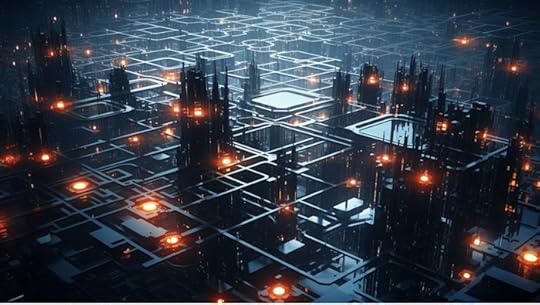
The Quantum Algorithm Marketplace
5. Quantum Computing PowerQuantum Computing Power represents a massive leap in computational capabilities, harnessing the principles of quantum mechanics to perform complex calculations at speeds unimaginable with today’s classical computers. The adoption of quantum computing on a broader scale could lead to the emergence of new types of digital assets. Here are a few examples:
a. Quantum Processing Time:Quantum computers are expensive and require specialized environments to operate. Therefore, access to quantum processing time could become a valuable digital asset. Users could buy, sell, or lease their quantum computing power to others who need it for specific tasks or periods.
b. Quantum Algorithms:Quantum computers operate based on a completely different set of principles compared to classical computers. This necessitates the development of new quantum algorithms. Ownership rights or licenses to use such quantum algorithms could become valuable digital assets in the future.
c. Quantum Secure Keys:Quantum computers pose a threat to current encryption methods, potentially able to break them much quicker than classical computers. Quantum key distribution (QKD) offers a solution to this by using quantum mechanics to secure communication and generate unbreakable encryption keys. These quantum secure keys could be considered a new form of digital asset.
d. Quantum Cloud Services:As cloud services today provide storage and processing power as a service, future cloud services could provide quantum computing power as a service. Subscriptions or usage rights to such services could be traded as digital assets.
e. Quantum Software:As the field of quantum computing evolves, so too will the need for specialized software that can run on these machines. Such software could become a digital asset, with users trading licenses or usage rights.
f. Quantum Machine Learning Models:Quantum machine learning, a merger of quantum physics and machine learning, could result in significantly more powerful and efficient models. Access to, or ownership of, these quantum-powered models could be a digital asset of considerable value.
In the future, the increasing need for powerful computing solutions to tackle complex problems could help push the value of these quantum computing-related assets.
Translate This PageSelect LanguageAfrikaansAlbanianAmharicArabicArmenianAzerbaijaniBasqueBelarusianBengaliBosnianBulgarianCatalanCebuanoChichewaChinese (Simplified)Chinese (Traditional)CorsicanCroatianCzechDanishDutchEnglishEsperantoEstonianFilipinoFinnishFrenchFrisianGalicianGeorgianGermanGreekGujaratiHaitian CreoleHausaHawaiianHebrewHindiHmongHungarianIcelandicIgboIndonesianIrishItalianJapaneseJavaneseKannadaKazakhKhmerKoreanKurdish (Kurmanji)KyrgyzLaoLatinLatvianLithuanianLuxembourgishMacedonianMalagasyMalayMalayalamMalteseMaoriMarathiMongolianMyanmar (Burmese)NepaliNorwegianPashtoPersianPolishPortuguesePunjabiRomanianRussianSamoanScottish GaelicSerbianSesothoShonaSindhiSinhalaSlovakSlovenianSomaliSpanishSudaneseSwahiliSwedishTajikTamilTeluguThaiTurkishUkrainianUrduUzbekVietnameseWelshXhosaYiddishYorubaZulu
#goog-gt-tt {display:none !important;}
.goog-te-banner-frame {display:none !important;}
.goog-te-menu-value:hover {text-decoration:none !important;}
.goog-text-highlight {background-color:transparent !important;box-shadow:none !important;}
body {top:0 !important;}
#google_translate_element2 {display:none!important;}
function googleTranslateElementInit2() {new google.translate.TranslateElement({pageLanguage: 'en',autoDisplay: false}, 'google_translate_element2');}
function GTranslateGetCurrentLang() {var keyValue = document['cookie'].match('(^|;) ?googtrans=([^;]*)(;|$)');return keyValue ? keyValue[2].split('/')[2] : null;}
function GTranslateFireEvent(element,event){try{if(document.createEventObject){var evt=document.createEventObject();element.fireEvent('on'+event,evt)}else{var evt=document.createEvent('HTMLEvents');evt.initEvent(event,true,true);element.dispatchEvent(evt)}}catch(e){}}
function doGTranslate(lang_pair){if(lang_pair.value)lang_pair=lang_pair.value;if(lang_pair=='')return;var lang=lang_pair.split('|')[1];if(GTranslateGetCurrentLang() == null && lang == lang_pair.split('|')[0])return;var teCombo;var sel=document.getElementsByTagName('select');for(var i=0;i<sel.length;i++)if(/goog-te-combo/.test(sel[i].className)){teCombo=sel[i];break;}if(document.getElementById('google_translate_element2')==null||document.getElementById('google_translate_element2').innerHTML.length==0||teCombo.length==0||teCombo.innerHTML.length==0){setTimeout(function(){doGTranslate(lang_pair)},500)}else{teCombo.value=lang;GTranslateFireEvent(teCombo,'change');GTranslateFireEvent(teCombo,'change')}}
Search for: Recent Posts Unleashing the Future: How Unusual Forms of Digital Assets Will Transform Our World by 2040 AI’s Achilles Heel: Navigating the Blind Spots of Our Data The Invisible Tug-of-War: Which Requires More Faith, Science or Religion? Categories Artificial Intelligence Business Trends Future of Agriculture Future of Banking Future of Education Future of Healthcare Future of Transportation Future of Work Future Scenarios Future Trends Futurist Thomas Frey Insights Global Trends Predictions Social Trends Technology Trends Speaking TopicsFuture of Healthcare – “Is Death our only Option?Future of AIFuture of Industries ← Previous Post

The post Unleashing the Future: How Unusual Forms of Digital Assets Will Transform Our World by 2040 appeared first on Futurist Speaker.


Thomas Frey's Blog

- Thomas Frey's profile
- 2 followers

