Bill Kaplan: Profiles in Knowledge
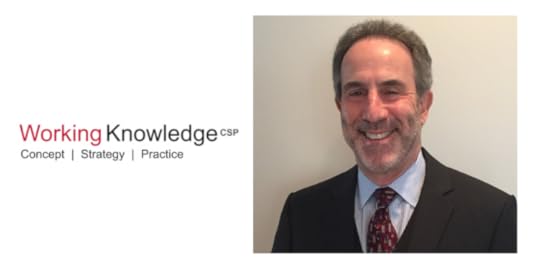
This is the 93rd article in the Profiles in Knowledge series featuring thought leaders in knowledge management. Bill Kaplan is an independent knowledge management practitioner, consultant, coach, advisor, trainer, author, and speaker based in Camas, Washington. His approach to KM is business-focused, non-academic, and practice-based, evolved from 20 years of KM solution planning and delivery. He focuses on “Creating Value from Knowledge” throughout the workplace as part of the way the work gets done. This includes dealing with knowledge capture, sharing, and retention challenges by mitigating and preventing knowledge loss due to workforce turnover.
I have known Bill for many years and often see him at the KMWorld Conference. He has been an active member of the SIKM Leaders Community since 2009, frequently replying to queries. We recently worked together as part of the Midwest KM Symposium planning committee, both presenting at the 2023 event held at Kent State University.
Background
Bill is the Founder of Working KnowledgeCSP, an independent, internationally recognized knowledge management consulting company. CSP stands for Concept | Strategy | Practice. After a 25-year USAF career, Bill served as the Chief Knowledge Officer and Knowledge Management Practice Manager at Acquisition Solutions, Inc. (ASI), a public sector focused management consulting company. Under Bill’s knowledge leadership, ASI earned Top 20 North American Most Admired Knowledge Enterprise (MAKE) recognition from Teleos in 2007, 2008, and 2009. Prior to that, he was the Deputy Global KM Practice Manager at SAIC. CIO Review recognized Working KnowledgeCSP as one of the “10 Most Promising KM Solution Providers of 2018 and 2020.”
Bill holds a BS in Business and Economics from Lehigh University, an MBA from Southern Illinois University at Edwardsville, and a Professional Degree in Engineering Management with a concentration in Knowledge Management from The George Washington University. He previously taught KM as an adjunct professor in knowledge management at the University of Maryland, Global Campus.
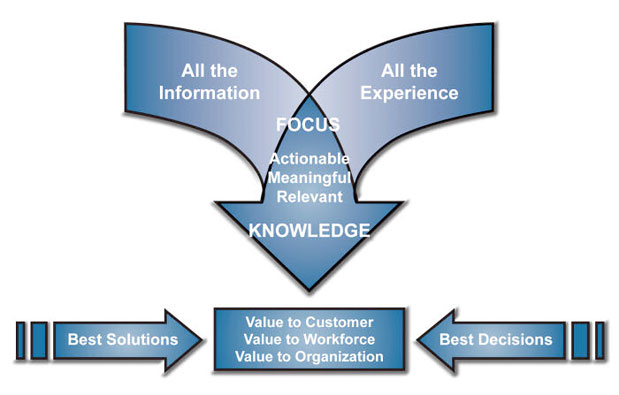
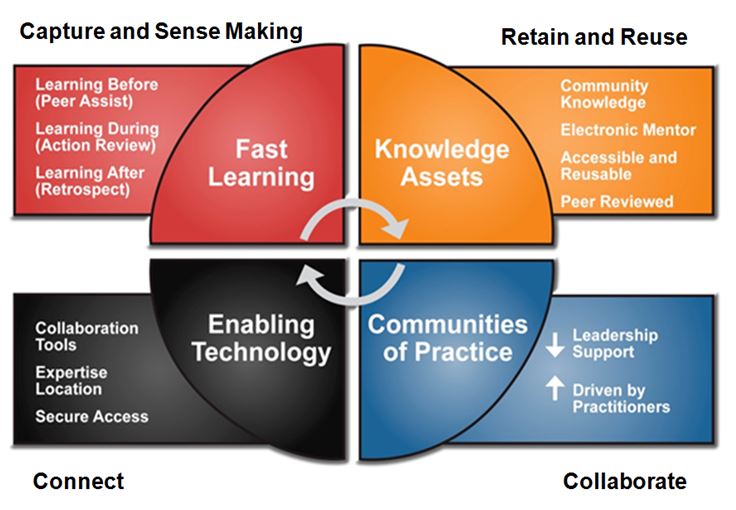
EducationThe George Washington University — Professional Degree, Engineering Management/Knowledge Management, 2006–2010Dwight D. Eisenhower School for National Security and Resource Strategy — NSM, National Security Policy and Research Studies, 1992–1993Southern Illinois University Edwardsville — MBA, Management, 1979–1980Lehigh University — BS, Business and Economics, 1969–1973ExperienceWorking KnowledgeCSP LLC — Founder and Principal Consultant, 2009 — presentUniversity of Maryland Global Campus — Adjunct Professor (Knowledge Management), 2018–2021ASI (Acquisition Solutions, Inc.) — Chief Knowledge Officer and KM Practice Manager, 2005–2009SAIC (Science Application International Corporation) — Deputy KM Practice Manager, Senior Consultant-Knowledge Management and Senior Consultant-Government Acquisition Policy and Process, 1998–2005United States Air Force, 1973–1998ProfilesAboutHighlightsLinkedInContentBlogLinkedIn PostsRealKMTwitterArticlesKnowledge Management: Leveraging the “Electrome” or “Learning at the Speed of Knowing”US Climate Change Mitigation Strategy Requires System Thinking and Defined RequirementsKnowledge Management and Critical Thinking: Congress, Legislative Outcomes and Systems ThinkingKnowledge Management: Lessons Learned and Design Thinking — Crafting an Environmentally and Economically Balanced “Fit for Purpose” National Energy PolicyKnowledge Management: “… each man is my superior, each woman also my superior, in that I may learn from him and her”The Incoming Administration: Transition, Decision Making, and the Value of Knowledge ManagementPeople, not Technology, Are Always the Foundation for KM SuccessCommunities of Practice (CoP) in International Financial InstitutionsKM and Evidenced Based Collaboration: a Solution for the Partial US Gov’t ShutdownKM ISO Standard: Progress Towards Accredited KM Certification ??3 Assumptions That Might Be Sabotaging Your KM EffortsThe Challenges In Building a KM Program in the Federal GovernmentKnowledge Management (KM) and US Talks with North Korea (NOKO)CoP Success and the Concept of Shared ValueNo Time for KM in Times of Change?Context Puts a Face on Knowledge and Lets You See Inside5 Reasons You Can’t Get the Go Ahead for Your KM Effort!The Long Term Value of Current Content and Knowledge Sharing: Your RelevanceAgile Knowledge Management: How to Rapidly Develop a Sustainable Knowledge Transfer Capability While Increasing PerformancePractice-Based KM Maturity ModelCommunity of Practice (CoP) Maturity Model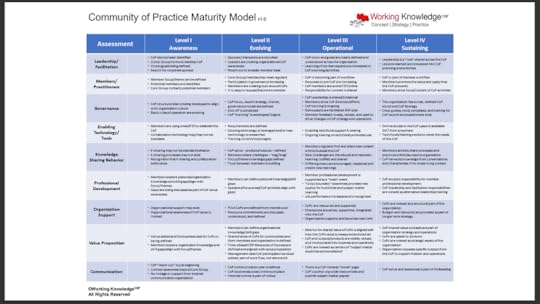 Value Creation from Knowledge
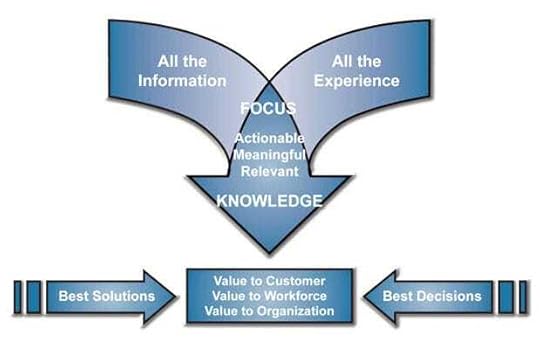 Knowledge at the Point of Execution®
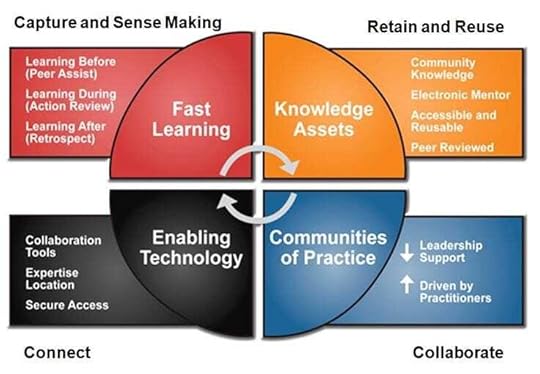 KM Framework
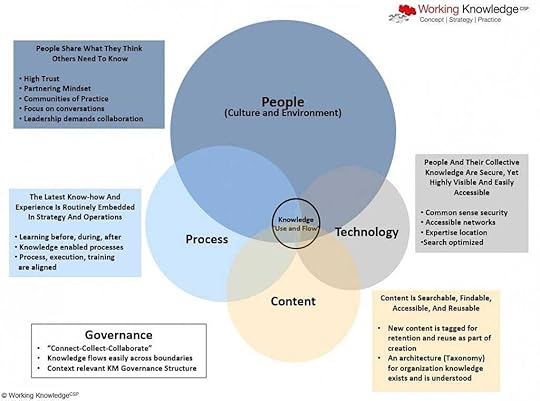 Knowledge Enabled OrganizationsLinkedIn ArticlesKnowledge Management: Requirements Definition, Consensus and Lessons Learned in Delivering The Equality Act (2021)Knowledge Management: “Performing and Learning”: Lessons from 2020 for a National Voting StandardWhat Does Good Policing Look Like and How Does a Community Define It? The Value of User Stories and Use CasesKnowledge Management and the Plans to Return to Campus: Learning to Create Value from Other People’s KnowledgeLearning Not Blame: “Inquiry” Not “Inquisition”Operating “Faster Than the Speed of Change”: Creating Value from State Knowledge in the Fight Against COVID-19NY Governor Andrew Cuomo: “Creating Value from Knowledge”The Evolving Knowledge Management (KM) ISO Standard Is Your Friend, But You Need to Place the Standard in Context!Communities of Practice: Reflections of KM VersatilityAgile Knowledge ManagementProgram Management: Improving Knowledge Capability to Mitigate Operational Risk in Program ExecutionThe Knowledge Manager: Key to Creating Value From Your KnowledgeKnowledge Leadership, the News Media, Trust, and Enabling Learning Lessons in BaltimoreCreating Value from Knowledge: The Chief Knowledge OfficerKnowledge Management vs. Knowledge LeadershipMeasuring the Unmeasurable: Part 1, Part 2, and Part 3Practically Speaking, Does Professional Certification in Knowledge Management Exist? Part 1…Yet? and Part 2: How Will You Know It’s Real?Concept and Practice
The Knowledge Edge Series
Understanding KMKM Concept, Strategy, and PracticeKnowledge LeadershipKM Concepts: Fundamentals of a Knowledge Enabled OrganizationOne View of KnowledgeHigh Performing Knowledge Enabled OrganizationsFast LearningCoPs (Part 1)CoPs (Part 2)Knowledge AssetsKnowledge at the Point of ExecutionDeveloping Knowledge Workers Through Senior Management LeadershipOperationalizing LearningUnderstanding KM CertificationArticlesReplacing Risk with Knowledge to Deliver Better Acquisition OutcomesKnowledge is the Source of Better Acquisition OutcomesCapturing, Retaining, and Leveraging Federal Agency Workforce Knowledge — ATSDLeveraging Our Critical Acquisition KnowledgeDeploying a Knowledge Convergence Framework: Four key elements for building a performance learning cultureCreating a Sustainable KM Framework: The Concept | Strategy | Practice | (CSP) Model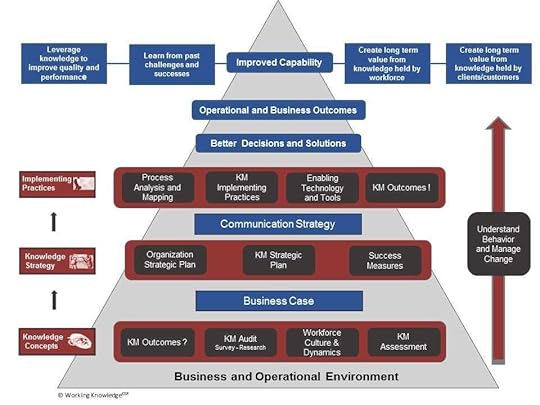 CSP ModelArticles by OthersInterview: Bill Kaplan on Knowledge Loss and Employee Turnover by Mimi DionneHow Technology Will Affect the Future of Knowledge Management by Lauren TreesConnecting the dot.govs by Steve BarthAlternatives to definition by Dave Snowden2016 election: an opportunity to reset knowledge management by Meredith SomersCIO ProfileSIKM Leaders CommunityPosts
Bill’s tribute to Melissie Rumizen
I worked closely with Melissie Rumizen while she was with the KM consulting team led by Kent Greenes at the original SAIC. One key learning for me from Melissie was her perspective that there is no “perfect KM Strategy” for an organization. The idea that the strategy should and will develop through practical application and “performing and learning” in the job and on the job is a fundamental that anchors much of my current approach to KM consulting. I still refer to my copy of the book with her inscription to me on a regular basis. I visited with her in her home in Fairfax, VA shortly before she passed away…she gave me some advice and it is in this inscription. Melissie told me KM was not an easy discipline with which to work, and if I was to stay with it, I needed to be always a “source of learning” for my colleagues and my clients. Melissie was and remains, through her thinking and writing, a real practitioner in the field.
Presentations
2009–06 Managing Knowledge Loss Due to Workforce Attrition — Slides2014–07 Losing Your Minds: Capturing, Leveraging & Retaining Organizational Knowledge — Slides2016–02 Agile KM — Slides2019–02 The Value of CoPs in International Financial Institutions — SlidesPresentationsPractice-Based KM Maturity ModelCommunity of Practice Maturity ModelKM Framework7 “Must Know” KM Fundamentals to Implement Knowledge-Based Contract ManagementStrategic and Critical ThinkingSlideShareConferencesKM Showcase2019 — Communities of Practice — Shared Value2020 — Knowledge Management is Easier to Deliver as a Slogan than as a Sustainable InitiativeKMWorld2015 W3: Applying ‘Agile’ in Developing KM Strategies & Implementing Frameworks2010Replacing Risk With Knowledge in Program Operations — SlidesKnowledge Loss Strategies — SlidesNASPOManaging the Risk of Knowledge Loss Due to Workforce AttritionDoD and Federal Knowledge Management Symposium2019 The Key to KM and Digital Transformation is Not TechnologySLA2021 Developing, Implementing, and Resetting a KM Strategy in a Time of UncertaintyKMGNKMAgile — KM Strategy Development “Faster than the Speed of Change”Midwest KM Symposium2023 Knowledge Management Made Simpler, But Not Necessarily Easier! Lessons from KM in Practice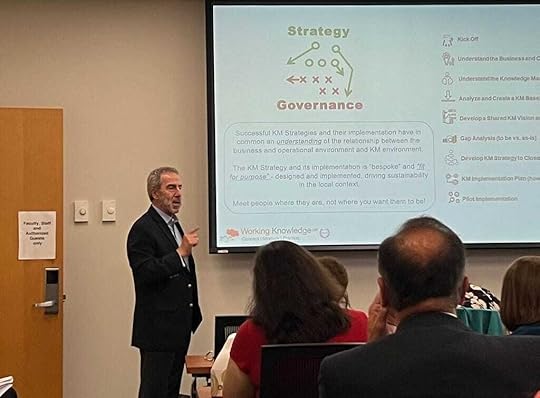 Bill Kaplan presenting at the 2023 Midwest KM Symposium
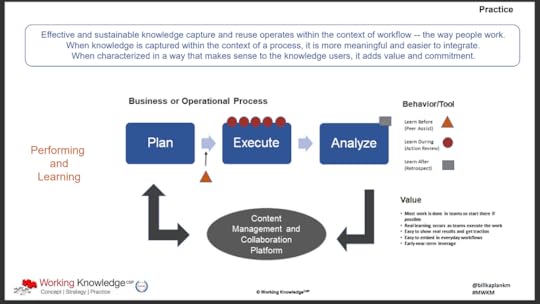 Performing and Learning
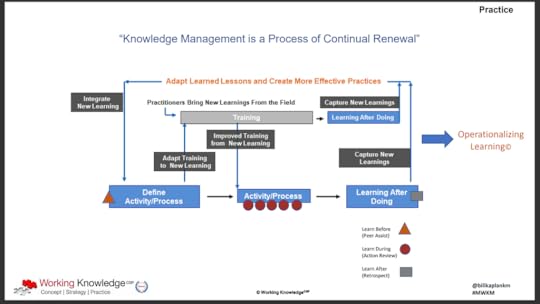 Operationalizing Learning
 Context puts a face on knowledge and lets you see inside
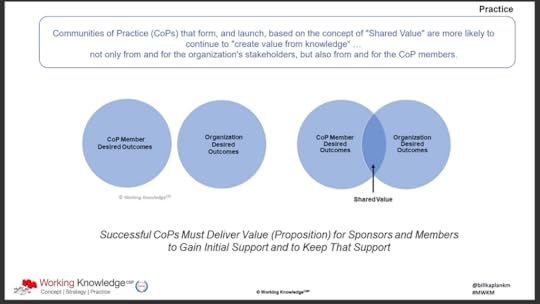 Successful Communities of PracticePodcastsKM Journey, KM Philosophy, the ISO Standard, and the Value of a KM Strategy — Santosh ShekarBecause You Need To Know — Edwin K. MorrisKnowledge Cast — Zach WahlKnowledge Cast — Making Knowledge Management Clickable — Bill interviews Zach Wahl and Joe Hilger of Enterprise KnowledgeVideosGlobal Knowledge Management Congress & Awards 2016https://medium.com/media/c88b393b0ec9af2f026bf8b933960574/hrefStriking a Balance Between KM Theory, Concepts and Practical Applicationhttps://medium.com/media/f9b8d39d1fb612021c53cfc0419fe833/hrefCommunity of Practice Success and the Concept of Shared Valuehttps://medium.com/media/cd1882258fd0c9174d66a45ca1e96eb8/hrefDifference between Knowledge Management and Knowledge Leadershiphttps://medium.com/media/d41367bf325ef92913843c605d236a42/hrefCharacteristics of Knowledge-Enabled High-Performing Organizationshttps://medium.com/media/50e7c427d006b95b3a5b2da317340b2c/hrefAgile Knowledge Managementhttps://medium.com/media/c7718183d2bb851148a1eeba59f33199/hrefHow Training Can Help Manage Organizational Knowledgehttps://medium.com/media/7f6e2947b9fc1cd8ca3479c680aa9f7b/hrefResolving the Issue of Workforce Turnover and Knowledge Losshttps://medium.com/media/fd7171108a46d6cbb0d439103705d508/hrefCompetencies of a Chief Knowledge Officerhttps://medium.com/media/7fe21a4b8365b262fe53407dd9d535d7/hrefMeasuring the Intangible Elements of Knowledgehttps://medium.com/media/b09ed082502631340c3b79583957d12e/hrefComparing KM in the private sector and in global developmenthttps://medium.com/media/4f66590019f07efc5530f3a9b3c18073/hrefStrategies for gaining a competitive edge through employee engagement and satisfactionhttps://medium.com/media/2166096bfe6344803c3e9939692a973f/hrefBooksLosing your minds: Capturing, Retaining and Leveraging Organizational KnowledgeTable of Contents, Summary, and ForewordReview by Mimi Dionne
 Gaining buy-in for KM edited by Laura SlaterChapter 3: Knowledge accountability drives knowledge management success
 [image error]