Q&A with Alice Fowler
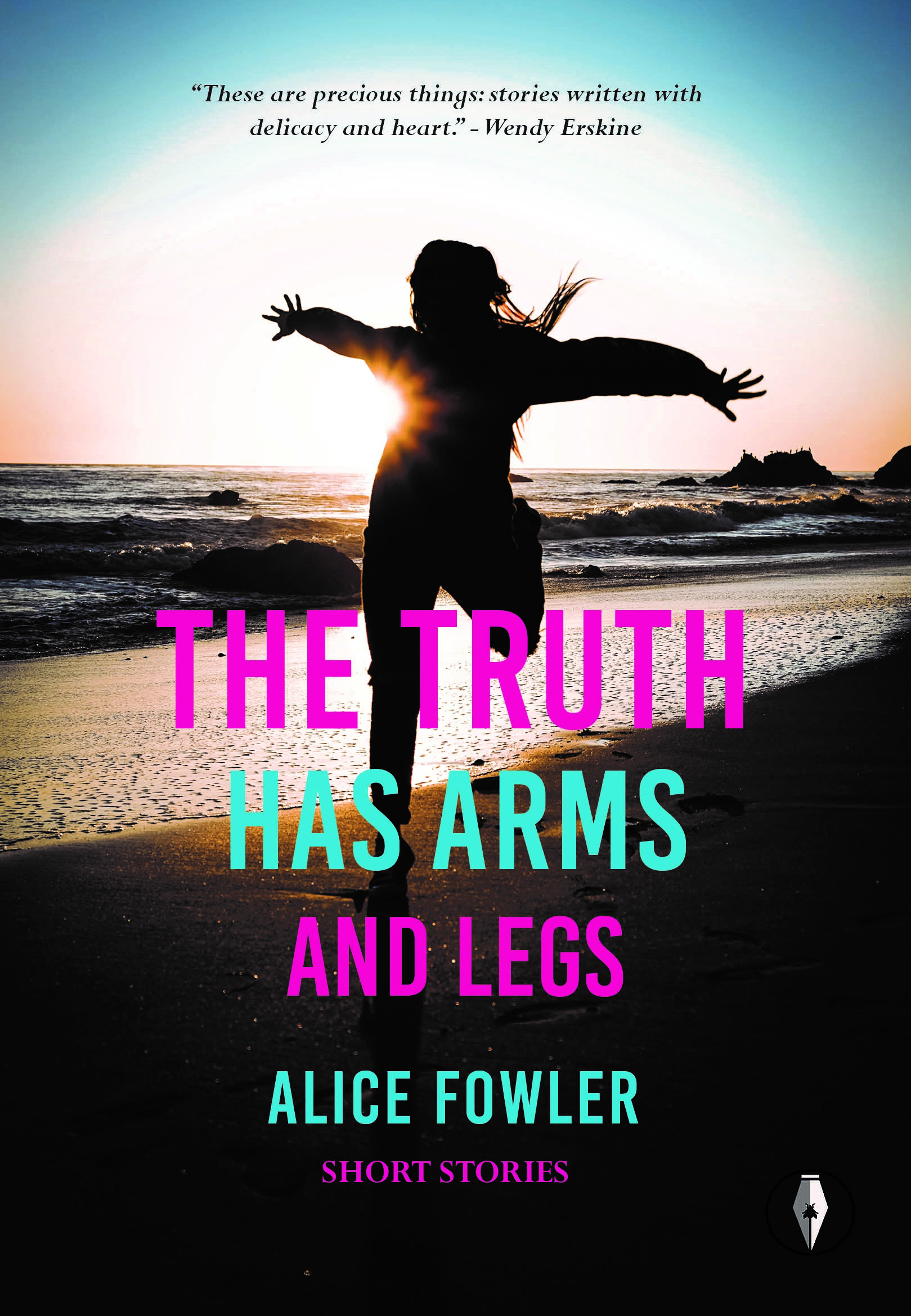
As with many of the authors I’ve interviewed on The Writer is a Lonely Hunter, Alice and I first met on social media. We both commented on Tweets from the Women Writers Network account, and as I became more aware of Alice through her online presence, it was a delight to realise we had things in common including projects coming to fruition in July. While you don’t need to know anything more about The Secret Life of Carolyn Russell, I’m pleased to introduce Alice and her outstanding short story collection, The Truth Has Arms and Legs which will be released by Fly On The Wall Press on Friday 14 July 2023.
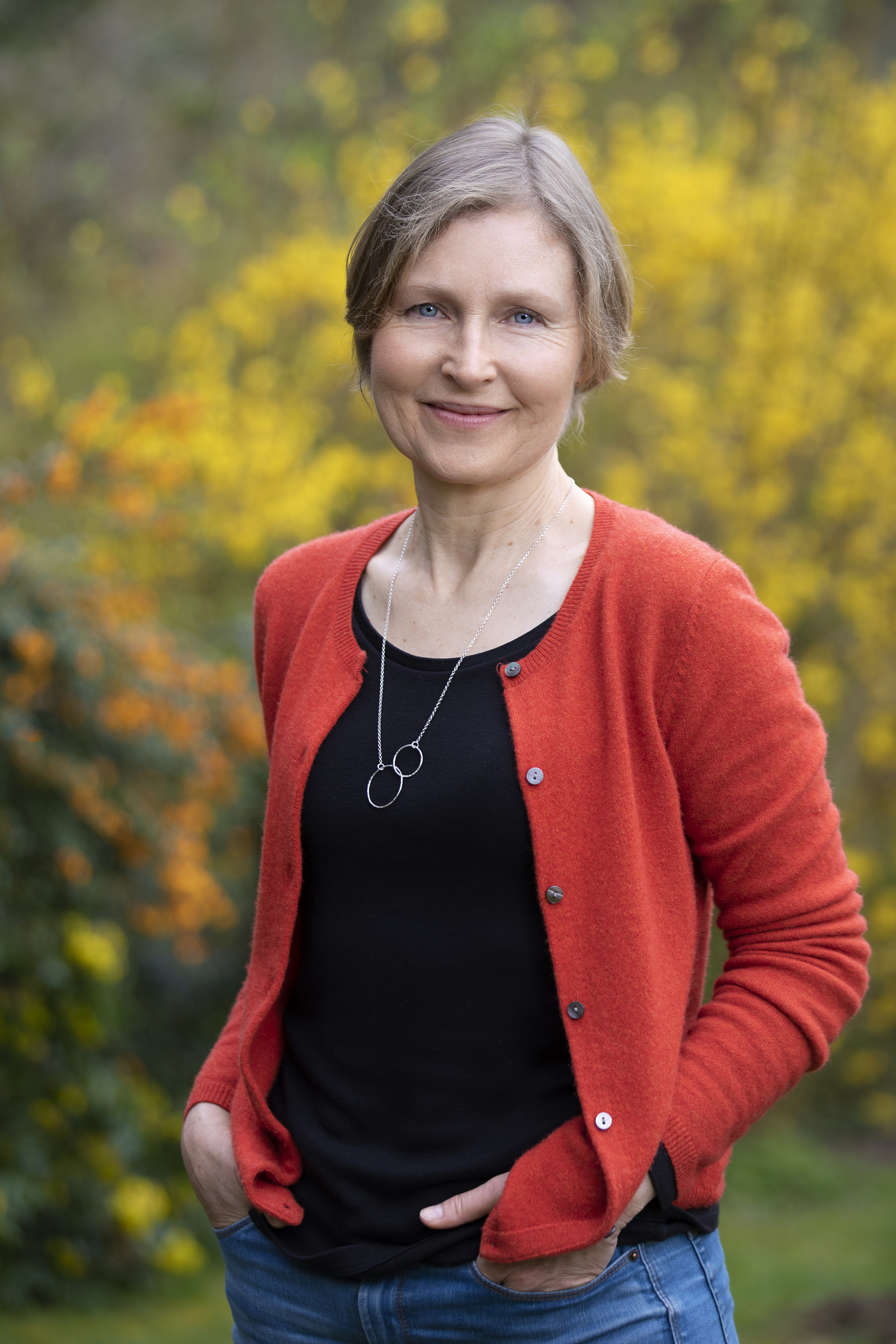
About Alice
Alice Fowler is an award-winning writer of short stories and longer fiction. She won the Historical Writers’ Association short story competition in 2020 and the Wells Festival of Literature short story competition in 2021. Other stories have been short- and long-listed in prizes and printed in anthologies. Her historical novel was longlisted for the 2021 Stylist Feminist Fiction Prize.
Alice has a degree in Human Sciences from Lady Margaret Hall, Oxford and worked as a national print journalist until 2006.
She lives in Surrey with her husband and teenage sons, and loves theatre, tennis and walking in the Surrey Hills.
About The Truth Has Arms And Legs
Delve into a world of change and reinvention. Where relationships are as delicate as turtle eggs, and just as easily smashed.
This poignant short story collection explores pivotal moments that transform our lives. Jenny, whose life is defined by small disasters, discovers a more generous version of herself. A traveller girl might just win her race and alter her life’s course. A widow, cut off in a riverside backwater, opens her heart to a stranger.
In this captivating collection, readers will be moved by the raw vulnerability of human connection, and the resilience that enables us to grow and thrive. In change, Alice Fowler’s characters find the ability to be truly free.
Q&A
The About Alice page on your website says you write short stories and longer fiction including work on a historical novel. What are the benefits of writing both short form and long pieces? Is your process for writing short fiction and longer fiction different?
Thanks so much for having me on your blog Gail! I particularly like this question as it really makes me think about my writing process. When I begin a short story, I often don’t know where it will end up. Or, if I do have an idea of the ending, I certainly don’t know how I’ll get there. I really enjoy that feeling of discovery. When it’s going well, writing can feel like painting: you add a dab of this colour, and a dab of that one, and then stand back to judge the overall effect.
For me, this approach works very well for short stories precisely because they’re short. You can throw all the plates up in the air and then (hopefully) catch them again. I write my stories from a place of pleasure, and I hope that readers sense that as they read.
With novel writing, this ‘pantser’ approach is riskier. I still like to write this way when I can, but it sometimes sends me off into blind alleys. Ideally when I begin a chapter in my novel I have more of plan – and stick to it! – while leaving enough unknown to make the writing process fun and interesting.
Your impressive debut collection includes stories from different periods to the present day and Covid. Was it your intention to span decades in your writing?
I didn’t set out to do that, although you’re right, the collection covers a time period from the Victorian era to the present. Several of the stories reflect my interest in recent social history. I spent quite a lot of time as a child with my grandparents and great grandmother. I remember hearing my grandparents talking about ‘the War’ in an almost wistful tone, presumably because they were newly married at the time. I also remember staring at old, black and white family photographs and feeling a visceral hunger to know more about these long-gone lives.
On your website, it also explains that your writing explores human nature, in all its magnificence, frailties and flaws. Which of the stories in your collection particularly represent this?
I’m really interested in the ways we, as humans, deceive ourselves. We’re continually telling and retelling our own internal stories, to justify our actions or make sense of our mistakes. So I suppose the flaw I’m thinking of most is failure to face the truth.
The story ‘Becoming Your Best You’, in which a woman resets the course of her life and marriage, takes place in a make-up artist’s chair. Although the setting is confined, the story travels very deeply through the woman’s life, to show the various ways she has closed in on herself rather than face uncomfortable truths. As the story unfolds, something happens to make that change. I had a lot of fun writing that story.
Several other stories also explore this idea of reinvention: what happens when characters let go of their old narratives and find courage to face change.
I love the title of your collection The Truth Has Arms And Legs and see it’s taken from a story you’ve included. How important are titles to you?
I’m really glad you like the title, thank you. That title came to me one day when I was out walking, for a story I’d written about the Holocaust. The story has a motif of limbs running through it: Auntie’s legs poking from the loft space, the limbs of paper dolls and later, very sadly, the piles of limbs at Auschwitz.
The title also suggests that the big, stirring events of history, that we learn about in books, are made up of many small, ‘ordinary’ lives that are too easily forgotten.
I certainly believe titles are important. Sometimes I think of one early on and stick to it. At other times – as in this case – the title comes later, after the story is written.
What was your rationale for including stories in the collection and the order of presentation?
I quite often enter stories for competitions, which I use as deadlines and sometimes almost as a ‘commission’, to force myself to write them down. Winning some competitions and being short- or long-listed in others has been very useful, as it encouraged me to think my stories might be worthy of publication.
In terms of how I ordered them – I’ll have to tell you a story. I don’t like driving but I do like travelling by train (reflected in the fact that two stories in the collection are set on trains, one a Victorian steam train, the other a tube train in London!) Working on trains suits me as it frees my head space. I remember sitting on a train one day and ordering the stories on the back of an envelope. The order came pretty instinctively, almost as a creative act. Working with Isabelle Kenyon at Fly On The Wall Press, we didn’t alter that original order. I feel it was the right one.
Many of your stories include a clever twist at the end. Do you have a clear idea of the ending when you start writing?
Endings are crucial to short stories. Ideally they should leave the reader wondering. The best short stories (I’m not including my own here, but am thinking of masters of the craft like Wendy Erskine) have an afterlife that lives on in the reader’s head. You’re left thinking: well, what happened then? What did she do next?
In terms of twists, that’s interesting, as I’m not really aware that my stories have them. As a reader I’m often not a fan of twists and as a writer I don’t aim for them either. Whatever happens at the end needs to be consistent with character, not something you feel the author has imposed for its own sake. Having said that, short stories definitely evoke some kind of change. That may well be revealed at the end.
What is next for you, Alice?
My next big challenge is getting my historical novel into a good enough state to submit to agents. I hope to reach that point fairly soon. After that I have an idea for a different kind of novel. Of course, I would love to write many more short stories. When a story’s going well, it’s the best feeling in the world.
Thank you, Alice, for joining us at The Writer is a Lonely Hunter.
Find out more about Alice here:
Author website: www.alicefowlerauthor.com
Twitter: @alicefwrites
Purchase link: https://www.flyonthewallpress.co.uk/product-page/the-truth-has-arms-and-legs