How to write a great first line for your novel
 Photo by Ugur Akdemir on Unsplash
Look up the syllabus of any writing course and you will see at least one lesson dedicated to “writing an opening hook” or “writing a killer first line.” It was certainly a point of focus during my degree program in college and my professors led me to believe that if I couldn’t write a good open sentence, no one would ever read my work.
Well, jokes on them because at least three people have read my work…
In a world of e-books, audiobooks, and serialized content, I think we can all agree that first lines aren’t as important as they used to be. I’ve personally never put down a book because the first line isn’t stellar. However, the opening line/hook/scene is the best chance to pull in your reader, and books with killer opening lines do stand out.
So, what goes into a great opening line? I’m not going to pretend like I have the secret recipe (after all, I’ve never published a novel), but I have read a lot of books in the genres I enjoy writing and noticed some themes across great opening lines.
Let’s start with one of the most famous opening lines in sci-fi literature, 1984:
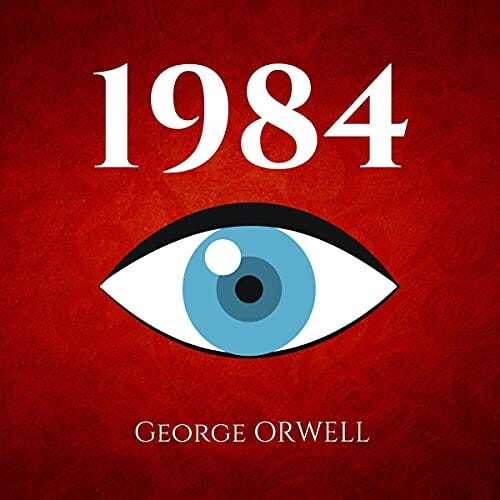 1984 by George Orwell
It was a bright cold day in April, and the clocks were striking thirteen.
The hook here is that it is offering us a unique detail. We know, from the first line, we aren’t in our normal world and the number thirteen is ominous in itself. This line does a lot and if you were the type of person to judge a book by its first line, I would wager you’d keep reading. You might even read three lines.
So, is the conclusion that the opening line needs to offer some unique detail about the world? Definitely not. There are plenty of examples out there of genre fiction not hooking you with a unique detail in the opening line. However, it does hit on an important rule: your opening line needs to do something. It can’t just be that “Bob didn’t like Mondays.” That may sound like a good opening line, but it’s too mundane and tells us nothing about the setting, Bob or the stakes of the story.
Looking at the opening lines of the fantasy and sci-fi novels I’ve read over the past few years, the ones that stand out to me do one (or more) of these four things:
Gives a very unique detailEstablishes a unique narrative style or character voiceStates the theme of the storyConveys the stakes of the situationWe’ve covered the first one with the 1984 example, but how is that different than the second? For that, let’s look at one of my favorite series, The First Law and the opening line from The Blade Itself:
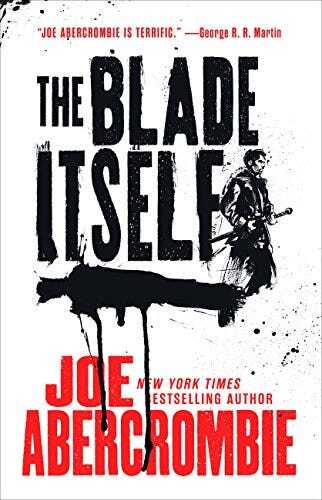 Cover of “The Blade Itself” by Joe Abercrombie
Logen plunged through the trees, bare feet slipping and sliding on the wet earth, the slush, the wet pine needles, breath rasping in his chest, blood thumping in his head.
We are thrust right into an action scene (Logen running away) and we get a glimpse at his unique voice. Logen has a lot of fragmented, poignant, and action-driven blocking. Read that sentence out loud and I think you can hear it. Here, we don’t get a unique detail about the setting, but we do get a glimpse at the narrative voice that will carry us through the book.
The last two things I notice in great opening lines might seem like the same thing, but they are quite different in execution. The first is “Stating the theme of the story.” This is all about the characters. What lesson do they need to learn in this story? What conflict keeps coming up for them?
A good example of this, I think, is the opening line of Mistborn:
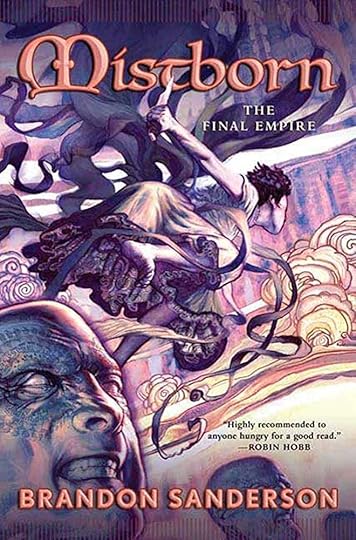 Cover for “The Final Empire” by Brandon Sanderson
Sometimes, I worry that I’m not the hero everyone thinks I am.
This is not the line right after the first chapter’s header, but is instead the epistolary entry that appears before every chapter and helps drive the narrative throughout this series. I just wanted to call that out because some will say the first line is “Ash fell from the sky,” which is also a good first line because it offers a unique detail, but it does not state the theme:
No one knows if what they are doing is truly right.
The last, “Conveying the stakes of the situation,” is about plot. Will the world end if our characters don’t do the right thing? Is someone’s life in jeopardy? Basically, what is the external outcome of the story (separate from the internal struggle of the characters)?
An example of this can be found in one of the greatest sci-fi/fantasy novels ever written: The Fifth Season by NK Jemisin:
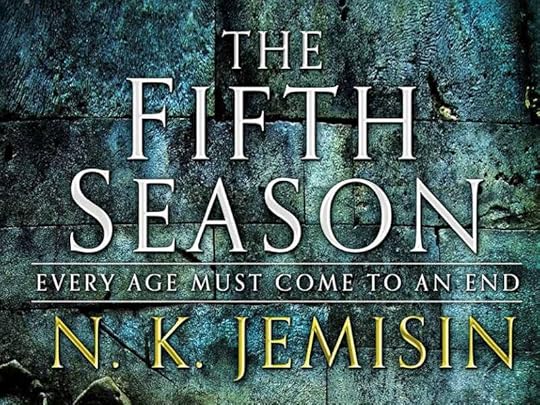
Let’s start with the end of the world, why don’t we? Get it over with and move on to more interesting things.
Here, we get a unique voice and we understand the stakes of the plot: the world is ending. Better yet, the narrator is telling us there is something even more interesting than that! If that doesn’t make you want to keep reading then… you probably didn’t make it this far in the article, so… whatever.
There are countless examples out there in fantasy and sci-fi, but these are the few that stand out to me. I’d love to hear some of your favorite lines! And if you are struggling at getting your opening just right, don’t fret: I’ve enjoyed plenty of books with weak opening lines too.
To close out, here are just a few more opening lines I’ve enjoyed from some pretty popular series.
The Scopuli had been taken eight days ago, and Julie Mao was finally ready to be shot.
Stakes set, unique detail
I would have lived in peace. But my enemies brought me war.
Stakes and theme
The palace still shook occasionally as the earth rumbled in memory, groaned as if it would deny what had happened.
Unique setting
By the time Professor Richard Lovell found his way through Canton’s narrow alleys to the faded address in his diary, the boy was the only one in the house left alive.
States the theme of the story (although it may not be immediately obvious if you haven’t read it and I don’t want to spoil it here).
[image error]