Hubert Saint-Onge: Profiles in Knowledge
This is the 83rd article in the Profiles in Knowledge series featuring thought leaders in knowledge management. Hubert Saint-Onge is the founder and Principal of SaintOnge Alliance, with expertise in knowledge management, strategy, organization capability and learning, performance enhancement through culture renewal, and leadership development.
He developed and refined a model called the Knowledge Assets Framework. This model strategically integrates business plans with branding, leadership, and people management to optimize the performance of an organization.
Hubert specializes in organizational performance, formulation and implementation of knowledge and learning strategies, development of communities of practice, strategic development of organizational capabilities, values alignment, development of leadership teams, leadership assessment and succession planning, leadership development, assessment of customer-perceived value, and development and implementation of branding strategy
The focus of this work is on strategic planning, organizational change and transformation, collaboration, knowledge sharing, capability building, and leadership development. He lives in Waterloo, Ontario, Canada.
I first heard Hubert speak in 2002 when he presented a webinar at HP: “Tying Knowledge to Customers.” I later invited him to present on the September 2008 SIKM Leaders Community call: “Collaborative Networks and the New Enterprise.”
Background ExperiencePrincipal, SaintOnge Alliance, 2003 — PresentSenior Vice President, Strategic Capabilities, Clarica, 1996–2002Vice President, Leadership and Organization Development, CIBC, 1990–1996EducationCarlton University (Ottawa) — MA, Political Science (International Affairs), 1972–1973Glendon Campus of York University — BA, Political Science, 1969–1972ProfilesAboutLinkedInFacebookRotman School of ManagementEntovationContentSaint-Onge Toolkit
For over a decade, Hubert Saint-Onge has been refining a model known as the Knowledge Assets Framework. This proven model is designed for the strategic integration of business plans with people management systems, using technology architecture and organizational infrastructure.
Hubert Saint-Onge is well-known in the international community of knowledge assets practitioners. He began his life work in knowledge management and has been lauded for his innovative thinking and leadership skills. He has a solid track record in leading large organizations (previously as Vice President of The Canadian Imperial Bank of Commerce and currently as Vice President of Strategic Capabilities at Clarica Insurance) to become knowledge-focused enterprises. Clarica recently ranked 17th among “Most Admired Knowledge Enterprises” in the world.
Mr. Saint-Onge has done seminal work in the area of corporate cultural values and customer relationships. He is a passionate and compelling presenter, and able to easily synthesize disparate perspectives into themes that will assist dialogue. Exposure to his ideas will permanently enlarge your awareness of how organizations function.
The Saint-Onge Toolkit is a compilation of his signature PPT slides enhanced by rich media (video clips from live presentations). Add to this Hubert’s lessons learned from the field and you have a comprehensive blueprint for a knowledge strategy implementation appropriate for any firm.
The Saint-Onge Toolkit is a support system for consultants, CKOs and individuals who wish to create a knowledge-focused strategy within organizations. The tools and methods included in the Toolkit are developed for conceptually agile people who are practical in their knowledge management approach.
Currently the Toolkit includes a Knowledge Management primer, Hubert Saint-Onge’s Knowledge Assets Framework, a module on Values mapping, an outline of a three-year Knowledge Strategy implementation process, a KM anthology, a library of video clips and white papers, a series of PowerPoint presentations with voice clips and a module on Customer Capital.
In the Saint-Onge Toolkit Knowledge Management Primer you will learn:
Why intangible assets must be managed differently from tangible assets.How knowledge management can reduce the gap between organizational capabilities and market demands.How to create new opportunities for your organization before the marketplace defines the need.The Knowledge Assets Framework: An Overview
Historically, every organization has had to manage its knowledge in one way or another. This module covers the systematic pursuit, capture and sharing of knowledge and how this process can leverage the effectiveness of individuals, teams and entire organizations.
The module is structured in three sections: The Knowledge Assets Framework, its subset The Knowledge Strategy, and a Case Study of a Knowledge Strategy success story.
Section I, The Knowledge Assets Framework, presents the wider context (which encompasses the Knowledge Strategy) and offers a new perspective on how the organization creates value through the management of its intangible assets. It also covers the measurement of intangible assets at the enterprise level, which complements the work of Karl Erik Sveiby (see The Sveiby Toolkit).
How does one identify the intangible assets of an enterprise?Why have intangible assets become important to the viability of an organization?How is the management of intangible assets different from the management of tangible assets?What are the implications of a Knowledge Assets Framework for measurement?Section II, The Knowledge Strategy, introduces the business rationale which justifies the investment required. The Knowledge Strategy addresses how to launch a coordinated approach to knowledge management in the organization. We will articulate a vision of what the end product might be for an organization once the key objectives of the Knowledge Strategy have been realized. A blueprint for constructing a Knowledge Strategy will be put forward (in the long version). It will describe the principles that should guide its implementation.
In Section III, Case Study, we will examine one project (the successful acquisition of 2nd Corporation) of a financial services organization, including the principles, the strategy, the orchestration, the business rationale (which justified the investment) and a methodology for measuring results.
Even though different organizations will have different questions, answers and approaches to implementing a Knowledge Strategy, the fundamental principles will remain the same and many of the dilemmas are common to all organizations. Examining real implementations like the Case Study will give us a fresh perspective on the issues and opportunities surrounding a Knowledge Strategy approach to creating value in our organizations.
In the end, an effective Knowledge Strategy should prove to be one of the key factors that will differentiate any organization in the marketplace!
Values: The story of value mapping at The Company
Hubert Saint-Onge developed this template for his own use, as he recounted the story of a successful values mapping project at The Company. As part of the Saint-Onge Toolkit, this template is available to any CEO or CKO for customization and is suitable is suitable for distribution as part of a corporate communications program on values mapping. It articulates in general terms the rationale for values work, covering:
organizational valuesknowledge capitalcontextapproachlanguage and labelingcore valuesdeploymentbrandingvalues as the lens of the organizationIts content is based on the following critical assumptions:
Your organization has conducted (or is in the progress of conducting) an in-depth review of the history of the firm through an analysis of documents dating back to the creation of the company;Your organization has already completed extensive work on individual and corporate values and its leaders are positioned to articulate those values;Your organization is actively working towards adopting a ‘customer-centric’ position in terms corporate strategy;Your organization has been actively working toward a definition of its brand and is currently developing a company-wide communications program on your brand;Your organization is actively creating new organizational structure.If these assumptions are satisfied, then appropriate substitutions at designated text placeholders should provide you with a 32-page booklet suitable for a company-wide communications program on values mapping.
Text placeholders will require appropriate text substitution for the following:
[Knowledge Capital Model] This requires specifying an appropriate model such as the Knowledge Assets Framework, Intangible Assets Monitor, Enterprise Capital Model, Balanced Scorecard etc.[A statement of your company’s corporate values][Describe your company’s key products and the strength of your brand. Describe any brand surveys conducted with your customers. Describe any learned outcomes from the dialogue with your customers.][Specify number of people and specific groups who responded to your internal values survey][Specify a specific corporate behavior attributable to a particular corporate value][Specify three core values of your company][Training initiative] Identify a training initiative that is also an implicitly reinforced core competence.[Describe recent strategic projects (such as key alliances) which will contribute to corporate growth]The Knowledge Assets Framework is a comprehensive model for leveraging knowledge for value creation, so that knowledge activities in an organization will have maximum impact. It comprises three pillars: knowledge architecture, technology infrastructure and culture.
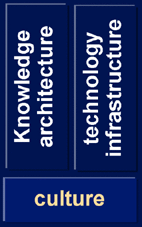
An integral part of the Knowledge Assets Framework is the articulation of a Knowledge Strategy. This is best developed through a set of multi-dimensional questions to be addressed by the CKO through dialogue with other members of the organization. The questions cover the areas of intangible asset management, business case development, the role of learning and implementation issues.
Knowledge value creation must become a key theme in an organization before implementation begins. A scale determining the ‘knowledge readiness’ of an organization, or its ‘absorptive capability’ will help to determine what pre-cursors need to be in place prior to implementation.
Do we understand the intangible assets of the enterprise?Why have intangible assets become important to the viability of our organization?How is the management of intangible assets different from that of tangible assets?What are the implications of this framework for measurement?Where does knowledge and learning fit in this framework?Developing the business case:
How does one formulate the business case for a knowledge strategy to be put in place?What are the key drivers?What are the possible key areas of business impact?Is knowledge a top-line or a bottom-line contributor to the business?To what extent is there a link between the knowledge strategy and objectives for business growth?Developing the Knowledge Strategy:
What do we consider to be the key components of a knowledge strategy? Does it imply a sequence or a “building block” approach?What is the relative emphasis placed on explicit versus tacit knowledge?To what extent is the strategy “technology” versus “culture” driven?Is the strategy based mostly on supporting more effective individual work or on supporting collaboration across individuals and teams?Is the main feed of knowledge internal or external to the organization?Is the strategy mostly oriented to a “knowledge as a stock” view (i.e., access and retrieval) or “knowledge as a flow” view (i.e., interaction, relationships and communities of practice)?To what extent is the strategy oriented to enhance “internal capability” as opposed to enhance the interface with customers/suppliers?Is our strategy best characterized as “grass root” or as “coordinated from the center”? What is the balance between creating the overall infrastructure and architecture and building discrete knowledge initiatives to serve specific business needs?Issues in Implementing the Knowledge Strategy:
Do the implementation plans explicitly take into account the “absorptive” capability of the organization?What role does the senior leadership of the organization play in increasing receptivity to the knowledge strategy?To what extent should the implementation approach take into account the main drivers/inhibitors for the implementation of the knowledge strategy in the organization?Knowledge Management Anthology
anthology
A collection of writings.A miscellany, assortment, or catalog, as of thoughts, comments, or ideas: “The Irish love their constitution for what it is: an anthology of the clerical-nationalist ideas of 1936” (Economist).[Medieval Greek anthologi, collection of epigrams, from Greek, flower gathering, from anthologein, to gather flowers : antho-, antho- + logos, a gathering (from legein, to gather. See leg- in Indo-European Roots).]
This KM anthology is a compilation of ideas organized into the following topics:
What is Knowledge?
The Business RationaleOrganizational KnowledgeTacit and ExplicitCharacteristicsOrganizational KnowledgeObtaining Knowledge
Capturing vs. CreatingThinking of Knowledge
Internal MarketAsset of KnowledgeIntangible KnowledgeStock or Flow?Barriers and PitfallsCase Studies
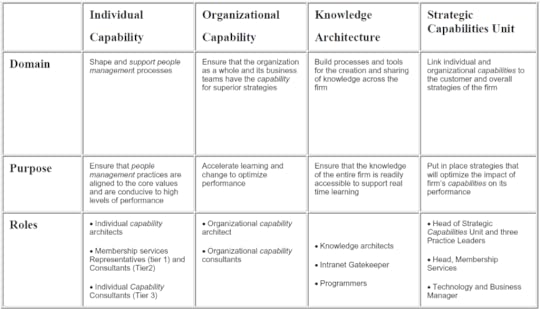
General MotorsDow ChemicalsSiemensU.S. ArmyAir LiquideCSCBuckman LabsHewlett-PackardScandiaChevron — TLOMcKinsey & Co.Booz Allen & HamiltonBritish PetroleumPostsTwitterLinkedIn PostsBlogHow to assess your organization’s capability to execute strategyIntegrating a new leader to a management teamCreating space for the exercise of judgmentBalancing “fast” and “slow” thinking for a more effective use of timeArticlesLinkedIn ArticlesKonverge and KnowTacit knowledge: the key to the strategic alignment of intellectual capitalHow Knowledge Management Adds Critical Value to Distribution Channel ManagementThe evolutionary organization: avoiding a Titanic Fate with Peter A.C. SmithManaging Toward InterdependenceThe Power of Shared KnowledgeStrategic Capabilities Shaping Human Resource Management within the Knowledge-Driven Enterprise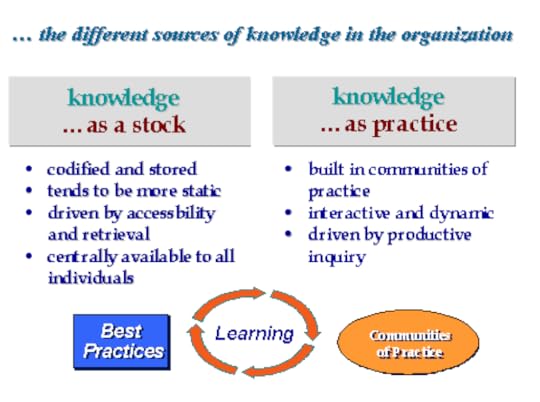
 Avoiding the Sudden-Death Syndrome
As vice president of people, knowledge, and strategies at Clarica insurance company, Hubert Saint-Onge is one of a new breed of chief knowledge officers charged with assessing and managing corporate knowledge capital. He spoke with Exec about the role of intellectual capital at the Waterloo, Ontario-based company, and the need for understanding and exploiting intangible assets.
Why is it important for companies to understand intellectual capital?
Intellectual capital is about looking at the firm from a new perspective. In the past we have viewed firms mostly from the tangible- and financial-assets perspective. But you can define the value of a company in three components: tangible assets, financial capital, and intangible assets. So we’re trying to see the firm from the perspective of those intangible assets, and see how those assets contribute to value. Obviously, you still need to manage the tangible assets to stay in business and operate. But we think that they are not what’s going to create competitive advantage for us.
We divide intangible assets — the intellectual capital — into three areas: human capital, which includes the capabilities of individuals to provide solutions to customers; structural capital, which is the capability of the organization to meet market requirements; and customer capital, which is the penetration, width, loyalty, and profitability of our franchise. What senior executives tend to say is that somewhere around 80 percent of the worth of the firm is in their intangible assets. But we have all been managing firms as if they are driven by tangible assets. Our accounting systems bias this allocation of attention in a big way, because the tangibles are the only thing that we are in fact measuring or monitoring or trending.
However, we’ve come to believe that strategic survival depends on how we manage the intangible assets of the firm. And if those intangible assets are actually being undermined, you are losing your competitive advantage in the marketplace. The problem is that, by and large, business leaders have not been actively managing their intangible assets. They are very actively managing the tangible assets, and very actively managing the financial assets. But one can say with confidence that they give only very partial attention to the intangible assets.
Do most executives appreciate this problem?
I think that most executives are becoming more attuned to this issue. I think most senior folks in private moments and times of candor will tell you that they understand that the rules of the game are changing — and that they are not all that clear on what the new rules are. But they do know that firms seem to be disappearing at an alarming rate — firms that they consider to be well-tooled, well-equipped, capable. We call this the sudden-death syndrome, and it comes in part from not knowing how to nurture, harness, and grow your intellectual capital.
When I sit down in front of CEOs and senior folks or speak in groups I will say, “OK, can you tell me whether right now you are building up or depleting your customer capital?” And if they are being candid they will tell you, a glimmer of fear in their eyes, that they don’t know. We haven’t put the mechanisms in place either to monitor or to understand what is happening to our intangible assets.
That means you can be losing customer capital by the ton and not even realize it. Think of a chart showing organizational capability, which is really based on structural capital, and market demands. Market demands are going up exponentially, so if your organizational capability is going up linearly, you’re falling behind in your ability to meet customers’ expectations. Even though your capability is increasing somewhat, you’re losing ground. But you can’t see that growing gap, because you can’t track how well you are building your intangible-based capability.
When that market-demand curve takes off and leaves you behind, it takes a while for the financial reality to catch up with the reality that’s first reflected in the intangible assets — the declining customer capital. So you might still have a great financial picture, but essentially you are undermining your future. That gives you the sudden-death syndrome — the kind of situation where the company celebrates its best year ever, and 18 months later it’s gone beyond hope of repair.
What is being done at The Mutual Group in the area of learning and intellectual capital?
At Mutual we are working to get a clear sense of our intangible assets, of the capabilities of our individuals and the organization as a whole. We are moving into Asia and expanding our presence in the United States, so we want to make sure we are leveraging our intangible assets to improve our competitive position in all our markets.
The CEO here at Mutual pointed out that one of the things that we are all doing is trying to measure intangible assets in the same way that we measure the tangible ones, and that is never going to work. So at this point we are putting in place an initial attempt to measure our intangible assets. We are in the very early stages of that. We are also putting in place a learning/knowledge system based on groupware. And we are doing a lot of work around customer knowledge — really tapping into what the firm knows in terms of customer knowledge.
We are finding that the firm knows more than it knows, if you will. We have some 2,000 agents out there in Canada alone that know a whole lot about our customers. But I don’t think we are as good as we need to be at capturing the insights that these people carry. So we are really working hard at building a customer-knowledge capability.
You recently wrote about the importance of “tacit knowledge” in the organization. What is that?
Knowledge is made up of explicit knowledge and tacit knowledge. Take a phone conversation, for example: The information going over the wires is the formal, explicit knowledge. But it’s the tacit knowledge of the speakers on both ends — what they know about the other person, the context of the information, and so forth — that allows them to decode that explicit knowledge and give it a richer meaning. Most managers think only of the explicit knowledge. So what is happening with a lot of IT systems is that companies are building an information mountain that people are buried in, rather than on top of, because they don’t have the tacit knowledge to interpret it.
How, in a practical sense, do you apply tacit knowledge to those mountains of information?
I think it calls for more of a cultural solution than a technical solution. One way is by building communities of knowledge where people work together in a relatively small group to derive and marshal insights from information. Each community should have some common purpose, an affinity of task or an affinity of occupation.
For instance, we might build a sales-management community by bringing together 20 or so of our good sales agents and letting them interact with those mountains of information through a shared database. They could exchange their respective learning and understanding, interact as a community around the information, build up tacit knowledge, and use it to apply that store of explicit knowledge and come up with new ideas or approaches.
You mentioned that The Mutual Group is in the early stages of creating measurements for its intangible assets. But the measurement of such assets is still a fairly inexact science, isn’t it?
It is very inexact and actually quite difficult. It is difficult to isolate variables. Also, the generation of intellectual capital manifests itself differently in each organization — meaning you can’t simply apply one company’s approach to another. So it’s not an easy proposition.
Let me give you an analogy of how we view this. In subatomic physics, scientists are finding that you can’t measure both the size and direction of a subatomic particle at the same time. I think that when we are dealing with intangible assets, we have to make the same kind of choice: Will we measure absolute volume, or will we measure the flow and the direction of the flow? I believe that we need to focus on that second area — measuring intangible assets in terms of trends, up or down, rather than absolute value.
We want to be able to determine ratios so that when we invest in our intangible assets, we can determine the impact that money will have. I’d like to be able to say, OK, if we spend $5 on our human and structural capital, it should bring $10 in financial capital. Right now, that’s what we do with financial capital: I know that if I increase my lending capital, I can add 12%, 14%, 16% to the bottom line. But if I invest that money in the development of our human capital, it’s just an expense in our current accounting format. So it creates a bias against the investment in intangible assets.
Are we at the point where we can come up with those ratios?
No, we’re certainly not there. We’re really in the first couple years of a 10-year ramp. But that’s where we want to be, and that’s where we need to be.
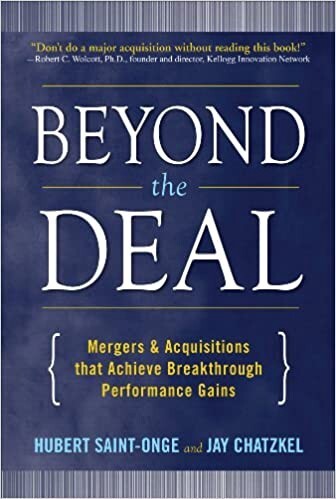
Articles by OthersA conversation with Hubert Saint‐Onge by Jay ChatzkelPower Of Shared Knowledge by Jack VinsonConductive Organizations are always on the move by Jack VinsonBlogs are knowledge management tools by Jack VinsonHubert’s error by Dave SnowdenIs your organization conductive? by Bertrand DuperrinSuccessful Knowledge Management Implementation by Dan KirschCollaborative Networks & The New Enterprise by Eric MackThe Nine Dilemmas Leaders Face by Thomas StewartBroad-based leadership vs. high-visibility leaders.Independence vs. interdependence.Long term vs. short term.Creativity vs. discipline.Trust vs. change.Bureaucracy busting vs. economies of scale.People vs. productivity.Leadership vs. capability.Revenue growth vs. cost containment.CommunitiesSIKM Leaders Community: September 2008 Call: Hubert Saint-Onge — Collaborative Networks and the New EnterpriseAssociation of Knowledgework (AOK)Conflicting Views on Training and CoPsWhat Worked, Didn’t Work at ClaricaPresentationsCommunities of Practice Slide for AOK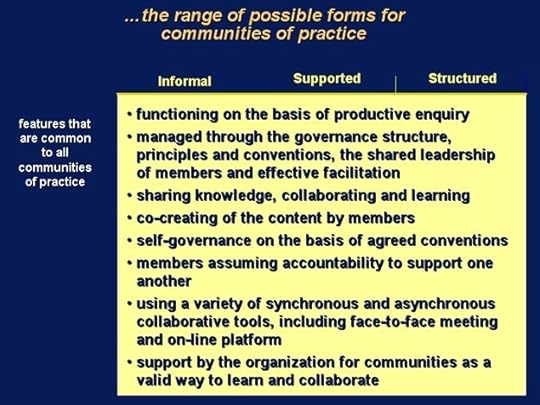 How to re-ignite a sense of community in companies to increase collaboration and agilityKMWorld & Intranets2008 A205: Integration Strategies2007 A103: Collaborative Networks & The New Enterprise2005 Keynote: Building Capability in the Conductive Organization2003 Keynote: Knowledge, Learning & ProductivityPodcastsAre you being a thought partner? A Disruptive ConversationOpen to InfluenceVideosYouTubeRekindle CommunityIndividual learningNoble causeTrust advantageDynamic resourcingTrust innovationRadical opennessEmpowering individualsBegin with a level of analysis at an organization-wide levelUnderstanding the Importance of ValuesThe Inner Game of LeadershipValues Mapping in an OrganizationPrescribing a Careful, Measured Approach to Identifying ValuesCommitment vs. Loyalty, the new employment contract explainedShared values form the foundation for innovation and organizational agilityEmpowerment and the evolution of valuesValues Clarification and the Individual. What’s in it for me?The Next Step: Building External Networks of Value CreationOrganizational Values and Brand Identity: Is there a Connection?Measuring Up: The Metrics of Brand Identity and Shared ValuesBooksBeyond the Deal: A Revolutionary Framework for Successful Mergers & Acquisitions That Achieve Breakthrough Performance Gains with Jay Chatzkel
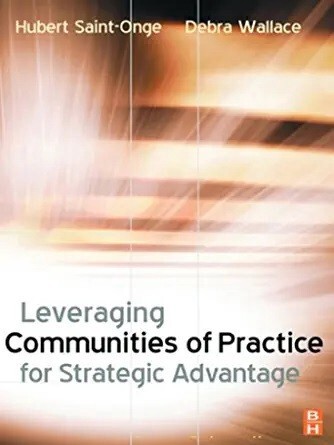
 Leveraging Communities of Practice for Strategic Advantage with Debra WallaceChapter 11 Communities as Catalysts for Change
 The Conductive Organization: Building Beyond Sustainability with Charles Armstrong
 Breakthrough Performance for Mergers and Acquisitions in the Knowledge Era: The Knowledge Approach to Mergers and Acquisitions with Jay Chatzkel
 Book ChaptersPerformance Through Learning: Knowledge Management In Practice — by Kurt April, Carol Gorelick, and Nick Milton — Chapter 13 (with Debra Wallace): Generating Capabilities in Communities of Practice: The Clarica StoryKnowledge and Strategy edited by Michael Zack — Chapter 12: Tacit Knowledge: The Key to the Strategic Alignment of Intellectual CapitalKnowledge Capital: How Knowledge-Based Enterprises Really Get Built by Jay Chatzkel — Chapter 14: Creating and Implementing a Knowledge StrategyNext Generation Knowledge Management: Transforming theory into practice edited by Jerry Ash — Chapter 14 (with Debra Wallace): Communities of Practice Supplant Training[image error]