10 Types of Content Writers and When to Use Them

There are days when writing for the web can feel like shouting into the void. I craft a story to be published and wonder who is actually reading it. The reality is that no writer wants to create copy that nobody reads.
We research what people are sharing on social media. We dive into organic search analytics to figure out how people are searching for the topics we’re covering and how search engines are providing them answers. We read content on similar topics to see what other writers are doing and make sure we can differentiate our content.
Every piece of content I create on a given day begins with strategy. Usually, it’s a combination of collaborative discussions with clients and independent research, but regardless of the methods, the goal is the same: Tell a story that’s engaging for the reader, valuable for the client and strategically designed to get noticed on the web.
In a lot of ways, a professional content writer is a well-rounded content specialist, with strengths in multiple content marketing disciplines. That’s how great content is born: mapping SEO, social media, technical research and more to the core task of putting pen to paper.
Relationship with SEOUltimately, as a web writer, my relationship with SEO is extremely practical. I’ve been trained to identify effective keywords and do some big-picture strategic thinking about how terms are best used in a content marketing strategy. However, it’s important to prioritize developing strategies to build content around those terms without overtly cramming in key terms or buzzwords.
Marrying SEO with content writing is very much like threading a needle. It requires a delicate, intentional touch. Plus, a content writer job doesn’t end when a piece is published. There’s also social media or email promotion to be factored in, as well as the larger marketing performance itself. A blog, for instance, can live on the internet forever and can be circulated through email and across social media. This means I have to consider how my work will be featured, optimized and talked about online.
The post-publication takeaways (Did it generate social media buzz? Did it help drive open rates or time on page?) are then cycled into my next piece for that client. Every post is a learning experience.
Whereas a purely technical writer or a content mill operates in a vacuum, churning out content with little insight into end goals, I’m tasked with putting a lot of pieces together. I have to anticipate future blog performance, understand niche lingo, be proficient in distribution channels and optimize for search engines. The writing is but one part of being a digital content writer.
10 Types of Content Writers and When to Use Them

What types of freelance content writers do you need? The answer to that question depends on the business goals for the content you want to create. Before you begin hiring freelance talent, define the purpose and goal for each assignment to ensure you attract candidates with the skill sets to match the type of writing required.
You have limited time and resources to see your content vision through. You won the budget battle and now you must assemble a powerful team. You have stories to tell, a brand reputation to protect, sales goals to reach, and a rebrand to finish. And thankfully, you can find a specialized writer to support all of these grand efforts.
What does a content writer do?A content writer does many things because there are many types of freelance writing niches. Every writer specializes in different areas, bringing unique skills and experiences to the table. But you will also find plenty of overlap across the content types each writer can handle.

A blog writer knows how to turn complex topics into warm conversations. They are devoted to making engaging content that performs well. For a single article, they will work four hours on the draft and consider six blog titles along the way. Eventually, the blog writer will settle on a title with the highest click-through potential.
Blog writers use their inquisitive powers to hunt down and source data points that strengthen blog content. If they don’t understand a topic, they know content can’t be faked so they reach out to subject matter experts for support. They also collaborate with influencers and experts to produce interviews or add contributor quotes that bring more credibility to content.
Since a published blog post is ultimately another page on your website, blog writers also tend to have SEO expertise. If scoped into the project, some blog writers will perform keyword research and optimize the content. Others will take direction from your overarching SEO strategy. A skilled blog writer always integrates keyword phrases appropriately without sacrificing the integrity of the content.
 2. Brand journalist
A brand journalist is a natural-born storyteller and they don’t rest until they find their story. These writers are more extroverted by trade and they feed off the energy of their interview subjects. They will send cold outreach emails and follow up with phone calls to see the story through.
Brand journalists make excellent brand ambassadors. Whether they are writing press releases or customer stories, they will show your brand in a positive light. They understand the fragility of a brand’s reputation, so it is in their nature to regularly fact-check data and quotes before anything is published.
A brand journalist excels at long-form content and human interest pieces that are pitched to third-parties for media or publication placements. They also have a knack for writing highly compelling headlines that drive click-throughs and shares.
 3. Copywriter
A copywriter is agile, able to switch their creative brain fluidly between an impressive range of topics and projects. They get how to connect blocks of information so the reader finds ease in even the most complex digital journey.
They simultaneously speak the language of your brand and your customer. From product descriptions to website pages, copywriters cobble together experiences with every sentence. Copywriters are curious and analytical, so expect to provide details and data to help them craft messaging strategically.
 4. Ghostwriter
A ghostwriter is a chameleon, so skilled at their writing craft that they shapeshift into the dedicated voice that belongs to both brands and people. Ghostwriters fill content resource gaps when your organization does not have the bandwidth, the skills, the motivation — or all of the above.
This writer churns out articles for various team members and thought leadership pieces for your CEO. They take on the ebooks and white papers your team has been unable to produce all year due to time constraints. A ghostwriter has a good bedside manner as they are used to asking people in-depth personal and professional questions to capture expertise, stories, and tone.
 5. Technical writer
A technical writer is frequently confused with a tech writer, but their skills are distinctly different. A technical writer is an ace at making highly technical content easier for others to understand. They provide in-depth explanations of technology — how to use it, how to build it, the processes, the components, the inner workings, and the mechanics.
A tech writer doesn’t get into the nitty-gritty of product specs and details. Instead, they write about technology in a broader sense and usually the application of technology. To see tech writers in their natural habitat, go to TechCrunch.
Tips and Best Practices for Content WritingUse Previous Content as a TemplateWhen developing outlines for new content pieces, use your old, well-performing ones as a guide. Review the sections for old content to see if any of them apply to your new topic. For example, with our knowledge base articles, we often use similar sections in each one, like:
Use Your Brand VoiceIt’s important to keep a consistent brand voice throughout all your content. Sure, some pieces may tempt you to be funny, maybe even crass, to get some quick attention. But if that’s not your typical brand voice, it’s going to come across as inauthentic to your audience. Rather than trying to win over your audience by being something you’re not, be honest with them and be yourself. Your company has its own set of values and a brand voice they know and expect. Use it.
Keep It ShortEven with long-form content, it’s important to keep your sentences and paragraphs short. Try to keep sentences under 20 words and paragraphs at 100 words or fewer. This helps with scannability for your content, making it easy for readers to skim what you’ve written and find exactly what they’re looking for. It’s also helpful for readability, making your content accessible to a larger audience, and for SEO.
Tell a StoryStorytelling can benefit even nonfiction content. Sharing examples, personal experiences, or a larger perspective than just the facts helps draw readers and viewers into the content. It keeps them interested and engaged to follow it from beginning to end. Learning how to hone your storytelling skills may not only make your pieces easier to read and more engaging but also make them easier to write.
Preview Your ContentIf possible, preview your content before publishing on any platform. Previewing lets you see how your content looks to the public when it’s live online. Conducting one can help you see if your font choice and colors are readable, how text and images appear on screen, and how the content changes based on screen resolution. Test your content in multiple web browsers, if applicable, and on different screen sizes to make sure it’s optimized for both desktop and mobile viewing.
Repurpose Old ContentNot every piece of content has to come from scratch. You can repurpose old content in new formats to engage your audience in unique ways. For example, video content and podcasts are popular in marketing today. Consider taking an old blog post, such as one about clickbait, and discussing it on an episode of a podcast. This allows you to better distribute your resources, using previous research and content planning to produce more pieces on topics relevant to your audience.
FAQs About Content WritingAs you consider whether to include content writing in your marketing plan, you may have some specific questions regarding development and implementation. Here are some of the most frequently asked questions about the field:
Does Content Marketing Really Work?Yes, content marketing really works. According to a study by the Content Marketing Institute (CMI), 91% of B2B marketers use content marketing to reach customers. That’s because this strategy helps companies meet some of their most desired marketing goals, such as brand awareness, increasing sales, lead generation, and increasing engagement. When you curate your content in a way that appeals to your target audience, you have the greatest chance for success.
Does Content Marketing Decrease Sales?No, content marketing doesn’t put you at risk of losing sales. Some people new to content marketing may wonder if educating your audience eliminates the need for your products or services, but it doesn’t. In fact, B2B marketers with blogs report gaining about 67% more leads than companies that don’t. There are many reasons to educate your audience about your brand, such as:
How Can I Grow My Brand’s Presence Online More Efficiently?Brands can grow their online presence in several ways. Content writing helps establish your brand as an industry authority through posts, visuals, and other content. The more content you create, the stronger your business presence becomes, but only if that content is high quality. Developing content shows your audience that you’re interested in helping and teaching them besides making sales. Think to brand, not to convert. Developing trust comes before sales. Focus on the buyer’s perception of your brand by describing the benefits of your products or services rather than telling them what you want them to do.
Advertising original content on social media can help your content gain momentum and reach a larger audience. Other options include things like guest posting and content syndication. Look for options where you can get your content out to larger audiences in a reputable way. Avoid spammy tactics like clickbait or making promises you don’t intend to keep. This can damage your brand reputation and ultimately your sales and conversions over time.
How Long Does It Take for Content Marketing to Work?Content marketing and other organic strategies, like SEO, can take more than just a few days to bring results. First, Google and other search engines must index your unique content. Next, work to get backlinks from authoritative websites. Studies and experts say small and medium-sized businesses should give their content marketing strategy between six and nine months to produce results.
How Often Should You Blog?According to HubSpot, it’s best to develop a publishing schedule that works best for your writers and your audience. For small companies or teams, this may amount to publishing at least three blog posts a week. For larger organizations, you may publish up to five times a week to help your traffic gain momentum.
Typically, publishing at least once per week shows that your company is active in the online community and discussing relevant topics. Above all, you want to make sure your posts are the best quality and the most informative that they can be for your audience. Publishing 300 poorly written posts isn’t as effective as publishing 10 high-quality ones.
How Do I Measure the Value of Content?Once you’ve invested time and money into creating content, it’s natural to wonder if it’s really that valuable. There are a few ways you should know if you’re getting the most from your hard work:
Should I Outsource My Content Writing?Outsourcing content means hiring a company, freelancer, or contractor to create pieces for your brand. While each company’s situation is different, there are a few things to consider when trying to decide if outsourcing is right for you. These include:
If you answered “no” to any of those questions, it might be time to outsource your work. Start a call with CopyPress to learn about our content creation solutions for marketing teams, agencies, and individual brands alike.
The better you understand the discipline of content writing and its process, the easier it is to create engaging, high-quality pieces your audience loves. This can increase your organic traffic, the number of qualified leads you receive, and your company revenue.
Source:
https://www.brafton.com/blog/content-writing/what-its-really-like-to-be-a-web-content-writer-and-what-that-means-for-your-business/
https://www.clearvoice.com/blog/10-types-content-writers-use/
https://www.copypress.com/kb/copy/all-about-content-writing/
10 Types of Content Writers and When to Use Them

1.1 Content Marketing Ltd. (‘Content.Marketing’) provides its writers (‘Writers’) with the opportunity for remuneration to create content through the Content.Marketing platform on topics specified by its clients (‘Clients’).
1.2 This Writer Agreement contains the entire agreement between the Writer and Content.Marketing and supersedes any prior written or oral agreements, representations or understandings between the Writer and Content.Marketing.
1.3 Any alterations or alternative conditions belonging to the Writer are only binding if they have been confirmed in writing by Content.Marketing. Contradictory conditions belonging to the Writer only apply if Content.Marketing has given its express written consent to them in advance.
1.4 Content.Marketing cannot guarantee that the Writer will receive appropriate projects through the Content.Marketing platform. Content.Marketing is not obliged to procure projects for the Writer.
2. Registration2.1 Writers must apply to open an account with Content.Marketing. The Writer sign up form provided at Content.Marketing must be completed for this purpose. By completing the Writer sign up form, the Writer accepts this Writer Agreement. The Writer confirms that all of the details provided are correct, complete and truthful. The Writer undertakes to keep their details up to date. Writers are provided with an individual Writer ID for this purpose.
2.2 To complete the Writer sign up form, the Writer must upload a sample of their writing (500 words or more) on a subject of their choice. Content.Marketing will review the writing sample and entire application. If approved by Content.Marketing, the Writer account is activated. The Writer will be awarded a specific quality level (star rating) at the discretion of Content.Marketing. There is no right to access to the services of Content.Marketing.
2.3 The Writer herewith grants Content.Marketing non-exclusive licence to use the sample content as part of the sign up process without charge. Content.Marketing herewith accepts this granting of rights. Unless otherwise agreed in individual cases, Content.Marketing shall use this sample content exclusively for the sign up procedure and not for publication or sale to Clients.
2.4 Content.Marketing has the right to review the quality level of the Writer at any time and to alter that quality level. Changes to quality levels are at the discretion of Content.Marketing. In this context, Content.Marketing shall consider, among other things, the quality of the Writer’s content since the last review of their quality level and the Writer’s working practices (e.g. observance of deadlines, number of required revisions, cancellations of projects).
2.6 The Writer may view and edit the access details and other user information that is provided in the course of sign up (address, contact information, etc.) at any time in their writer account.
2.8 Each Writer is responsible for maintaining the secrecy of the writer information (login, password, writer ID). Should the writer information fall into the hands of unauthorized third parties, Content.Marketing must be notified immediately. In the event of any disclosure to unauthorized third parties, Content.Marketing is entitled to take all steps that it considers necessary to protect the service, its Clients and/or its Writers including by, without limitation, blocking access to the account in question.
3. Open Project and Direct Projects3.1 At Content.Marketing, Clients have the opportunity to place projects for composition by specific writers (‘Direct Project’) or to allow Content.Marketing to select the writer (‘Open Project’). The Client’s project includes, in addition to a description of the content required, specification of the title of the content, the subject area, the number of words (minimum and maximum) and the deadline date.
3.2 In the case of a Direct Project, Content.Marketing offers the Writer requested the opportunity to complete the project through the Content.Marketing platform. Content.Marketing may withdraw the project at any time, up to the point of its acceptance by the Writer. To clarify, even in the case of a Direct Project, no direct contract comes about between the Client and the Writer.
3.3 In the case of Open Projects, Content.Marketing offers one or more Writers it selects at its discretion the opportunity to take on the project. Content.Marketing may withdraw the project at any time, up to the point of its acceptance by a Writer. If a project is offered to multiple writers, the Writer who is first to accept the offer, shall be awarded the project.
4. Submission of Content, Prompt Delivery4.1 Following acceptance of a project, the Writer shall write the content in accordance with the Specifications of the Client. The Writer may enter the content in a text box (‘Editor’) in the ‘Submit’ content panel of the ‘Project Management’ tab of their writer account. The content will be submitted to Content.Marketing through the Writer’s account in every case.
10 Types of Content Writers and When to Use Them
What types of freelance content writers do you need? The answer to that question depends on the business goals for the content you want to create. Before you begin hiring freelance talent, define the purpose and goal for each assignment to ensure you attract candidates with the skill sets to match the type of writing required.
You have limited time and resources to see your content vision through. You won the budget battle and now you must assemble a powerful team. You have stories to tell, a brand reputation to protect, sales goals to reach, and a rebrand to finish. And thankfully, you can find a specialized writer to support all of these grand efforts.
What does a content writer do?A content writer does many things because there are many types of freelance writing niches. Every writer specializes in different areas, bringing unique skills and experiences to the table. But you will also find plenty of overlap across the content types each writer can handle.
A blog writer knows how to turn complex topics into warm conversations. They are devoted to making engaging content that performs well. For a single article, they will work four hours on the draft and consider six blog titles along the way. Eventually, the blog writer will settle on a title with the highest click-through potential.
Blog writers use their inquisitive powers to hunt down and source data points that strengthen blog content. If they don’t understand a topic, they know content can’t be faked so they reach out to subject matter experts for support. They also collaborate with influencers and experts to produce interviews or add contributor quotes that bring more credibility to content.
Since a published blog post is ultimately another page on your website, blog writers also tend to have SEO expertise. If scoped into the project, some blog writers will perform keyword research and optimize the content. Others will take direction from your overarching SEO strategy. A skilled blog writer always integrates keyword phrases appropriately without sacrificing the integrity of the content.
2. Brand journalistA brand journalist is a natural-born storyteller and they don’t rest until they find their story. These writers are more extroverted by trade and they feed off the energy of their interview subjects. They will send cold outreach emails and follow up with phone calls to see the story through.
Brand journalists make excellent brand ambassadors. Whether they are writing press releases or customer stories, they will show your brand in a positive light. They understand the fragility of a brand’s reputation, so it is in their nature to regularly fact-check data and quotes before anything is published.
A brand journalist excels at long-form content and human interest pieces that are pitched to third-parties for media or publication placements. They also have a knack for writing highly compelling headlines that drive click-throughs and shares.
3. CopywriterA copywriter is agile, able to switch their creative brain fluidly between an impressive range of topics and projects. They get how to connect blocks of information so the reader finds ease in even the most complex digital journey.
They simultaneously speak the language of your brand and your customer. From product descriptions to website pages, copywriters cobble together experiences with every sentence. Copywriters are curious and analytical, so expect to provide details and data to help them craft messaging strategically.
4. GhostwriterA ghostwriter is a chameleon, so skilled at their writing craft that they shapeshift into the dedicated voice that belongs to both brands and people. Ghostwriters fill content resource gaps when your organization does not have the bandwidth, the skills, the motivation — or all of the above.
This writer churns out articles for various team members and thought leadership pieces for your CEO. They take on the ebooks and white papers your team has been unable to produce all year due to time constraints. A ghostwriter has a good bedside manner as they are used to asking people in-depth personal and professional questions to capture expertise, stories, and tone.
5. Technical writerA technical writer is frequently confused with a tech writer, but their skills are distinctly different. A technical writer is an ace at making highly technical content easier for others to understand. They provide in-depth explanations of technology — how to use it, how to build it, the processes, the components, the inner workings, and the mechanics.
A tech writer doesn’t get into the nitty-gritty of product specs and details. Instead, they write about technology in a broader sense and usually the application of technology. To see tech writers in their natural habitat, go to TechCrunch.
How to Write Content for Email Marketing

Think invested and engaged subscribers. More conversions. More sales. More trust. It’s all possible with good email. (That explains why email earns a GIANT return on investment. For every 800 spent on email marketing, expect to earn about $55 back.)
Not to mention, it’s one of the most popular types of marketing out there. It’s not only effective — it’s also an easy, accessible, personal way to stay connected to your growing audience.
Email marketing is different than social media. It’s more personal, more targeted, and, as a result, higher-stakes. With this in mind, consider these practical tips for how to write content for email marketing.
1. Write a Good Subject LineThe subject line is the gatekeeper in the world of email marketing. Write a good one and you’ll see a satisfying open rate. Write a poor one and you’ll suffer the sound of crickets in the background of your campaign.
While there are dozens of great ways to write a compelling subject line, the best ones all have a few things in common: They revolve around grabbing a reader’s interest and keeping it. With this in mind, follow all of the standard rules that come with writing any great email subject line: include action words; address the reader directly; make it unique, succinct, and short; and differentiate it from anything else they’ll see that day.
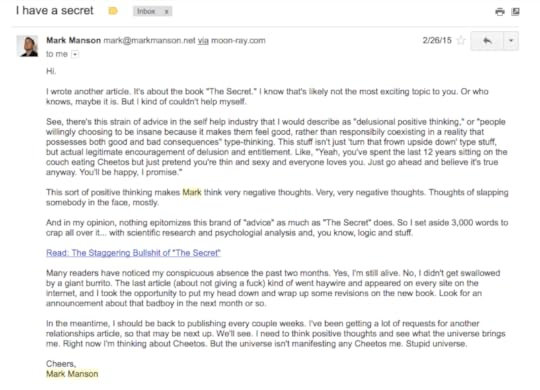
Personalized email copy performs better than general email copy. With this in mind, input your customer’s name into your email subject lines and be sure to target the body of your email so that it speaks directly to your audience and nobody else’s.
While it can be easy to worry that your emails will be lost in the fray, the only way to ensure that they won’t be overlooked is to personalize them fully and differentiate them from anything else out there.
3. Make Your Emails Clear First, Catchy SecondCatchy emails are great, but only if they’re also clear enough to make your audience want to click on them. With this in mind, focus on making your emails clear and descriptive first, catchy second.
4. Ensure Your Subject Line Relates to Your CopyEven if your subject line is clear and catchy, it’s all for naught if it doesn’t also align with your body copy. Keep in mind that delivering what you promise is critical in the world of email, and only people who can truly do this succeed in the long run.
With this in mind, keep your subject text in-line with your body copy. In addition to providing better value for readers, this will also go a long way toward enhancing your reputation as a company and making sure that customers want to click your material in the days to come.
5. Keep It RelevantRelevance is critical for a good email, so be sure to tie the content of your email in with something that will ground it as relevant and in-demand. Current events work well, as does some personal detail about the audience. By showcasing your relevance, you stand a better chance of grabbing the reader’s attention and keeping it.
6. Write Emails in the Second PersonSecond person is the best voice for email because its personal and unique. When you reach out and speak directly to your customers, it’s easier for them to relate to the voice and content of your email.
This, in turn, also makes it easier for them to connect with your emails, and enhances the likelihood that they’ll open your emails in the future – which is a good thing for everyone involved.
7. Showcase Benefits Over FeaturesIf you’re making an offer via email, be sure to showcase the benefits of said offer rather than the features. In addition to being more valuable for readers, this also helps present a realistic picture of your product, which goes a long way toward helping people understand what to expect from it.
While most people focus on the features in an attempt to sell a product, focusing on the benefits can go much further toward helping the reader understand what’s unique and special about the product.
8. Keep It Short but SweetEmail marketing is not the place to get long-winded and verbose. Instead, keep your emails as short and to-the-point as possible. This enhances the likelihood that you’ll keep your audience’s interest and also serves to keep you on track and on topic throughout the duration of your email campaign.
9. Let Your Personality Shine ThroughYour personality should show through in the emails you write, and it will benefit your company and your personal brand if you follow this tip. While you always want to be professional, allowing your personality to shine through your email copy is an effective way to differentiate yourself from the crowd.
10. Don’t SpamSpamming your readers is the cardinal sin of email marketing. With this in mind, only send out posts when you have things to say and don’t ever, ever send out an email just to send out an email. Customers are quick to unsubscribe, and you could be landing yourself in hot water as a result.
Resource:
https://content.marketing/writer-agreement
https://www.clearvoice.com/blog/10-types-content-writers-use/
https://expresswriters.com/how-to-write-content-for-email-marketing/