
Interesting correlation between language and age!
Factor #1
Since these are the underlying rules for pretty much everything you say in Korean, unless you are going to just stick to formal language forever, you will want to eventually know the other person’s age. (And of course, age difference affects many other aspects of two people’s relationship, but let’s just focus on linguistic elements here.)
Factor #2
In Korean culture, two different age systems are used. One is the “normal” age calculation, measuring exactly “how old” you are, in years/months/days. And in the other method, you just count how many different years you’ve experienced in your life. So in this system, if you were born in 1998, you are in “year no. 1” of your life, and the next year, you are in “year no. 2” of your life, so you are 2. This system used to be implemented in many countries around the world a long time ago, but now Korea is known to be the only place where it’s still actively used. So in Korean age, everybody ages at the same time on January 1st of every year, because the year number has changed.
Factor #3
When children grow up and eventually reach school age, it’s usually “year no. 8” of their life, so in Korean age, 8살. And this is where things get complicated and at the same time, very interesting. In principle, everybody should be 8 years old (in Korean age) because they all live in the same timeline and nobody is time traveling. But until about a decade ago, the Korean school system allowed parents to enroll their children in elementary school one year earlier if the child was born in January or February, because the Korean school year starts in March. One possible explanation for this is that the child mortality rate was much higher and birthdate registrations were not always accurate in the 50s and 60s, so this kind of flexibility was more widely accepted. But now, with very accurate birth records, it has become unnecessary, so this kind of early school admission system based on birth months was removed in 2008.
Want to learn Korean?
Talk To Me In Korean is here to help!
Learn with our systematic online curriculum, books and ebooks!
Factor #4
However, people in their 20s, 30s and older all started elementary school before 2008, so everybody remembers going to school with a few classmates that were actually younger than them in Korean age. And the people who entered school earlier because of their early birthdays are called 빠른년생 (lit. = early year born). So for example, someone born in January of 1994 was able to attend elementary school with everyone else in the class being born in 1993, and everybody in the class (regardless of the birth year) talked to each other in casual language (반말).
Factor #5
All of that is okay and simple… until you graduate and then start working. Using 반말 to people who are “technically” a year older than you was okay and allowed when you were in school, but only because you were all classmates with no social hierarchy. This continues all the way up to college.
Start learning today #text-318610229 { text-align: center; color: rgb(53, 80, 154);}#text-318610229 > * { color: rgb(53, 80, 154);} Start with online courses first Browse books first #text-box-1393347322 { width: 100%;}#text-box-1393347322 .text-box-content { font-size: 100%;} #banner-1418324876 { padding-top: 300px; background-color: rgb(250, 235, 235);}#banner-1418324876 .overlay { background-color: rgb(250, 235, 235);}#banner-1418324876 .ux-shape-divider--top svg { height: 150px; --divider-top-width: 100%;}#banner-1418324876 .ux-shape-divider--bottom svg { height: 150px; --divider-width: 100%;}
So what happens?
So what a funny yet very common situation that can happen is, you start working at an organization and you introduce yourself to other people. The topic of how old you are will naturally come up and those who are the same age will (with mutual agreement) talk to each other in 반말 when they are in private settings.
As a real-life example, our very own TTMIK teachers 승완 and 예지 were born in the same year, which makes them the same age, but 승완 was born in February and therefore entered school one year before 예지 did, who was born in December. So even though 승완 and 예지 were born in the same year and can talk to each other in 반말 privately, all of 승완’s “same-age” friends are one year older than 예지’s same-age friends. So imagine 승완 and 예지 each bringing one friend from college and hanging out together. There is definitely some discussion to be had about who can talk to whom in casual language once they get to know one another better, as well as what titles to use (오빠? 언니? Or their personal name + 씨?) to address people.
There is no telling exactly until when this “Korean” method of counting one’s age will continue to be used, but while it’s in use, there will always be some initial, potentially fun confusion and discussion about how to address each other.
Thank you very much for reading and see you next time!
Study with our popular Korean textbooks
SALE
[image error]
Beginner Package (Hangeul Master + Level 1 Textbook + Workbook) $53 $50.35Add to cart
SALE
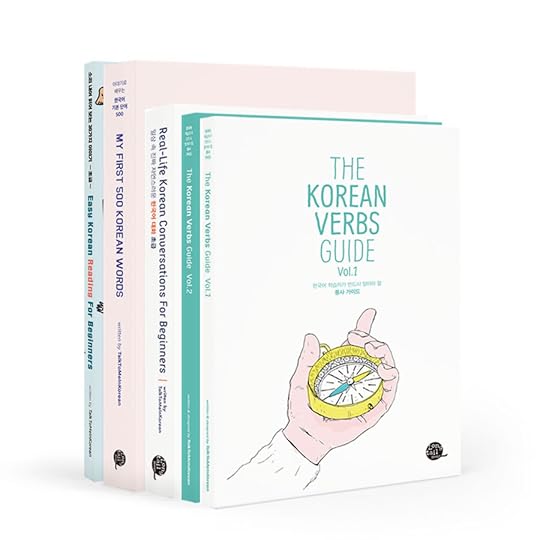
TTMIK Best Sellers (For Beginners) $95 $90.25Add to cart
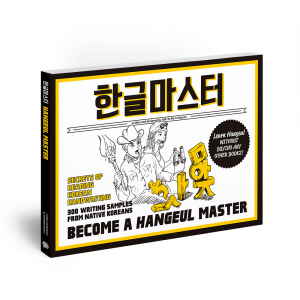
Hangeul Master – Learn how to read and write in Korean $22Add to cart
SALE

Level 1 Package (Grammar Textbook + Workbook) $31 $29.45Add to cart
My First 500 Korean Words $25Add to cart
Easy Korean Reading For Beginners $18Add to cart


TalkToMeInKorean's Blog

- TalkToMeInKorean's profile
- 254 followers

