
CMP#79 My Article in Persuasions On-line
 Clutching My Pearls is my ongoing blog series about my take on Jane Austen’s beliefs and ideas, as based on her novels. I’ve also been blogging about now-obscure female authors of the long 18th century. For more, click "Authoresses" on the menu at right. Click here for the first in the series.
CMP#79 Jane Austen and Elizabeth Helme
Clutching My Pearls is my ongoing blog series about my take on Jane Austen’s beliefs and ideas, as based on her novels. I’ve also been blogging about now-obscure female authors of the long 18th century. For more, click "Authoresses" on the menu at right. Click here for the first in the series.
CMP#79 Jane Austen and Elizabeth Helme
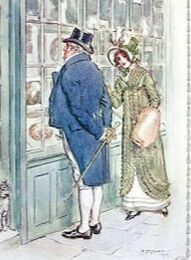 The Jane Austen Society of North America has published my article "Admiral Croft and the Rich Uncle" in their December online edition of Persuasions. The article is about some striking similarities that I've come across between a 1799 novel by Elizabeth Helme and two of Austen's novels.
I previously wrote about Elizabeth Helme in this blog post. She was a hard-working author who enjoyed considerable popular success although she died in illness and poverty. I would not say that Helme was an influence on Austen in the sense that Austen emulated her. I would not compare Helme to Samuel Johnson, Cowper, or Fanny Burney--all writers whom Austen particularly admired. However, I think the evidence is clear that Austen read Helme's novels and made use of some of her dialogue, characters, and plot contrivances.
In this case, the novel I'm speaking of is called Albert, or, The Wilds of Strathnavern. It contains a rich uncle, a character named Colonel O'Bryen, who I argue is the prototype of Admiral Croft.
Albert also makes use of private theatricals for plot purposes. Other Austen scholars have pointed to other contemporary novels which mention private theatricals as the possible source for Austen's use of them in Mansfield Park, but in Albert, the private theatricals are--as with Maria Bertram and Henry Crawford--used for the purposes of seduction.... Here is what The New London Review had to say about Albert: "There is some ingenuity in the construction of this novel, and an agreeable diversity in the dramatis personae, that entitles its author to be ranked, though not in the first, yet not below the second class of novelists. Her language, however, is frequently incorrect, and sometimes, we think unnecessarily debased by colloquial expletives and barbarisms." (This is a reference to Colonel O'Bryen's dialogue. He says "Zounds" and "What the Pie" a lot.)
Another reviewer wrote: "This novel contains little originality or strength of character but it is amusing in its story, and respectable for the propriety of moral sentiment. Many false notions of honour are properly exposed, and the vices of dissipation are painted with a truth of colouring that confers equal credit on the intentions and the abilities of the authoress."
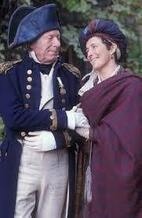 Austen's happiest couple I won't recap my entire article here, but I will add that an alternate or additional source of inspiration for Admiral Croft's sanguine attitude to matrimony might be that sailors apparently had the reputation for quick courtships in general. In an 1817 novel, Elizabeth, Her Lover and Husband, Captain Beverly marries in haste: “With the proverbial carelessness of a sailor, he married a widow lady, after having seen her three times at a place of public amusement…. This union was productive of but little happiness-contracted without any knowledge on his side of her character, habits, or pursuits, and on hers from pecuniary, or, as they are sometimes called, prudential considerations.”
 Of course, Admiral and Mrs. Croft's marriage worked out very well. They are an entirely devoted couple.
I had known that sailors had the reputation of spending their money quickly once they reached port, and some kept a girl in every port, but perhaps they also had a reputation for hasty marriages. If there is a specific proverb about sailors and carelessness, I don't know about it. Speaking of proverbs, Admiral Croft uses the expression: "breaking a head and giving a plaster," meaning to give someone an injury and then offer them a remedy for the injury. Plasters, plaisters, or poultices, were called "emplastrums" by doctors and apothecaries. These were topical mixtures which could be prepared at home and applied to various parts of the body. The best-known example is the mustard plaster for chest colds and coughs. In the TV series Tales from the Green Valley, domestic historian Ruth Goodman prepares a mustard plaster for her colleague Alex Langlands (at 20:00). She adds that most home remedies were merely placebos. "Mind you," she says, "one shouldn't underestimate the power of a placebo." Happy Holidays to all. Barring breaking news, Clutching My Pearls will resume in the New Year.


date newest »
newest »
message 1:
by
Elizabeth
(new)
Jan 04, 2022 11:42PM
 What the pie? I think I'll adopt that into my vocabulary.
reply
|
flag
 Elizabeth wrote: "What the pie? I think I'll adopt that into my vocabulary." Yeah, I searched on that phrase and I couldn't find it used anywhere else!


