An Interview With Author Ann Gimpel

What books did you love as a child? Why?
I'm going to use the term child to include my teenage years. I've always been a voracious reader. I discovered C.S. Lewis when I was in about sixth grade. There was something incredibly alluring about an old English manor house with a hidden door in the back of a wardrobe that opened onto a magical land. I polished off the remaining books in the Narnia series and moved on to Tolkien. From there I discovered Heinlein's Stranger in a Strange Land. I've always liked stories that transport me to places that require imagination. Gone With the Wind was another favorite, as was Daphne de Maurier's Rebecca. Well drawn mysteries, where you really don't know "who done it" till close to the end, have always been favorites as well.
When did you decide you wanted to be a writer? Why did you decide to write?
I don't know that it was an active decision. I've rambled through the backcountry for years as a backpacker and a mountaineer. What that translates to is lots of time alone. Stories have always run around in my head during my time in the wilderness. Round about the fall of 2008, I came back from a Labor Day trip and sat down at my keyboard. Three months later, I had a 550 page novel. It wasn't particularly good, but it was a start. And a good learning experience. Somewhere along the way, I discovered I also like writing short stories.
I'm fortunate in that writing has always come easily to me. It feels like a natural extension of how my mind works. I'm also lucky that magazines and webzines started buying my short stories and that a small press picked up my third, fourth and fifth novels.
When do you find time to write?
I'm recently retired. (Think about thirty seconds ago!) Prior to that, I sandwiched writing in evenings and weekends. I'd either get up early, or stay up late. No one was more surprised than me when I'd actually finish 100,000 word novels.
What are the joys of writing for you?
When I'm in writer-mode, it's like I drop into a parallel universe. The story world is so real to me that I'm there in it, living it along with my characters. They let me know what they're going to do next. Often it's far better than the storyline I'd come up with.
What are the obstacles of writing? How do you overcome them?
Writing is an odd pursuit in that it's made up of two distinct phases. The creative one noted in the above question and another that focuses on editing the product I've created. Different parts of my brain are involved in each phase. While I wouldn't call editing an obstacle, I'm always amazed at the, uh, mistakes I find going back through my first drafts. There are always loose plot threads and way too many passive constructions to clean up.
What is your favorite genre to read in? Write in? Why?
I love contemporary fantasy, for both reading and writing. By that I mean books set in our world, but with fantasy elements that just sort of creep in. I want my books to feel real, like the things in them could actually happen to you! It's easier to do that when I set my stories in Seattle or San Francisco, than if I set them in Middle Earth. Charles de Lint is a master in that genre. Moonheart was one of my favorite books of his.
What was the inspiration for your book?
The protagonist in both Psyche's Prophecy and Psyche's Search is a psychologist. Because that's what I've done to earn a living in the real world, Lara was an easy character for me to relate to. I've been drawn to psychology since I was a very young woman. It was my college major because I couldn't imagine doing anything else. I suppose the inspiration for Psyche's Prophecy, which was really my third novel, was to write something salable. I thought if I wrote about something I knew intimately, inside and out, I'd have a better chance of someone else being interested in my story and characters. Aside from that, it was fun to create a character who was a psychologist, but ever so much more, too. Lara has the gift of sight. As the story has unfolded through the last two volumes of the series, her use of her gift has intrigued me.
Do you do research for your writing? If so, how do you go about it (Internet, travel, etc.)?
Oh, yes. I absolutely research everything. Even though I'm writing fiction, I want it to be accurate. The internet is a wonderful tool. It has geography, history, Celtic myth and legends and just about anything else I could ever need. Since the Psyche books are set in Seattle, I didn't need to travel. I was born there. I did, however, make a trek out to Garland Mineral Springs. It took me three tries, since the first two times there was too much snow to make it up and over Jack's Pass. Interestingly, the cover of Psyche's Prophecy is one of my photographs. It was taken just outside the town of Index where the Index Galena Road is washed out. That was my first attempt to reach Garland. I didn't understand I'd have to go all the way round—an extra twenty-one miles—to get there until I saw that washed out road.
What did you learn about yourself from writing this book?
I learned that I have patience and perseverance. That I can visualize a coherent plot and that I can sort through minutiae to figure out what's important and what moves a story forward. Since I've never had any formal training in writing, aside from enough English classes in college to qualify for a minor in the subject, this has been a steep learning curve. Being a writer is nothing like I thought it would be. I spend way more time editing than I do writing. But it's the polish that makes a book. When I'm on my twelfth or fifteenth run through of a novel and the final pdf is in front of me, I know the manuscript so well, I've memorized sections of it. I have never, never said, "This is good enough," until I'm certain I can't do anything else to improve what I've written.
What advice do you have for other writers?
Develop a thick skin. The way I've learned is through a critique process. It's good to have beta readers who tell you the truth, not some sugar-coated fantasy to salve your ego. Sure it hurts when someone shreds your darling, but you can't write without some sort of ongoing feedback from outside yourself. Psyche's Prophecy began as a project for my online writing group. It was totally trashed by two other group members. But you know what? Nearly everything they said was right. I made lots of alterations and voila, I had a salable manuscript. Likewise, I workshopped Psyche's Promise, due out in July 2012. Two group members made lots of suggestions. I'm currently in the process of reworking that manuscript.
I got a short story rejection last week. It was the nicest rejection letter I've ever gotten because it included a critique of my story and a heartfelt plea for me to send them more stories. I wrote back to thank the editor and he wrote back to tell me that most of the authors who write to him after he's rejected their manuscripts—generally with form letters—call him every name in the book.
Writing is a process. I think I will be improving my style and ability for years. Take what others say to heart. It will only make your writing better.
What is your next project?
As noted above, I'm finishing polishing Psyche's Promise. It's due to my publisher on May 1st. In between, I wrote another novel, Fortune's Scion, a YA contemporary fantasy featuring different characters and a different setting. I entered it into Amazon's Breakthrough Novel Award competition. I'm hoping to at least make it to the second of four rounds so I can get a Publisher's Weekly review. Other than that, I'm continuing to write short stories.
What are you reading now?
Rainwild Chronicles by Robin Hobb. Anatomy of an Epidemic by Robert Whittaker. The Hangman's Daughter by Potzsch.
Psyche's Prophecy
Book One of the Transformation Series
By Ann Gimpel
What if your psychotherapist could really see into your soul? Picture all those secrets lying hidden, perhaps squirming a bit, just out of view. Would you invite your analyst to take a peek behind that gossamer curtain? Read your aura?
Classically trained at the Jung Institute in Zurich, Doctor Lara McInnis has a special gift that helps her with her patients. Born with "the sight" she can read auras, while flirting with a somewhat elusive ability to foretell the future. Lara becomes alarmed when several of her patients—and a student or two—tell her about the same cataclysmic dream.
Reaching out to the Institute for answers, Lara's paranormal ability sounds a sharp warning and she runs up hard against a dead end. Her search for assistance leads her to a Sidhe and ancient Celtic rituals blaze their way into her life. Complicating the picture is a deranged patient who's been hell bent on destroying Lara ever since she tried to help his abused wife, a boyfriend with a long-buried secret and a society that's crumbling to dust as shortages of everything from electricity to food escalate.
Amazon Paperback Amazon Kindle BN Smashwords
Psyche's Search
Book Two of the Transformation Series
Born with the sight, Laura McInnis is ambivalent about her paranormal ability. Oh it's useful enough some of the time with her psychotherapy patients. But mostly it's an embarrassment and an inconvenience—especially when her visions drag her to other worlds. Or into Goblin dens. In spite of escalating violence, incipient food shortages and frequent power blackouts, Lara is still far too attached to the comfortable life she shares with her boyfriend, Trevor, a flight attendant who lost his job when aviation fuel got so expensive—and so scarce—his airline went out of business. Forced to seek assistance to hone her unusual abilities in Psyche's Prophecy, Book I of this series, Lara is still quite the neophyte in terms of either summoning or bending her magic to do much of anything.
Reluctantly roped into channeling her unpredictable psychic talents to help a detective who saved her from a psychopathic killer, Lara soon finds herself stranded in the murky underbelly of a world inhabited by demons. The Sidhe offer hope, but they are so high-handed Lara stubbornly resists their suggestions. Riots, death on all sides, a mysterious accident and one particular demon targeting her, push Lara to make some hard decisions. When all seems lost, the Dreaming, nestled in the heart of Celtic magic, calls out to her.
Amazon Paperback Amazon Kindle BN Smashwords ARe
About the Author:
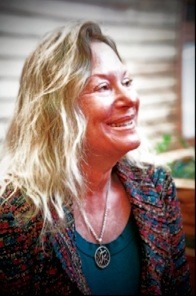 Ann Gimpel is a clinical psychologist, with a Jungian bent. Avocations include mountaineering, skiing, wilderness photography and, of course, writing. A lifelong aficionado of the unusual, she began writing speculative fiction a few years ago. Since then her short fiction has appeared in a number of webzines and anthologies. Two novels, Psyche's Prophecy, and its sequel, Psyche's Search, have been published by Gypsy Shadow Publishing, a small press. A husband, grown children, grandchildren and three wolf hybrids round out her family.
http://www.amazon.com/author/anngimpel
http://www.facebook.com/anngimpel.author
Filed under: Guest Authors Tagged: Ann Gimpel, Bewitching Book Tours, interviews, Psyche's Prophecy, Psyche's Search