Top 10 : What to Watch During the Lockdown (Pt-2)
The fans of Game of Throne were upset with the ending. But I think it is a logical conclusion to the story. I feel that the author had planned for this end all along. He also wanted to give a universal lesson. We have enough examples from history to prove that the progenies of royalty and great men degenerate over time. An ideal society should never go for hereditary rule by default.
We have this beautiful example from the life story of Lord Krishna. According to Bhagavata Mahapurana, all the descendants of Yadav clan including the progenies of Lord Krishna get killed at the end. Even though Lord Krishna knew what was to come, he did not do anything to prevent it. Rather it was likely that he himself facilitated it. There are many bhajans in which the devotees lovingly accuse Lord Krishna as the one who plotted the destruction of his own clan. The progenies had grown tyrannical and undisciplined. Did not we see in the beginning of GOT how the King’s son behaved?
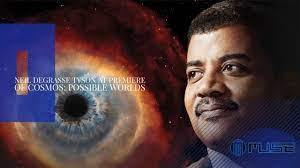
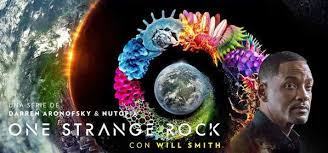
There is a saying facts are stranger than fiction. Even though I have started the Top Ten with fiction, the bulk of what I watch are actually documentaries on various topics- travel, societies, food, science, art history, history or anything that caught the fancy of the moment. I found these two series on scientific topics so interesting, I almost went for binge watch. Both were first aired on National Geographic and are now available on Hotstar. One is ‘Cosmos : Possible Worlds‘ and the other is ‘One Strange Rock‘.
Whenever we think of the ‘Cosmos’ one personality that comes to mind is Carl Sagan. Some of my contemporaries may even remember ‘The Cosmo’ serial aired on Doordarshan long back. Actually the first of the series, ‘Cosmos – a Personal vVyage’ presented by Carl Sagan was first was aired on PBS in 1980. By the way ‘ Cosmos : Possible Worlds‘ is presented by astrophysicist Neil deGrasse Tyson who is an ardent admirer cum disciple of Carl Sagan.
What lies beyond our visible range has fascinated us as human beings since perhaps we became human beings. All ancient civilisations had some theories about it. Without knowing what were the contents of the heavenly bodies, our ancients speculated on their effect on us. Science has been slowly unravelling the secrets of what lie beyond the visible universe. There was a time when scientists took pride in thinking that ours is the only planet that harbours life. But now scientists are not so sure. They doubt that life is unique only to earth.
Even though we have landed on the moon and sent spacecraft to the edge of the solar system, our verifiable knowledge of the vast universe is elementary compared to what we are yet to know. But to take interest in the magnanimity of the universe and speculate on it can be a kind of therapeutic experience in itself. Compared to the universe our earth is not even a speck of dust. And compared to the cosmic life time of planets and stars measured in billions of years, what is so significant about the life span of a human being of few decades, however great or small, well-known or anonymous, rich or poor he may be. Isn’t it so humbling and liberating to think thus.
Watching such series not only improves our scientific knowledge but also makes us feel how ignorant we are, how un-unique we are. Can there be a better way of getting rid of our ego and small mindedness. The history of our universes makes us realise how vulnerable we are. At the same time we get a clear vision as to the reality of vasudhaiba kutumbakam – all the world is one family – not only from the perspective of human beings, but also from the perspective of all living beings that have inhabited this planet for millions of years.
Same way, the series One Strange Rock makes us feel our interconnectedness as the inhabitants of the earth. The series is about our planet. Presented by the famous Hollywood actor Will Smith, we get to know our planet from the perspectives of a number of astronauts who have spent months in space. Is it not fascinating to know that the salt mines of Africa do effect the rainforests of Amazon which are half way across the globe? To own responsibility for our actions that may impact future generations, what better way to start with than to understand our planet’s distant past and the clear and present danger posed by our unbridled consumerism since the industrial age.
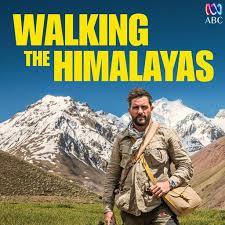
Walking the Himalayas is another docuseries that I found highly interesting. It is available on Discovery Plus. The docuseries follows bestselling British author and adventurer Major Levison Wood on his walking adventures across the Himalayas undertaken in 2016. He starts from the western end in Afghanistan and completes it in Nepal. In addition to the geography of the regions he passes by, we get glimpses of the social and political life of those regions. His journey faces a setback almost to the point of ending it midway when he meets with a serious accident. But such is his determination that he returns after recovery to resume his walk. His other similar adventures are also available on Discover Plus. Prior to the Himalayas he had walked along the entire length of Nile in 2015 starting from its source.
It is said the if you want to explore a place, the best way is by walking. I have had experience of short walking adventures mostly during childhood and the teenage years. The longest was perhaps when I went to Amarnath way back in 1999. You can find my experience of this trek on this blog post.
Even though I have often fancied long walking expeditions, it has never materialized. During these lock down periods, shows like ‘Walking the Himalayas’ have provided the vicarious experience of going for long walking adventures in addition to being so educative about people and places.
(to be continued)