
CMP#35 How Daring Was Austen?
Clutching My Pearls
is my ongoing blog series about my take on Jane Austen’s beliefs and ideas, as based on her novels. Folks today who love Jane Austen are eager to acquit her of being a woman of the long 18th century. Further, for some people, reinventing Jane Austen appears to be part of a larger effort to jettison and disavow the past.
Click here
for the first in the series. Was Austen Silenced Over Slavery?
Clutching My Pearls
is my ongoing blog series about my take on Jane Austen’s beliefs and ideas, as based on her novels. Folks today who love Jane Austen are eager to acquit her of being a woman of the long 18th century. Further, for some people, reinventing Jane Austen appears to be part of a larger effort to jettison and disavow the past.
Click here
for the first in the series. Was Austen Silenced Over Slavery?
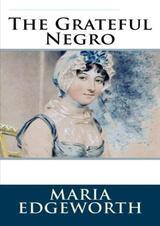 Problematic I have been hesitating over how best to open up a long discussion of Austen, Mansfield Park and the abolition movement. Should I start with what I think Mansfield Park is really about, i.e. the mistakes made by a father in the education of his daughters? Or should I start with what I think Mansfield Park is not about, i.e. it is not primarily an anti-slavery, anti-Empire novel? Should I set the stage with a discussion about what people said and thought about slavery in Austen's time? This blog post will serve as an outline for the topics I intend to touch on, and as I publish each post, I'll come back and link to it here.
It’s not just that I want to lay out my arguments clearly. I am worried -- as any sane person would be these days -- that in the current climate my remarks will be misconstrued.
When I say I disagree that Mansfield Park is an anti-slavery novel, it does not mean I want to shut my eyes and ears and read my dear sweet Jane without troubling my conscience about the ugly underbelly of Regency England.
I am saying that if you read Mansfield Park for the anti-slavery, there just isn’t much to find there, compared to other books. If you want to read fiction and non-fiction books written in Georgian or Regency times that discuss slavery, I can point you to some books that do. If you want to read books written in Georgian or Regency times with Black characters in them, I can point you to a few.
This doesn't guarantee that the views of these 18th writers will be entirely in accord with your views. This doesn't guarantee you will be delighted with their portrayals of Black people. But the point is, these other authors did discuss the subject.
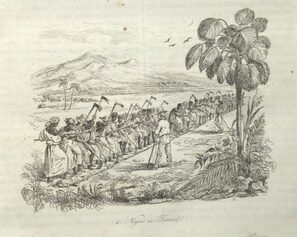 Hoeing in the cane fields For more than a century and a half after Mansfield Park was published, reviews and analysis of the novel never so much as mentioned the fact of slavery. It's not hidden: Sir Thomas owns property in Antigua and his niece asks him a question about the slave trade. But it's not central to the plot, either. In Jane Austen: The Critical Heritage 1811-1940, a collection of the reviews of Austen's work during that period, the word "Antigua" appears twice, and only to explain that Sir Thomas went there and came back. The word "slavery" is used once, by Thomas Macauley, but not in reference to Austen's writing.
 It is generally agreed that the issue of slavery in Mansfield Park came to the forefront with a famous 1993 essay by Edward Said in which he criticizes Austen for her apparent lack of concern about the slaves whose labour provided the sugar and hence the wealth that supported the Bertrams' lifestyle. However, two years before Said, Moira Ferguson was explaining that Austen was all about protesting slavery and the patriarchy.
An honest perusal of Mansfield Park shows there is no anti-slavery message in the text, nothing in the words that Austen, a famously articulate writer, actually wrote.
So it must be there in the symbolism. Much symbolism has been found. Today, the confident faith of Austen fans that their girl was a Total Badass rests on the premise that Mansfield Park is filled with anti-slavery messages. They interpret passing references to imported shawls or pug dogs or apricot trees as being filled with editorial meaning, while ignoring the remarks about Sir Thomas that Austen actually makes. Sometimes Austen's defenders empower Austen by explaining she actually means the opposite of what she says. Often it is asserted that Fanny and even the Bertram daughters are stand-ins for slaves, and Mrs. Norris is a plantation overseer. I think this is an interpretation which will become increasingly problematic.
It has also been confidently asserted that Austen wasn’t more explicit about slavery because (a) she was a woman and therefore wasn't able to air heterodox opinions and (b) it was legally dangerous to discuss such matters, that going this far in a novel -- with Fanny Price asking her uncle a question about the slave trade -- was daring stuff. "In fact," scholar George Boulukos explains, "there is no evidence that readers, publishers or booksellers of early nineteenth-century London either looked askance at fictional works treating these topics or worried that such topics might upset the public’s sense of propriety.”
In future posts, I will give examples of people who did write about slavery and social issues during this period, far more explicitly than Austen ever did. The topic was not “veiled in silence” but even raised in children’s literature. Here's one example for now:
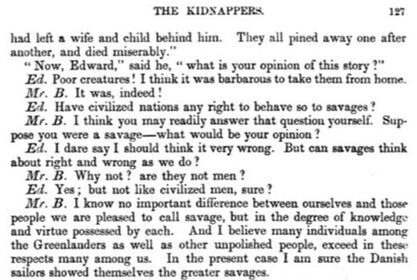 Evenings at Home was a very popular series of children's books written by John Aiken and Anna Laetitia Barbould.
 If it was not controversial to speak out against slavery in a book for children, if it was not controversial to assert that savages are people too, it was not necessary for Jane Austen to disguise her disapproval of slavery with a reference to apricots. Especially since Mansfield Park was published years after the slave trade was outlawed. Coming out against the slave trade in 1814 would be about as controversial as being against fox hunting today. The apricots are just apricots. In the novel, they feature in a squabble between Mrs. Norris and Dr. Grant. In addition, I have yet to find an example of a woman being sent to prison for seditious libel in the UK for anything that she wrote. I haven't found an example of anyone, male or female, going to prison for writing against slavery.
In fact, it was publishing forbidden opinions that was the crime, not the writing. Some women were sent to prison for publishing. In 1822 a radical atheist named Richard Carlile was convicted of blasphemy and seditious libel. His wife continued publishing his newspaper, so she followed him to prison. Then his sister carried on publishing, and she was sent to prison.
The poet Percy Bysshe Shelley had a poor servant, Dan Healey, who was arrested in August, 1812, for posting political handbills Shelley had written. That was considered publishing. Shelley didn't pay the £200 fine on behalf of his servant (who was an Irish orphan), so he, not Shelley, spent six months in prison.
In other words, if Mansfield Park was seditious, it was Austen's publishers Thomas Egerton or John Murray who were in trouble. If either of them warned her, "Whoa lady, you'd better dial that anti-slavery stuff back a bit or I won't publish it," no such correspondence survives. Shelley, on the other hand, did have documented issues with his publishers over material he wrote that they refused to publish.
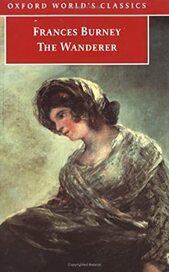 I concede that even if it wasn’t illegal to write about slavery or the patriarchy, cancel culture was a thing back then, too. Radicals, liberals and conservatives attacked each other in journals, in newspapers, and with pamphlets. You could say that the feminist and radical Mary Wollstonecraft was cancelled posthumously. (Her husband published a biography of her after her death and the details of her unconventional private life shocked the public.) Anna Laetitia Barbould got a scathing review for an anti-war poem. Fanny Burney's The Wanderer was criticized for its subject matter -- the oppression of women -- in addition to its "prolix and obscure" style.
 But lots of people get bad reviews. And Austen never got a bad review because of perceived unorthodox views. Does this mean she pulled her punches about her opinions, or does it mean she didn't have radical opinions?
Of course, those of us who admire Austen believe that she was an enlightened humanitarian. The fact is though, you won’t find much about the lower classes, Black people, slavery, or empire in Austen, compared to Anna Letitia Barbould or Lady Morgan or Jane West or Mary Brunton or Maria Edgeworth or Patricia Wakefield or Sarah Burney. Sorry, but it’s true. What you will find in Austen is wonderful writing and exquisite control of her subjects and plots. And hilarity. And unforgettable characters. And some subtle moral philosophy about being a decent, principled person in stories about self-knowledge, self-reflection and self-control.
Next, it's a deep dive into the "dead silence" in Mansfield Park, the passage of the book that refers to the "slave trade," and after that, the role that Sir Thomas Bertram, patriarch and slave-owner, plays in the novel. In my Mansfield Trilogy, there is a moral reckoning over slavery for Sir Thomas and his family. Click here for more about my books.


No comments have been added yet.


