
A conversation with author Cathy Holton
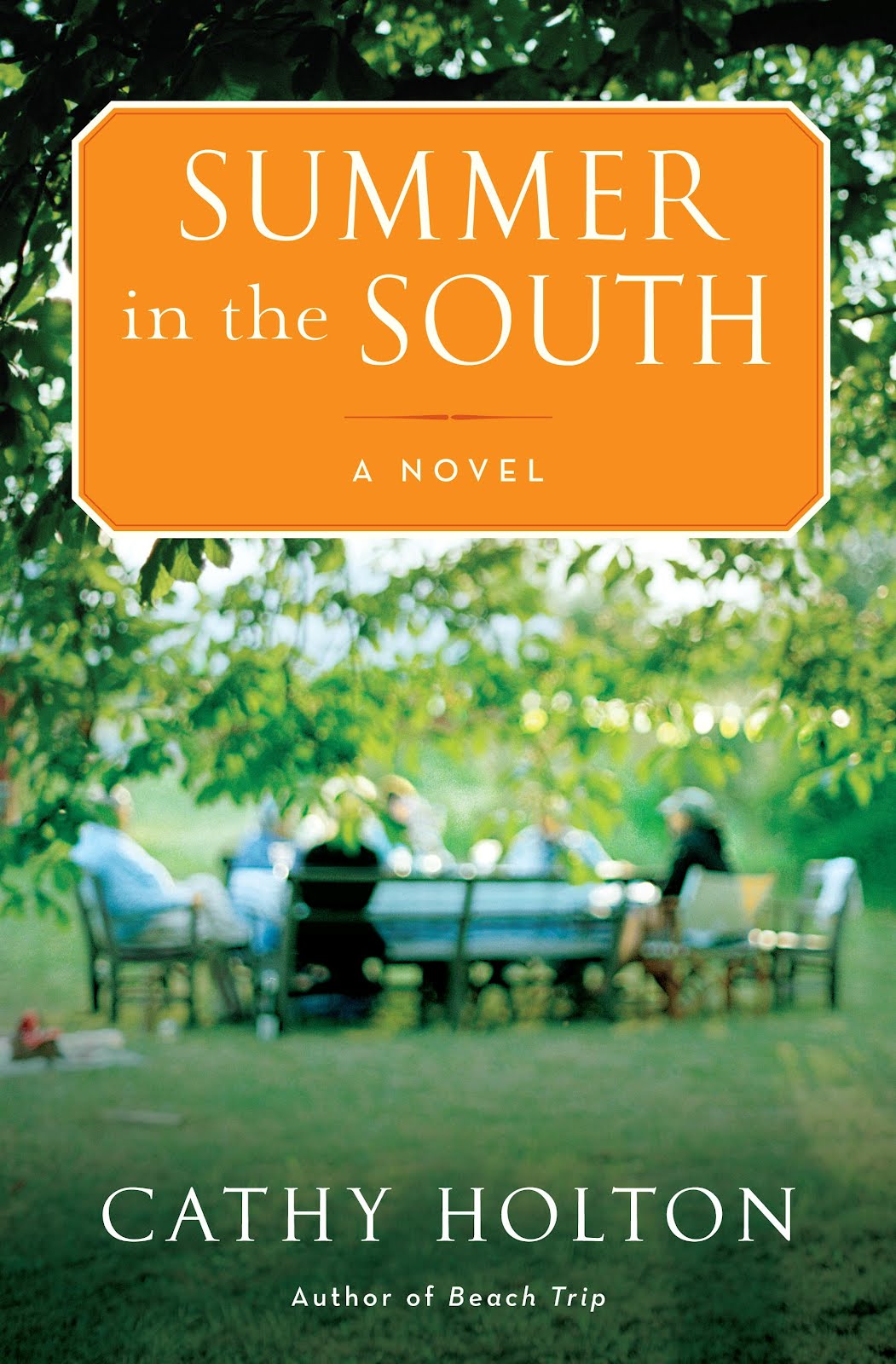
I first met Cathy Holton a few years ago after I'd read (and loved) her first novel Revenge of the Kudzu Debutantes. Like me, she lives in Chattanooga Tennessee, and she was gracious enough to visit my novel writing class at the university and talk about writing.
Since then, we've bonded over of our love of bars with character (think seventies velvet wallpaper), family history (looks like lines on both our sides settled around Midway, Georgia, before the Revolution), Flannery O'Connor, and Southern Culture on the Skids. I met up with Cathy at T-Bones, a local bar, for half priced wine and barbeque tacos to chat about her fourth and most recent novel Summer In the South, published . Unfortunately, we got so wrapped up in talking about writing and the South, that by the time we'd remembered to order our tacos, the kitchen was closed! Thankfully, we had our wine, and stayed chatting until closing time. Here are a few excerpts from our talk.
Sybil: Summer in the South deals with buried secrets and the lingering effects of race and class in a small Tennessee town. What should fans of your work expect to find in this new work that carries over from your other novels?
Cathy: Like my other novels, Summer in the South features strong female characters and an element of dark humor. Although the humor is more subdued in this one than in say, the Kudzu novels. I really consider Summer in the South my ode to Southern Gothic literature with just enough humor thrown in to make it palatable.
Sybil: We've talked some about strong southern women, how our mothers were good southern girls who had mastered the art of the hidden criticism, which southern women are particularly good at. I love the part in Summer in the South, where Darlene tells Ava that she'd never be able to go without mascara and makeup like Ava does because her own lashes aren't long enough. Ava, who is from the north, doesn't even realize she's being criticized for not taking care of herself.
Cathy: We've all experienced that, and of course Darlene's mother does the same thing to her. When Darlene comes home trying to impress her mother and says, "I sold more prom dresses than any of the other sales girls at the Brides & Debs Shoppe," and her mother says, "What? Were some of them out sick?"
It's a subtle form of sabotage and women (especially Southern women) are so good at it. You don't even realize you've been insulted until you start to fall asleep at night and then it hits you. I actually had a similar exchange with my own mother years ago (I've since forgiven her, of course.) Writers always use autobiographical elements in their writing. When I was reading Talismans, I was wondering what elements were autobiographical in yours.
Sybil: Well, my mom was a choir director, but she was in an emotionally and financially stable marriage, unlike Elise's mother from the book. Plus I have two brothers. One of the images that recurs in the collection is a pea coat that Elise finds that was her paternal grandfather's. She starts wearing the coat, and it becomes a talisman to her that links her to her past and provides a gateway to her future when she moves to Korea.
My own dad fought in the Korean war, like Elise's grandfather, and I found his pea coat one day when I was in college and started wearing it. My father was not a big man, so it fit pretty well. I loved that coat, but I lost it after a long-term relationship ended badly in my late twenties. That coat (and the attachment and loss of it) was the inspiration for the story "That Girl."
Cathy: That's interesting how those images filter into our work. I do think it was helpful to me to live away from the South for a while to gain perspective.
Sybil: I agree. Distance and perspective can help sharpen the world you want to write about. As James Joyce said, to be a writer you need three things: silence, exile, and cunning. In that sense we have both been expatriates from the South.
Cathy: Yes, but since you lived in Korea for so long [12 years], that has obviously influenced your work, too. You do such a good job with your descriptive passages of evoking the place and culture. There's an emotional attachment to Asia that comes through in your stories.
Sybil: That's true. I was not only an expatriate from the South, although both sides of my family's roots are one hundred percent southern, but from the States. Before I moved to Korea though, I was writing stories and novels set in the South. Now that I've moved back, I'm starting to incorporate the South and its culture more in my current work while still maintaining an interest in Americans traveling and living abroad. What about you?
Cathy: I've always wanted to live in a cottage on the seacoast of Ireland. At least for a time. But even if I did, I'd still write novels about the South. I don't know why. It must be some kind of strange compulsion, like eating dirt or picking scabs off your knees.


No comments have been added yet.
Sybil Baker's Blog

- Sybil Baker's profile
- 42 followers
Sybil Baker isn't a Goodreads Author
(yet),
but they
do have a blog,
so here are some recent posts imported from
their feed.

