ENDINGS AND BEGINNINGS
by Lisa Black
Opening to the first page of a book always has that same delicious thrill of anticipation as when the theater lights dim and the curtain begins to rise from the stage. Will I be delighted? Will I be amazed? What is going to happen?
But as wonderful as beginnings are, every book is really about its ending. There, we expect the story to come full circle, we expect that the things that have happened to be used in a relevant manner, we expect to be satisfied.
Writers who plot, like me—as opposed to writers who are [fly by the seat of your] pants-ers—know how the book will begin and how it will end. The difficult part is figuring out how to get from one to the other.
I am prompted to this theme because this cursed, dratted year of 2020 is ending, something that everyone has been wishing for and commenting on for eight or ten months now. Like many others, my year has largely sucked: my husband was out of work for seven months, I lost a brother and a cousin (non-Covid-related reasons), I spent over a year on a book that was rejected, and I watched helplessly as others endured much greater misery and much more overwhelming trials. I could have lost much more, and didn’t. And now 2020 is ending! Yay!
Except we all know better than to think simply turning a calendar page will make everything reset to ‘Normal’—or even ‘Better.’ Illness, injustice, stress and anxiety can’t just be tossed out with the used calendar.
But maybe this is why we like books. In a book, the author controls the ending. They can make sure the clues logically add up to one person’s irrefutable guilt, that the hero learns lessons en route that will serve them well in the final confrontation with the villain, that the reader will not be left wondering how Norman got his hands on the museum’s antique knife later found in his ex-wife’s body or why Josie suddenly understood Ukrainian when in the Kabul safe house. And woe to them if the author fails. Rules can be broken, twists can and should be unexpected, readers can be a little miffed that the protagonist didn’t get the cute guy at the end, but they should always feel that the story is now complete.
Yes, there have been endings that skirted the cliff. The Murder of Roger Ackroyd, as brilliant as Agatha Christie’s book was, did leave many a reader sputtering “But was that really fair?”
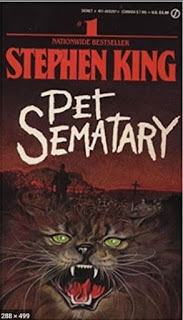 And full disclosure, if I dare: I sputtered myself at the ending of Pet Sematary. Unless I’m badly misremembering, the text touched on ancient Indian burial grounds, dreams, and some sort of giant who roamed the earth after dark. As a horror novel it’s absolutely fabulous, but if I can just say one little thing: if Dean R. Koontz had written it, he would have tied all those things together in a kind of explanation, a la Phantoms or Twilight Eyes. It might have been far-fetched, but it would have been something.
Her, by Harriet Lane, I found a fabulously written, utterly engrossing book, in which the ending made me want to throw it across the room. I loved Gone Girl…but it’s ending? Super frustrating.
Hannibal, by Thomas Harris. Maybe, IMHO, somebody couldn’t figure out how to end the book. Maybe somebody fell too much in love with his own characters. Maybe I’m just too pedestrian and can’t think outside the box. We may never know.
My friend Britin Haller absolutely loved Fierce Kingdom by Gin Phillips “…until the end. And I hate to say that because it truly was one of the greatest books I’ve ever read.”
We could even complain about Gone With the Wind. WTF? Two and a half hours and she and Rhett break up?
The Collector by John Fowles. It certainly wasn’t what I expected, but I can’t say I’m happy about it.
But as there have been happier New Year’s Eves, there are so many wonderfully satisfying endings in books. Anything by Ellery Queen or John Dickson Carr, in which all fifty-three separate clues are assembled in their proper order. Lord of the Rings leaves us with a nostalgic but fuzzy happiness as all the characters trundle off to their respective lives, exactly where they want to be. Pride and Prejudice, of course, proves that good things will eventually come to those who are true to oneself. A Christmas Carol, in which the character has completed an exhausting journey to become exactly the man he should be. The Shawshank Redemption by Stephen King. Room by Emma Donoghue.
 Best of all, I think, are when endings completely take you by surprise but, after a moment’s thought, you see they make total sense. Sharp Objects by Gillian Flynn. You Will Know Me by Megan Abbott. The Bone Collector by Jeffrey Deaver.
And that’s my New Year’s wish for everyone: that in 2021, we get to write our own, highly nourishing ending to each and every day.
What about you? No spoilers, but what book has the most (or least) satisfying ending?
Opening to the first page of a book always has that same delicious thrill of anticipation as when the theater lights dim and the curtain begins to rise from the stage. Will I be delighted? Will I be amazed? What is going to happen?
But as wonderful as beginnings are, every book is really about its ending. There, we expect the story to come full circle, we expect that the things that have happened to be used in a relevant manner, we expect to be satisfied.
Writers who plot, like me—as opposed to writers who are [fly by the seat of your] pants-ers—know how the book will begin and how it will end. The difficult part is figuring out how to get from one to the other.
I am prompted to this theme because this cursed, dratted year of 2020 is ending, something that everyone has been wishing for and commenting on for eight or ten months now. Like many others, my year has largely sucked: my husband was out of work for seven months, I lost a brother and a cousin (non-Covid-related reasons), I spent over a year on a book that was rejected, and I watched helplessly as others endured much greater misery and much more overwhelming trials. I could have lost much more, and didn’t. And now 2020 is ending! Yay!
Except we all know better than to think simply turning a calendar page will make everything reset to ‘Normal’—or even ‘Better.’ Illness, injustice, stress and anxiety can’t just be tossed out with the used calendar.
But maybe this is why we like books. In a book, the author controls the ending. They can make sure the clues logically add up to one person’s irrefutable guilt, that the hero learns lessons en route that will serve them well in the final confrontation with the villain, that the reader will not be left wondering how Norman got his hands on the museum’s antique knife later found in his ex-wife’s body or why Josie suddenly understood Ukrainian when in the Kabul safe house. And woe to them if the author fails. Rules can be broken, twists can and should be unexpected, readers can be a little miffed that the protagonist didn’t get the cute guy at the end, but they should always feel that the story is now complete.
Yes, there have been endings that skirted the cliff. The Murder of Roger Ackroyd, as brilliant as Agatha Christie’s book was, did leave many a reader sputtering “But was that really fair?”
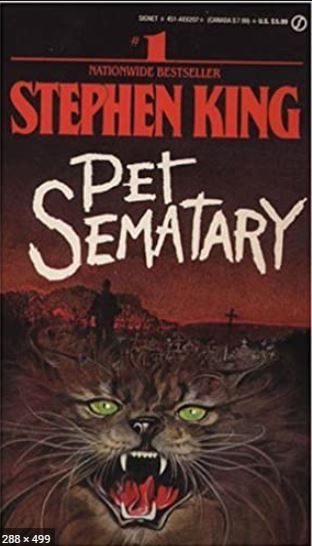 And full disclosure, if I dare: I sputtered myself at the ending of Pet Sematary. Unless I’m badly misremembering, the text touched on ancient Indian burial grounds, dreams, and some sort of giant who roamed the earth after dark. As a horror novel it’s absolutely fabulous, but if I can just say one little thing: if Dean R. Koontz had written it, he would have tied all those things together in a kind of explanation, a la Phantoms or Twilight Eyes. It might have been far-fetched, but it would have been something.
 Her, by Harriet Lane, I found a fabulously written, utterly engrossing book, in which the ending made me want to throw it across the room. I loved Gone Girl…but it’s ending? Super frustrating.
Hannibal, by Thomas Harris. Maybe, IMHO, somebody couldn’t figure out how to end the book. Maybe somebody fell too much in love with his own characters. Maybe I’m just too pedestrian and can’t think outside the box. We may never know.
My friend Britin Haller absolutely loved Fierce Kingdom by Gin Phillips “…until the end. And I hate to say that because it truly was one of the greatest books I’ve ever read.”
We could even complain about Gone With the Wind. WTF? Two and a half hours and she and Rhett break up?
The Collector by John Fowles. It certainly wasn’t what I expected, but I can’t say I’m happy about it.
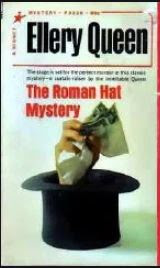
But as there have been happier New Year’s Eves, there are so many wonderfully satisfying endings in books. Anything by Ellery Queen or John Dickson Carr, in which all fifty-three separate clues are assembled in their proper order. Lord of the Rings leaves us with a nostalgic but fuzzy happiness as all the characters trundle off to their respective lives, exactly where they want to be. Pride and Prejudice, of course, proves that good things will eventually come to those who are true to oneself. A Christmas Carol, in which the character has completed an exhausting journey to become exactly the man he should be. The Shawshank Redemption by Stephen King. Room by Emma Donoghue.
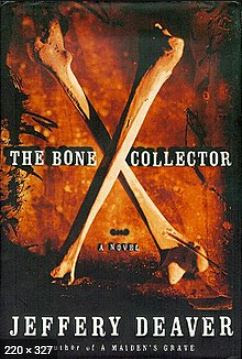 Best of all, I think, are when endings completely take you by surprise but, after a moment’s thought, you see they make total sense. Sharp Objects by Gillian Flynn. You Will Know Me by Megan Abbott. The Bone Collector by Jeffrey Deaver.
 And that’s my New Year’s wish for everyone: that in 2021, we get to write our own, highly nourishing ending to each and every day.
What about you? No spoilers, but what book has the most (or least) satisfying ending?


No comments have been added yet.