The Lion, The Witch, and the Wardrobe: The Complete Guide to Christian Symbolism and Bible References in C. S. Lewis' The Chronicles of Narnia
You have probably figured out by now that Aslan is Jesus, but that's just the beginning. I have tried to find every Christian symbol in Narnia! What does the snow and the endless Winter represent? Is the White Witch Satan?
What are the wolf, the fox, and the mice symbols for in Narnia? What is the symbolism of Susan's horn and the lamppost in Narnia? What does Mr. Tumnus represent?
Here is everything you will need if you want to host a Chronicles of Narnia Bible Study, too. Look especially to the symbolism of Aslan's sacrifice at the stone table as representing Christ's passion, death, and resurrection and the Sacrifice of Isaac. This would be a great Bible study for Lent.
Have you noticed any other Christian symbols in the Chronicles of Narnia? I have examined not just The Lion, the Witch, and the Wardrobe, but also Prince Caspian, The Voyage of the Dawn Treader, The Silver Chair, The Last Battle, and, my favorite, The Magician's Nephew.
You will find sections below for each of C. S. Lewis' books. Please let me know if I missed anything!
Christian Symbolism in J.R.R. Tolkien's Lord of the RingsIf you're interested in the Christian symbols and allegory in the Chronicles of Narnia, you will enjoy this book I published on the theology of the masterwork of C. S. Lewis' good friend, J.R.R. Tolkien - the Lord of the Rings:
[image error]

The Lion, the Witch, and the Wardrobe - Who Do The Characters Represent in Narnia?
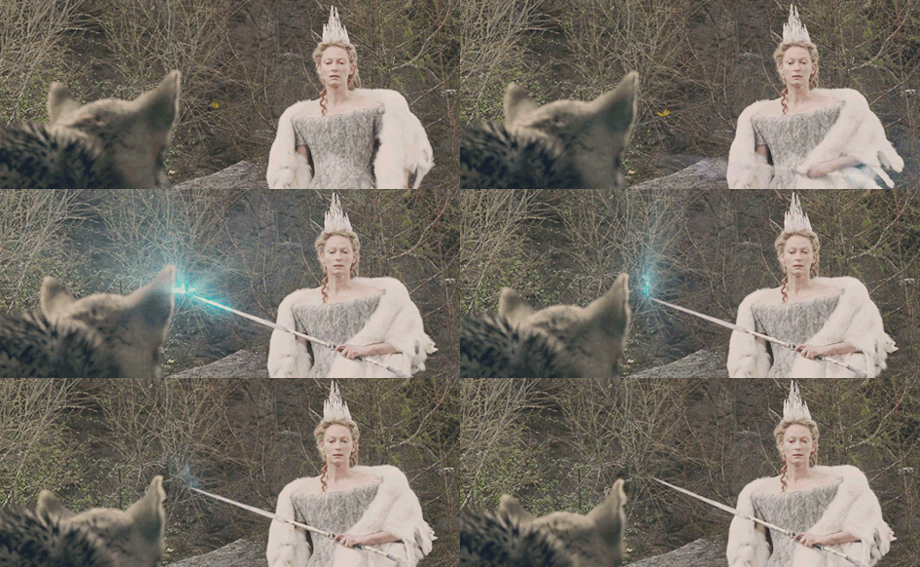
Narnia Symbolism: The White WitchWhat Does the White Witch Symbolize?The White Witch clearly represents Satan, or at the very least a fallen angel. Satan's reign over earth is marked by sin and death. The White Witch's reign over Narnia is marked by un-ending winter and snow.
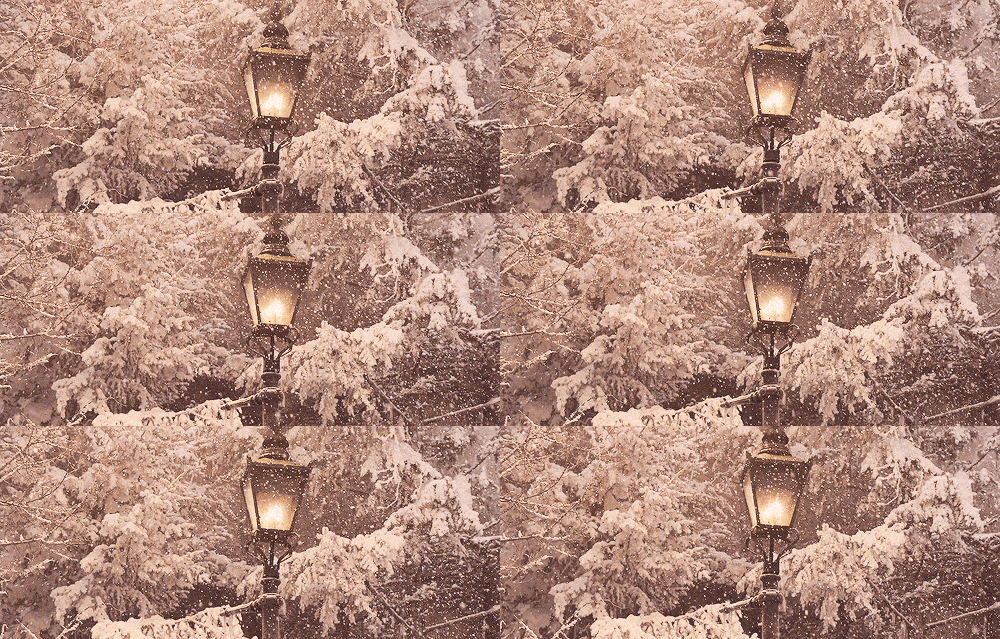
What Does The Snow Symbolize in Narnia?The Golden Age Prophecy was the ancient prediction of the Golden Age of Narnia. It tells of the ending of the unending winter and snow at Aslan's roar:
Wrong will be right, when Aslan comes in sight,At the sound of his roar, sorrows will be no more,When he bares his teeth, winter meets its death,And when he shakes his mane, we shall have spring again.
When Adam's flesh and Adam's bone,Sits at Cair Paravel in throne,The evil time will be over and done.
The White Witch's reign over Narnia is marked by un-ending winter and snow and turning people to stone. This all comes to an end when Aslan comes.
Likewise, Satan's reign over earth is marked by sin and death. This all comes to an end with the coming of Christ, the Messiah.
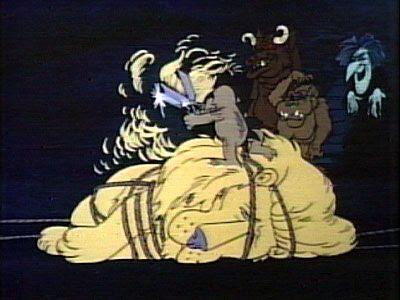
The White Witch tries to prevent the prophecy - specifically the "when he shakes his mane, we shall have spring again" part - by shaving off Aslan's mane before the ritual sacrifice and killing of Aslan.
Likewise, Satan tried to prevent Jesus Christ's victory over sin and death. Satan tempts Jesus in the desert to kneel before him. Satan eventually uses Judas - as the White Witch uses Edmund, more on that below - to betray Jesus to his death on a cross.
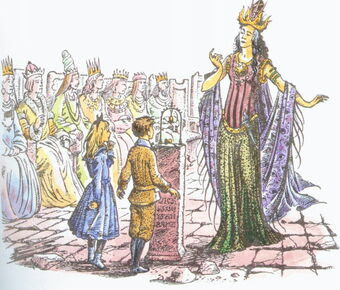
Christian Symbolism in The Magician's Nephew - The White Witch's Origins as Queen JadisIn The Magician's Nephew, C. S. Lewis gives us the White Witch's backstory and makes the parallels more obvious.
For example, in the pre-history of Narnia, the Queen Jadis of Charn, the original name and title of the White Witch, sneaks into Aslan's Garden. The White Witch sneaks into a garden very similar to Eden, instead of entering through the gate.
Inside, the witch plucks and eats a silver apple of the Tree of Youth, much as Satan tempts Eve to eat of the fruit of the Tree of Knowledge of Good and Evil. Nevertheless, Jadis acquires inexhaustible strength and steals immortality.
As an evil, anti-Eve figure from Genesis, Jadis strongly resembles Lilith, as well. Read more about Lilith, the anti-Eve and anti-Mary here.
Narnia Symbolism: AslanIs Aslan Jesus?Aslan is Jesus. Plain and simple. C.S. Lewis eventually pulls away the veil of allegory and makes this point explicit. In the Voyage of the Dawn Treader, Aslan is depicted as a lamb, as in the Lamb of God.
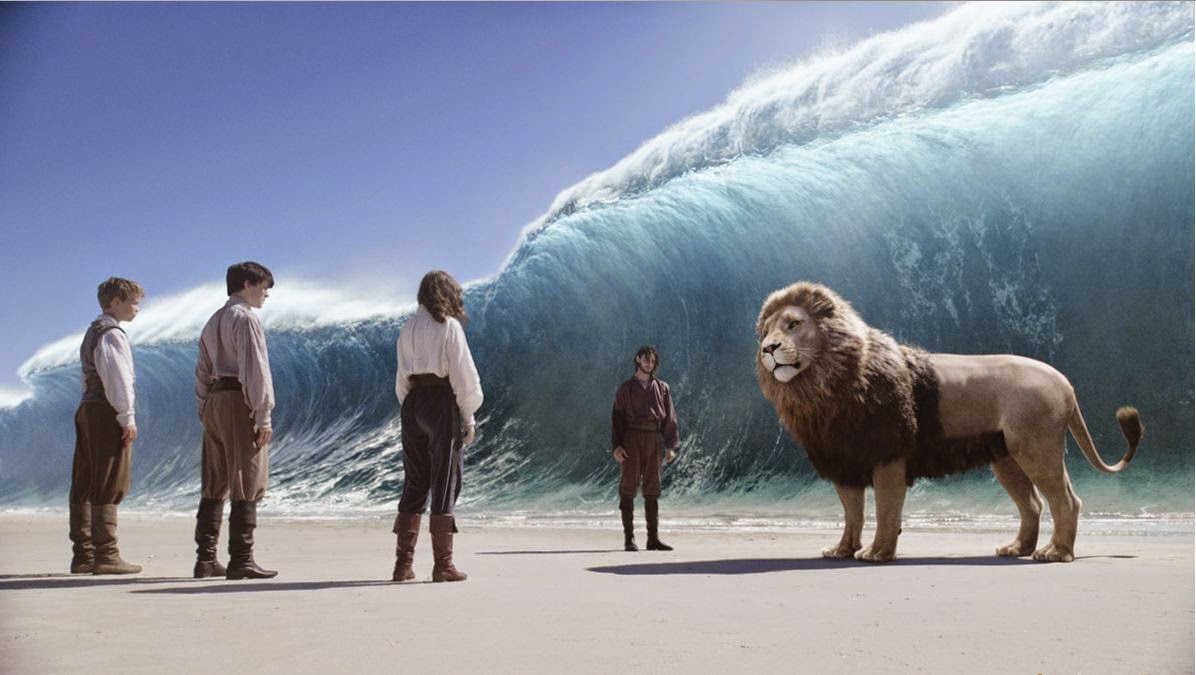
Similarly, in Revelation 5:3-7, the long-awaited Lion of Judah finally appears, and is described as "a Lamb standing, as though it had been slain." Read more on this dramatic turn of events in "The Most Surprising Moment in the Bible".
Frank Herbert's Sci-Fi series Dune also makes use of the Biblical Lion of Judah. Read more about that HERE.
Also, in Voyage of the Dawn Treader, C. S. Lewis wrote the following:
"It isn't Narnia, you know," sobbed Lucy. "It's you. We shan't meet you there. And how can we live, never meeting you?"
"But you shall meet me, dear one," said Aslan.
"Are -are you there too, Sir?" said Edmund.
"I am," said Aslan. "But there I have another name. You must learn to know me by that name. This was the very reason why you were brought to Narnia, that by knowing me here for a little, you may know me better there.”
This is one of my favorite passages in all of C. S. Lewis' Chronicles of Narnia - in all of Lewis' books for that matter. The symbolism of Aslan as Jesus is extremely rich in the Chronicles of Narnia. Several components of Christ's life, death, and resurrection, are symbolically represented by Aslan. We will continue discussing this below ...
Narnia Symbolism: Sons of Adam and Daughters of Eve, The Pevensie ChildrenThe coming of the Pevensie children - Peter, Susan, Edmund, and Lucy - to Narnia was the subject of an ancient prophesy. This was called the "Golden Age Prophecy".
The Golden Age Prophecy was the ancient prediction of the Golden Age of Narnia. It is not known when the prophecy was first told, but it likely originated when the White Witch first conquered Narnia. The Golden Age Prophecy is a set of two separate sayings, as first told in the story by Mr. Beaver:
Wrong will be right, when Aslan comes in sight,At the sound of his roar, sorrows will be no more,When he bares his teeth, winter meets its death,And when he shakes his mane, we shall have spring again.
When Adam's flesh and Adam's bone,Sits at Cair Paravel in throne,The evil time will be over and done.
The Pevensie children are identified as the "Sons of Adam" and "Daughters of Eve". Right off the bat, we know the Chronicles of Narnia takes place in the same universe as Genesis and the Garden of Eden.
The phrasing of the prophesy even seems to quote Genesis 2:23: "This at last is flesh of my flesh and bone of my bone".
Adam and Eve, the first man and woman of Narnia, were created by the "Emperor-Beyond-The-Sea". The "Emperor-Beyond-The-Sea" is the Narnian term for "God", the Father.
Prophecy in the Book of Genesis: Both the Immaculata Conception, the Virgin Mary, and her son, Jesus, the Messiah, are all prophesied at Genesis 3:15, what's called the Protoevangelium.
Narnia Symbolism: EdmundWho does Edmund represent in Narnia?
Aslan dies because of Edmund's betrayal.
Likewise, Judas' betrayal leads directly to Jesus' arrest and death. According to the Deep Magic, the punishment for Edmund's betrayal is death. Similarly, the "wages of sin is death" (Romans 6:23).The Turkish Delight also represents sin and the White Witch, temptation and the Tempter, as described above.


Narnia Symbolism: What Does the The Turkish Delight Symbolize in Narnia?Edmund betrays his family for 30 pieces of Turkish Delight. Judas betrays Jesus for 30 pieces of silver. The Turkish Delight is the thirty pieces of silver.
The Turkish Delight is also a symbol for the Forbidden Fruit of the Tree of Knowledge of Good and Evil. Edmund betrays his family to eat this "forbidden fruit". By the way, did you know that the Forbidden Fruit was NOT an apple?
This actually ties into The Magician's Nephew, the first of the Chronicles of Narnia. The White Witch - then known as the Queen Jadis - steals fruit from a garden. This garden is from the genesis of the world of Narnia. Aslan has also forbidden the taking and eating of this fruit.
Inside Aslan's garden, the White Witch plucks and eats a silver apple of the Tree of Youth. This forbidden fruit then becomes the source of the White Witch's power and immortality, while also damning her.
Narnia Symbolism: Peter Pevensie is Peter the ApostleWho leads Aslan's armies when Aslan must go away?Peter, the High King of Narnia. Who leads the Apostles when Jesus ascends to Heaven? Peter, the leader of the Apostles.
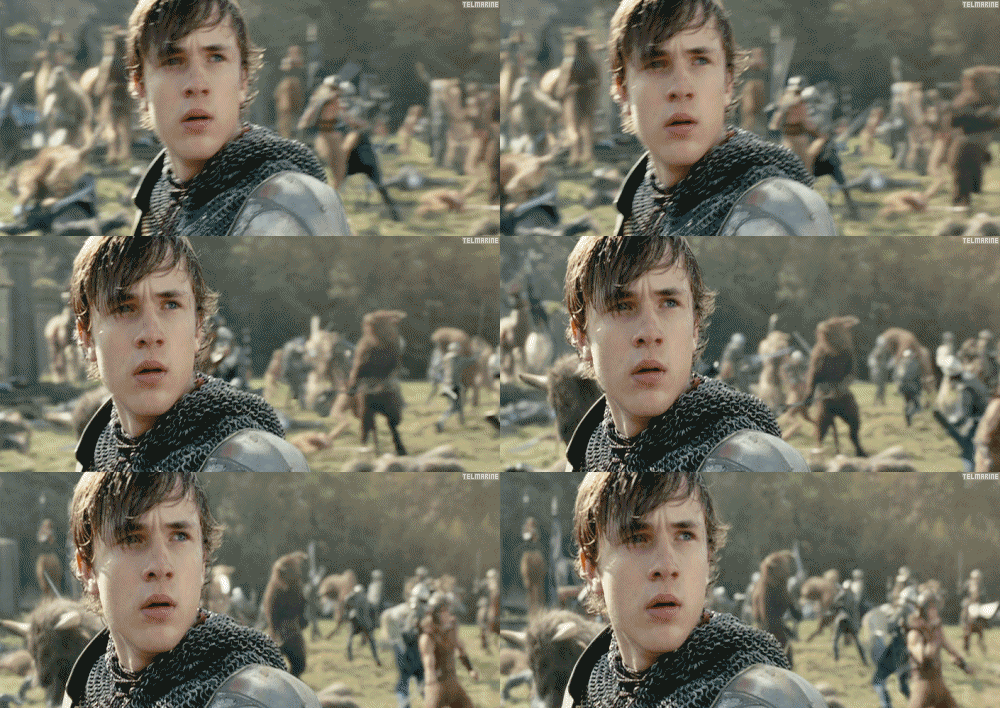
What is the Christian Symbolism of Peter as "Wolf's Bane"? What is the Allegorical Meaning of the Wolf in Narnia? During the Long Winter, the wolves fought on the side of the White Witch. The wolves served the White Witch as her Secret Police. Their captain was Maugrim.
The Secret Police of the White Witch, especially in its wolf aspect, appears to be more a symbol for the Nazi secret police forces, the Gestapo or the S.S., which often used wolves.
Also, the Pevensies, especially Lucy, enter Narnia oblivious of their danger. They are "like sheep for the slaughter". As at Matthew 10:16, "Behold, I am sending you out as sheep in the midst of wolves, so be wise as serpents and innocent as doves.
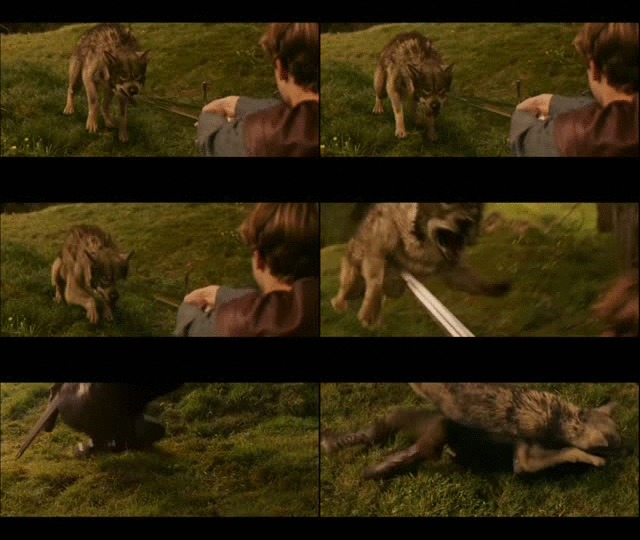
This is why King Peter, who is the symbol for the Apostle Peter, is called "Wolf's Bane". Aslan names Peter "Wolf's Bane" after his resurrection.
Likewise, Jesus visits the Apostles after His resurrection. Jesus instructs St. Peter to care for Jesus' sheep, as a shepherd-pastor and the first Pope. Here are Jesus' words from the last chapter of the Gospel of John, John 21:
When they had finished breakfast, Jesus said to Simon Peter, “Simon, son of John, do you love me more than these?” He said to him, “Yes, Lord; you know that I love you.” He said to him, “Feed my lambs.”
A second time he said to him, “Simon, son of John, do you love me?” He said to him, “Yes, Lord; you know that I love you.” He said to him, “Tend my sheep.”
He said to him the third time, “Simon, son of John, do you love me?” Peter was grieved because he said to him the third time, “Do you love me?” And he said to him, “Lord, you know everything; you know that I love you.” Jesus said to him, “Feed my sheep."
Peter "Wolf's Bane" and Saint Peter the Pope-Shepherd are tasked by Aslan and Jesus, respectively, to protect their sheep - their people - from the wolves.
What is the Symbolism of Aslan's Table and Tomb? Jesus' Passion, Death, and ResurrectionWhat Happened to Aslan in the Stone Table?Aslan is ritually sacrificed at the Stone Table. Evil spirits and witches surrounding him. It closely resembles the abomination of a Black Mass.
The Stone Table, Biblically-speaking, is most directly a reference to the stone altar where Isaac was to be sacrificed by Abraham. But the Sacrifice of Isaac directly points to the Sacrifice of Jesus on the Cross.
The Stone Table of Aslan is the Cross of Christ.
Look at this image of Susan and Lucy holding the dead body of Aslan side-by-side with Michelangelo's Pieta, a depiction of the Blessed Mother holding the body of Christ, after He was taken down from the Cross:
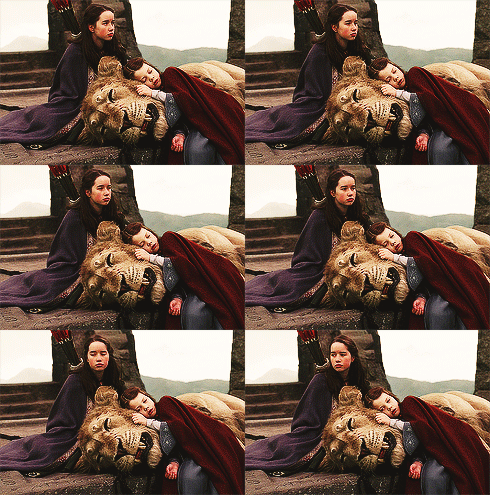
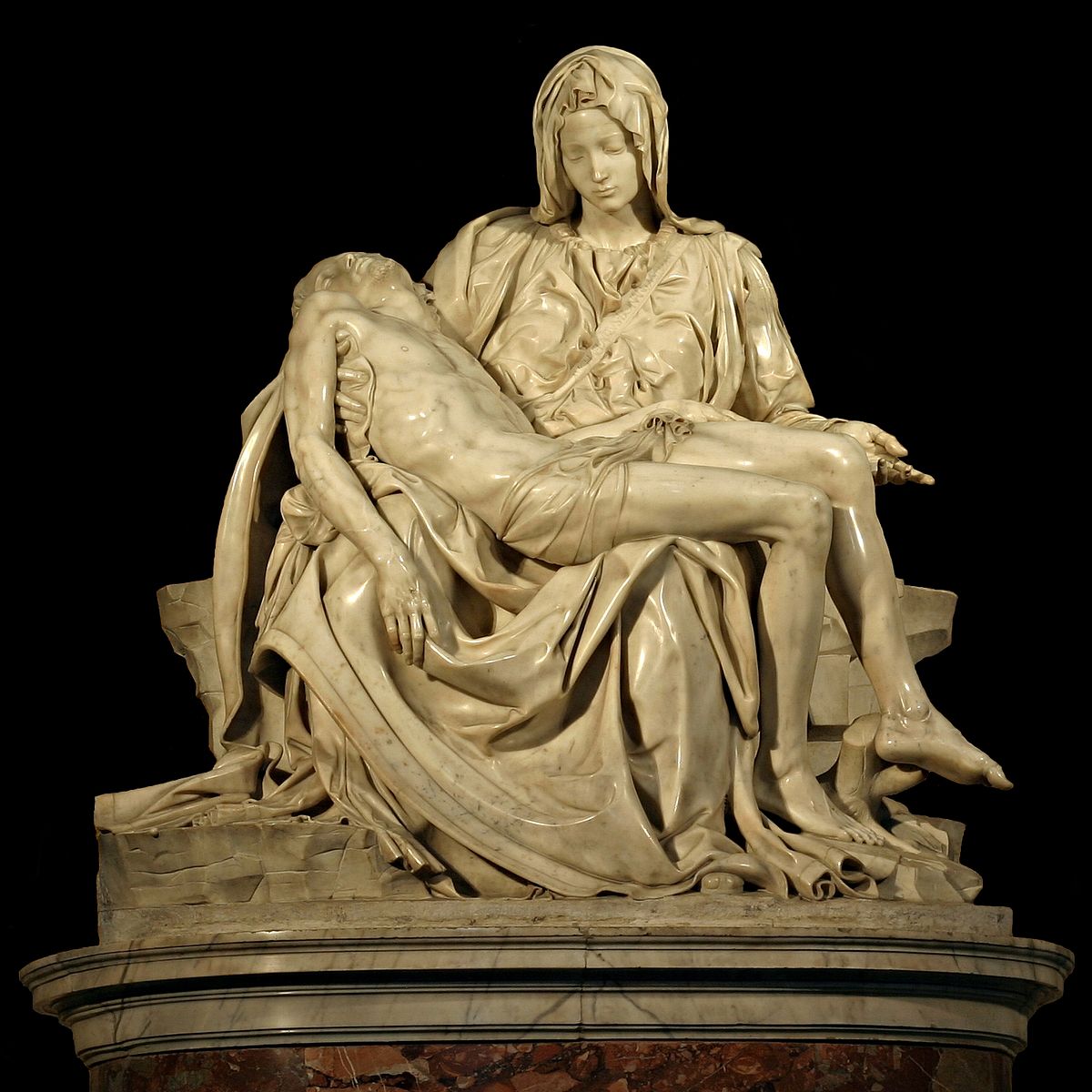 Michelangelo's Pieta compared to Narnia
 The Stone Table is also the Tomb of Aslan, since he was not buried ...
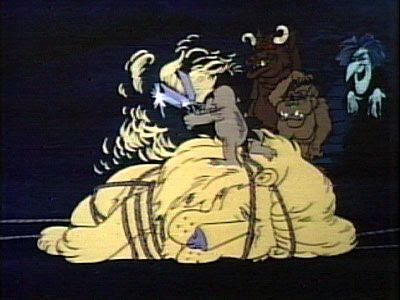
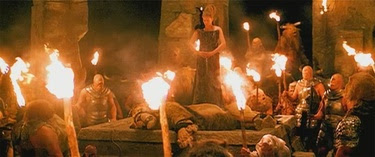
What is the Symbolism of the Binding of Aslan with Ropes?The sacrifice of Jesus on the Cross is prefigured by Abraham's (almost) sacrifice of Isaac. The sacrifice of Isaac is often referred to as the "Binding of Isaac" or the Akedah, in Hebrew.
Similarly, Aslan is bound by ropes. Aslan is not crucified, exactly, because this is the manner of execution reserved for a human. Instead, C. S. Lewis' crucifixion symbolism is based on animal sacrifice. A ram was bound (with ropes) and sacrificed as a substitute for Isaac.
The Akedah Binding of Aslan connects to two more Christian symbols in Narnia: (1) Susan's Horn and (2) the Mice biting through Aslan's ropes.
What is the Symbolism of Susan's Horn in Narnia?Reference to the Akedah, the binding of Isaac, appears throughout the Rosh Hashanah liturgy of the Jews. Even the shofar (ram’s horn) blown on the holiday is said to be a reminder of the Akedah, and how Isaac was spared.
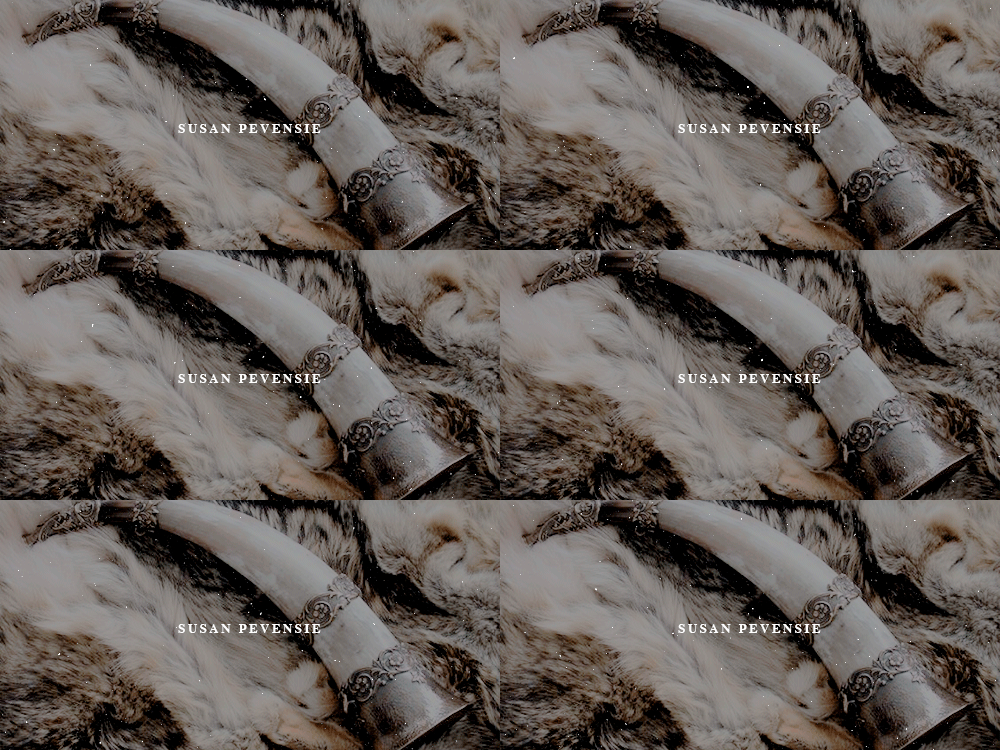
This is why Susan is given the horn by Father Christmas! Father Christmas tells Susan the following:
And when you put this horn to your lips and blow it, then, wherever you are, I think help of some kind will come to you.
Queen Susan's Horn was a prized possession of Susan Pevensie when she reigned in Narnia as "Queen Susan the Gentle". Given to her by Father Christmas just before the Winter Revolution, the horn was a magical object, used in times of emergency to call for help. Queen Susan's Horn is later used to summon the Pevensie children back to Narnia to aid Prince Caspian.
What do the Mice Represent in Narnia?After Aslan was bound by ropes and killed by the White Witch, mice chewed through the ropes which bound Aslan. These mice and their descendants became talking mice as a reward for this kindness.
The warrior mouse Reepicheep is likely a descendant of these mice blessed by Aslan.
Later in The Voyage of the Dawn Treader, these mice receive a further blessing through their representative Reepicheep. On Caspian X's voyage to the end of the world, Reepicheep became the first and only Narnian to sail beyond the eastern end of the world to Aslan's country.
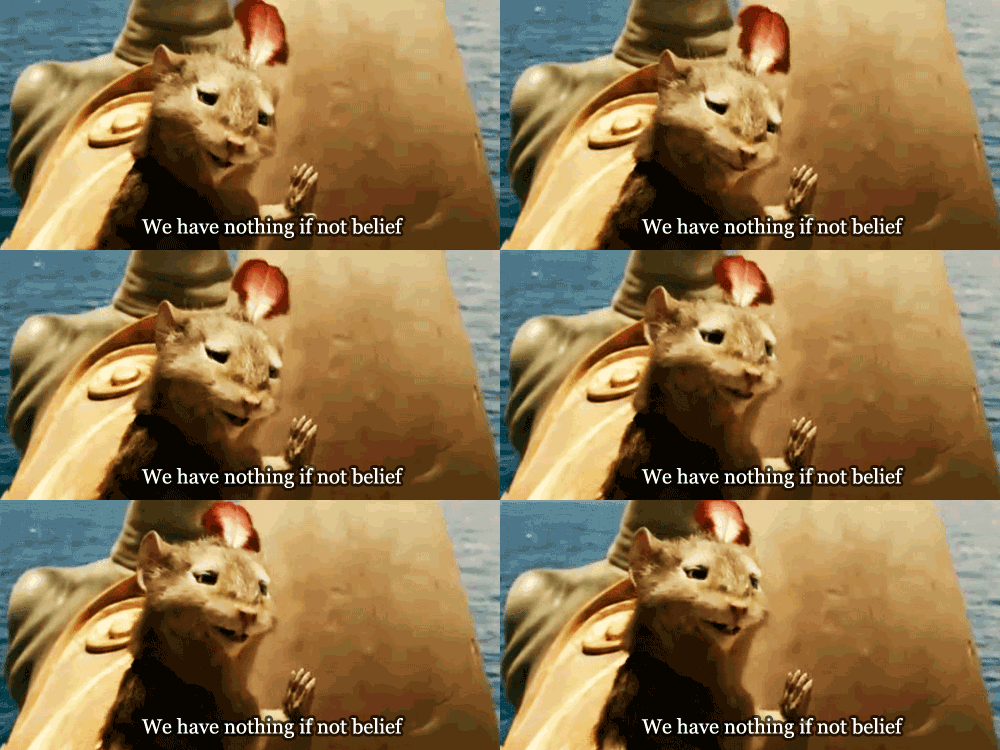
The use of mice by C. S. Lewis is a reference to the Beatitudes: "Blessed are the meek, for they shall inherit the earth" (Matthew 5:5).
Mice are similar to the hobbits of Tolkien's worlds, of which Tolkien wrote: “Even the smallest person can change the course of the future”. Or, in Narnia, “Even the smallest [animal] can change the course of the future”.
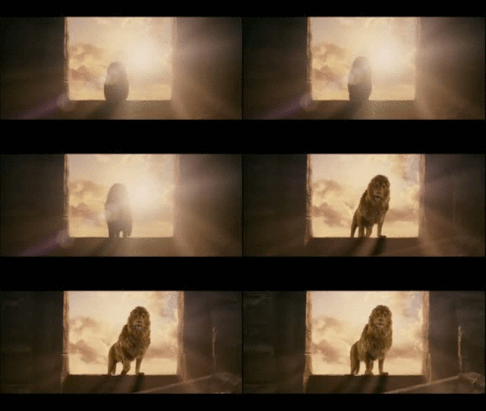
Narnia and Easter Morning: How Many Women Visit Jesus' and Aslan's Tomb?Lucy and Susan visiting the broken stone table is like Mary Magdalene and the other Mary visiting the tomb of Jesus. Lucy and Susan are surprised to find a resurrected Aslan, as are the Marys.
Also, look how the movie depicts Aslan emerging from his resurrection, similar to Jesus emerging from the tomb.
Narnia Symbolism: LucySt. Lucy of Narnia is actually a Catholic Saint! Read more about her here.
Lucy Pevensie is like the person who comes to believe in Jesus, while her friends and family are still non-believers or even atheists. Lucy's siblings, Peter and Susan, are bewildered at Lucy's behavior and wild stories, despite Lucy being known as honest and trustworthy.
Peter and Susan ask the Professor about Lucy's stranger behavior ...
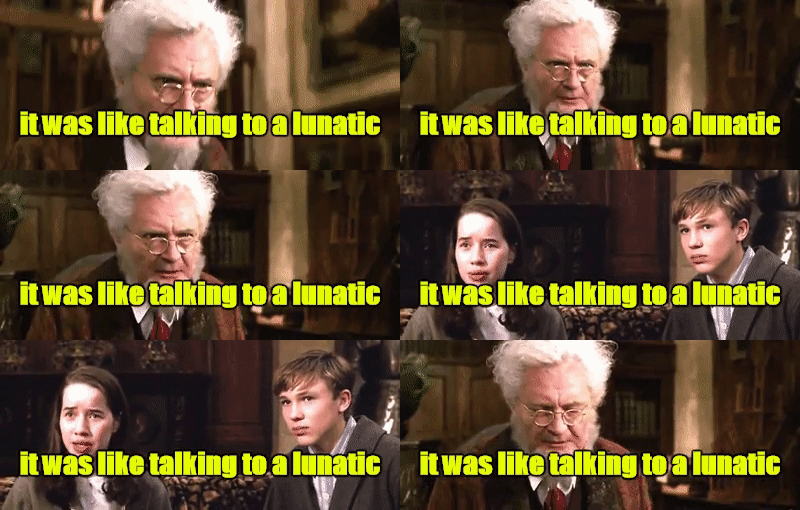
Who Does The Professor Represent in Narnia?The Professor in The Lion, the Witch, and the Wardrobe (Professor Kirke) uses the Christian reasoning of the trilemma - liar, lunatic or Lord - in defending Lucy to her siblings. It's the same argument Christians often invoke in discussion of Jesus as the Son of God.
It is the same argument that C.S Lewis, himself, stated perhaps better than anyone:
I am trying here to prevent anyone saying the really foolish thing that people often say about Him: I’m ready to accept Jesus as a great moral teacher, but I don’t accept his claim to be God. That is the one thing we must not say. A man who was merely a man and said the sort of things Jesus said would not be a great moral teacher. He would either be a lunatic — on the level with the man who says he is a poached egg — or else he would be the Devil of Hell. You must make your choice. Either this man was, and is, the Son of God, or else a madman or something worse. You can shut him up for a fool, you can spit at him and kill him as a demon or you can fall at his feet and call him Lord and God, but let us not come with any patronizing nonsense about his being a great human teacher. He has not left that open to us. He did not intend to.-- Mere Christianity
One could even say that the Professor in The Lion, the Witch, and the Wardrobe represents C. S. Lewis, himself.
Narnia Bible Symbolism: The Talking AnimalsThe Bible does contain talking animals. Some were bad and some were good. There is the possession of the serpent by Satan - the serpent of Eden was actually a dragon, by the way. There is a Satan-Serpent character in The Silver Chair, more on that later on ...
The Bible also includes the talking donkey, "Balaam's Ass" ...
What Does the Talking Donkey Represent in Narnia?In the Book of Numbers 22:28, Balaam starts punishing the donkey for refusing to move, it is miraculously given the power to speak to Balaam.
There are many talking donkeys in Narnia:
In the Magician's Nephew, one of the first animals to be given the power of speech was a donkey. This donkey wisely described the evil magician, Uncle Andrew, by saying, "Perhaps it's an animal that can't talk but thinks it can."
Puzzle the Donkey - Christian Allegory for Sin, Contrition, and Sacrament of Reconciliation
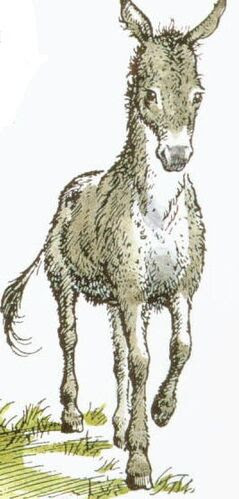 In the Last Battle, the donkey Puzzle was a friend of Shift the Ape. The clever Shift was able to convince the well-meaning Puzzle to participate in the False Aslan Affair by dressing up in a lion-skin and pretending to be Aslan. The well-meaning donkey thereby becomes an anti-Aslan or anti-Christ figure.
Puzzle's conscience was uneasy during this charade, and he eventually returns to Aslan's side. When Aslan ended the Narnian world, Puzzle enters Aslan's Country through the stable door with all of the other Narnians who loved Aslan.
When he finally met the Lion, Puzzle afraid and ashamed:
The Lion bowed down his head and whispered something to Puzzle at which his long ears went down, but then he said something else at which the ears perked up again. The humans couldn't hear what he had said either time.― The Last Battle (Chapter 16)
Here, Puzzle the donkey models the Christian pattern of sin, contrition, and reconciliation with Jesus-Aslan, and ultimately, redemption.
Who Does The Fox Represent in Narnia?The Fox was an elderly fox who lived in Narnia during the reign of the White Witch. He was also one of the first Narnians to receive a present from Father Christmas after Aslan ended the Long Winter.
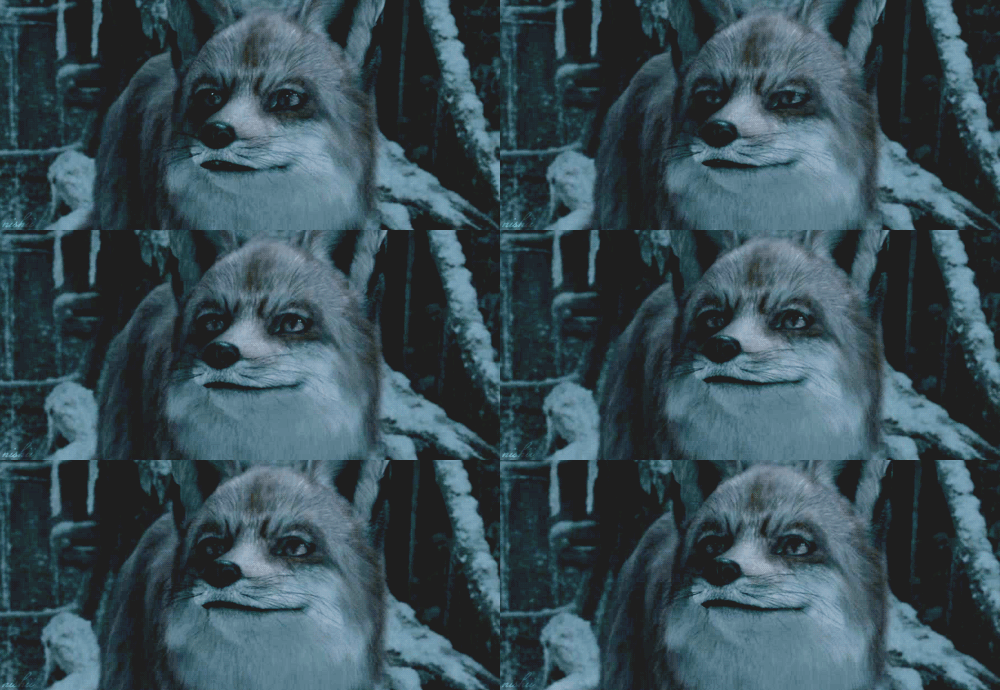
The fox represents people who do not seem to be religious but when tested are proved to be very pious and like the fox, willing to give up their lives for the sake of their beliefs.
What Do Mr. and Mrs. Beaver Symbolize in Narnia?Mr. Beaver and Mrs. Beaver, also known as "She-Beaver", the wife of Mr. Beaver, were certainly kind characters of Christian virtue. Together, they aided the Pevensie children in their escape from the White Witch's Secret Police.

Mr. and Mrs. Beaver could be symbolic of guardian angels, since they are forever trying to help the Pevensies by guiding them to safety and leading them through the snow.
Mr. and Mrs. Beaver are also a representation of Moses. They lead the Pevensie children through the Wilderness, as Moses lead the Israelites through the Wilderness of Sinai. Likewise, the Israelites eventually left the Wilderness by the crossing of a river, the Jordan River.
Mr. and Mrs. Beaver are also a symbol of St. Christopher. As water creatures, they help bear the Pevensie children across the river. St. Christopher is said to have borne the Christ child across a river, as well. What Does Mr. Tumnus Represent in Narnia?You might be tempted to say Mr. Tumnus is another Christian symbol in Narnia for Judas, the betrayer of Christ. But wait!
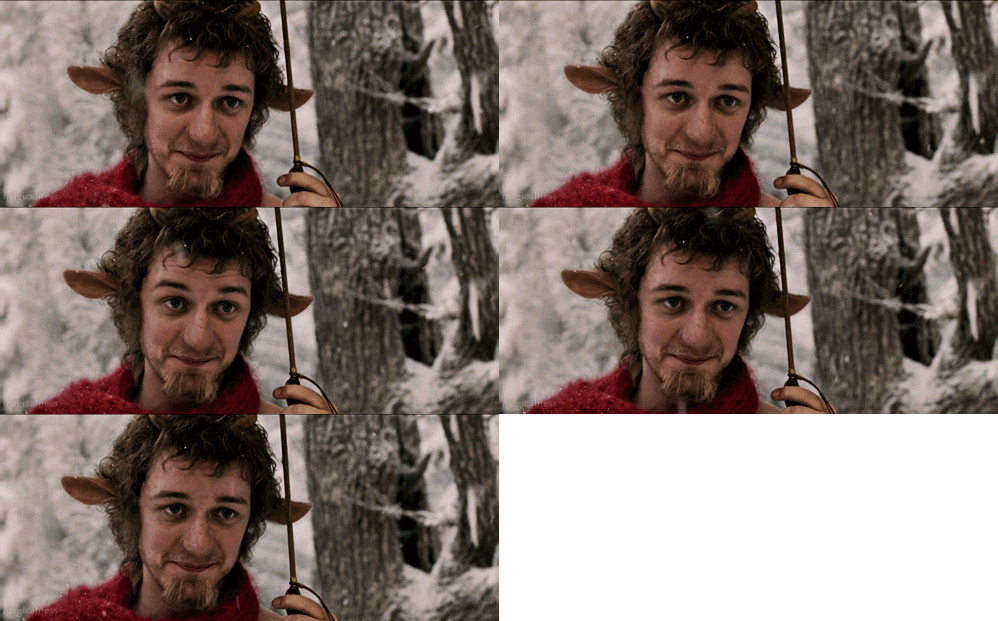
Mr. Tumnus is more like the Apostle Paul. Paul is originally Saul, a member of the Jewish leadership and persecutor of Christians. While he begins by leading the stoning and martyrdom of St. Stephen, he soon realizes his mistake and converts, ultimately giving his life for Christ.
Likewise, Mr. Tumnus begins by betraying the Pevensies, but - at least in the movie - realizes his mistake and lays down his life for them. Unwilling to betray the Pevensies any further, Tumnus is then "stoned" or turned to stone by the White Witch.
What is the Allegorical Meaning of the Wolf in Narnia? As described in the section on King Peter and St. Peter ...
During the Long Winter, the wolves fought on the side of the White Witch. The wolves served the White Witch as her Secret Police. Their captain was Maugrim.
The Secret Police of the White Witch, especially in its wolf aspect, appears to be more a symbol for the Nazi secret police forces, the Gestapo or the S.S., which often used wolves.
Also, the Pevensies, especially Lucy, enter Narnia oblivious of their danger. They are "like sheep for the slaughter". As at Matthew 10:16, "Behold, I am sending you out as sheep in the midst of wolves, so be wise as serpents and innocent as doves.
This is why King Peter, who is the symbol for the Apostle Peter, is called "Wolf's Bane". See the section above on the Christian symbolism of King Peter for more on this ...
Prince Caspian -
Christian Symbolism & Biblical ParallelsWhat is the Biblical Symbolism of the Narnian River God Scene Destroying the Armies?River gods and Naids were created by Aslan at the birth of Narnia when he gave the beasts speech. River gods were powerful male water spirits. The female water spirits were called Naiads. The most famous River god one is the one at the Fords of Berunan, known as the Berunan River god.
When Aslan returned, during the War of Deliverance, the Berunan River God awoke and greeted Aslan:
"Hail, Lord! Loose my chains."
"Loose my chains" sounds like the Hebrew slaves being "delivered" from their bondage in Egypt. And, of course, the god describes Aslan as "Lord", the same title borne by Jesus. The River God also uses "Hail" - more on the use of "Hail" in the Gospels here.
What the River God did next may remind you of a certain scene in Exodus. The Narnian river god destroys the armies of King Miraz just as God used the Nile to destroy the armies of Pharaoh.

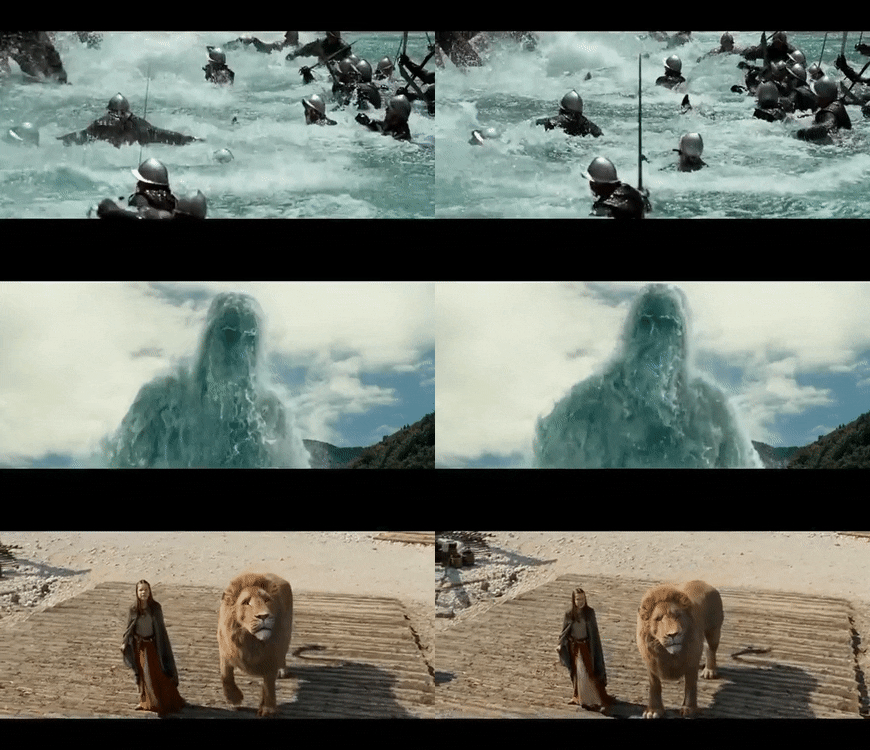
The Narnian river god even looks a bit like Moses.
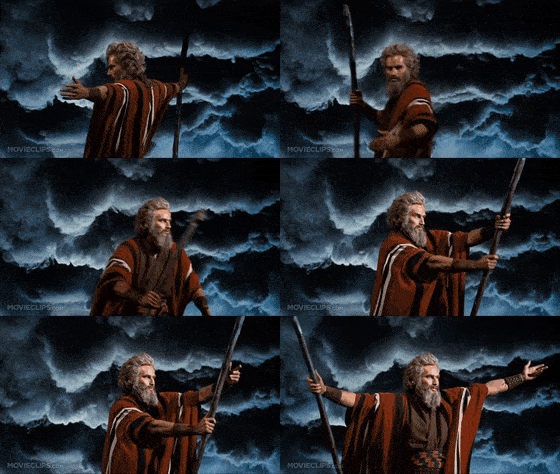
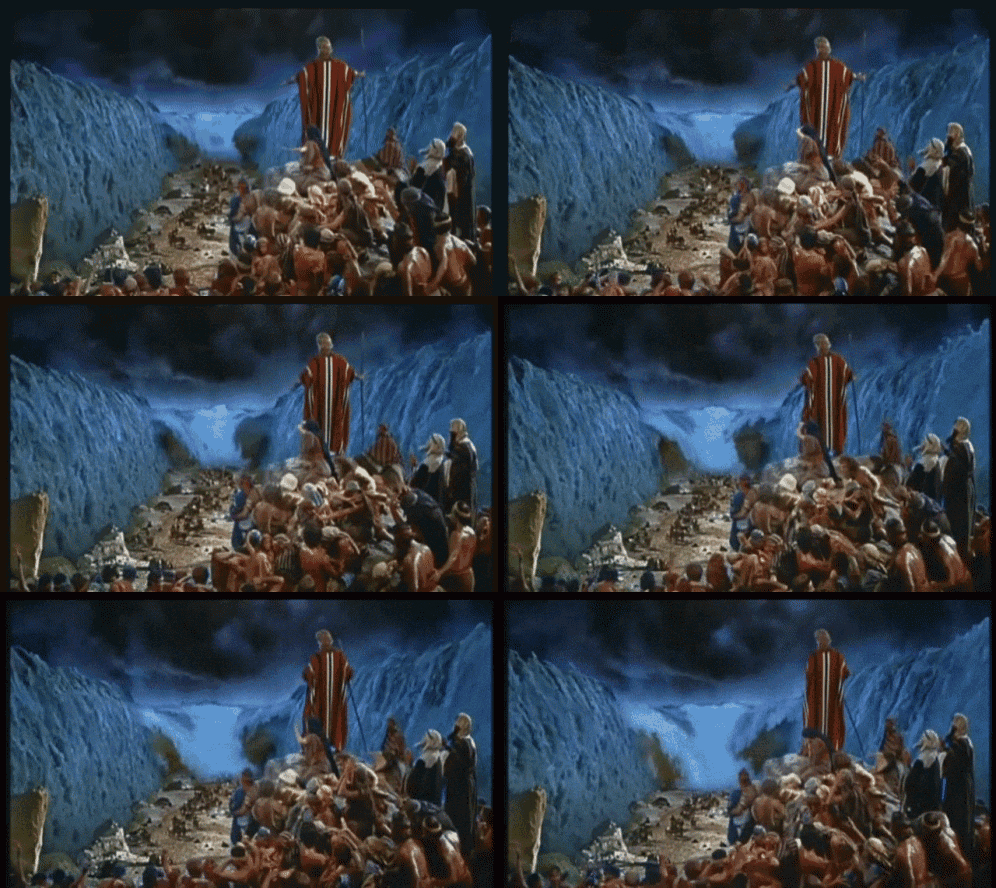
The Voyage of the Dawn Treader -
Christian Allegory & Symbolism Narnia Symbolism: Aslan's Country - Why Does the Light Grow Stronger? Why Does the Water Grow Sweeter?As the ship, the Dawn Treader, sails closer and closer to Aslan’s country, the light from the sun grows brighter and brighter. Everyone’s vision improves, too. This happens because of the ocean water, which is also growing sweeter and sweeter.
Why does the light grow brighter and brighter approaching Aslan's country?
The symbolism of the light of Aslan's Country refers to the light that Jesus Christ brings to men. Jesus is the "light of the world". The symbolism of the water of Aslan's Country refers to the power of the Holy Spirit that fills us when we put our faith and trust in God through Jesus Christ.
Water symbolism is, of course, very rich in the Bible. The Dawn Treader can be viewed as a kind of Ark, carrying the characters over the waters to the sanctuary of dry land, or toward a "New Heaven and a New Earth."
Why does the water grow sweeter and sweeter? Jesus promises us a feast of the choicest wines, a feast of wine on the lees". Likewise, the water is the clearest and choicest.
Also, Jesus tells the woman at the well at John 4:14, “Whoever drinks the water I give them will never thirst. Indeed, the water I give them will become in them a spring of water welling up to eternal life.”
Narnia Symbolism: Aslan changes from a Lion into a LambThe Lion is a massive Biblical symbol. Read more on the Lion of Judah here. As described above in this article, the Lion of Judah appears in the Book of Revelation as a Lamb.
In the Voyage of the Dawn Treader, Aslan describes himself as a lamb, as in "the Lamb of God, who takes away the sins of the world". These are the words of St. John the Baptist upon seeing Jesus at John 1:29. Remember, also, that the Sacrifice of Isaac was replaced with a male lamb, a ram.
Similarly, in Revelation 5:3-7, the long-awaited Lion of Judah finally appears, and is described as "a Lamb standing, as though it had been slain." Read more on this dramatic turn of events in "The Most Surprising Moment in the Bible".
Frank Herbert's Sci-Fi series Dune also makes use of the Biblical Lion of Judah. Read more about that HERE.
Also, in Voyage of the Dawn Treader, C. S. Lewis wrote the following:
"It isn't Narnia, you know," sobbed Lucy. "It's you. We shan't meet you there. And how can we live, never meeting you?"
"But you shall meet me, dear one," said Aslan.
"Are -are you there too, Sir?" said Edmund.
"I am," said Aslan. "But there I have another name. You must learn to know me by that name. This was the very reason why you were brought to Narnia, that by knowing me here for a little, you may know me better there.”
The Silver Chair -
Christian Allegory & SymbolismThe Silver Chair was a magical device constructed by the Queen of Underland, also known as the Lady of the Green Kirtle - another Satan figure like the White Witch. The Silver Chair was designed to keep Prince Rilian bound to a cursed enchantment. Every night, Rilian was sat down onto the chair to renew the manipulative magic.
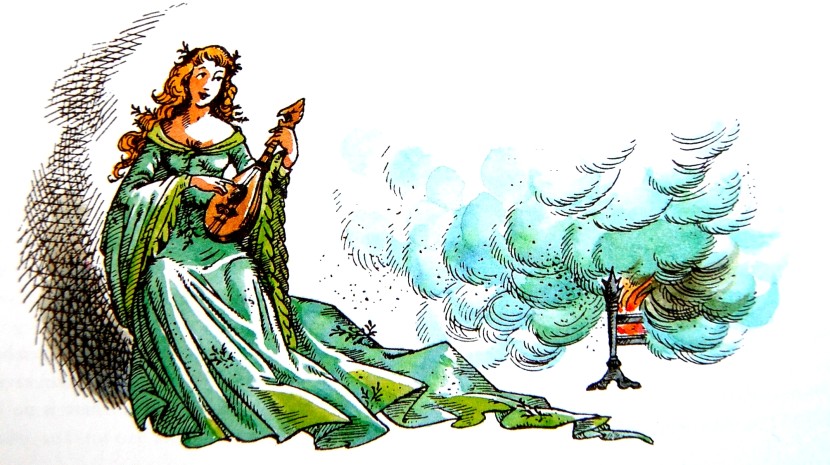
Queen of Underland, The Lady of the Green Kirtle - The Satan Serpent of The Silver ChairWhen Prince Rilian was about twenty years old, Rilian's mother, Lilliandil, was attacked and killed while taking a nap in the northern lands. She was killed by a giant green serpent. We later find out that the green serpent was - surprise! - the Lady of the Green Kirtle.
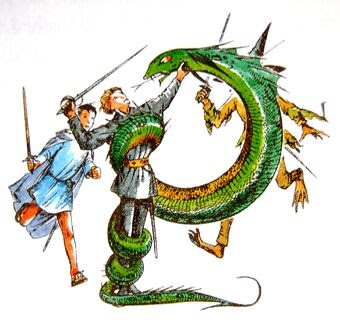
The Bible, of course includes the possession of the serpent by Satan in Genesis. The serpent of Eden was actually a dragon, by the way.
Is Prince Rilian the Prodigal Son?Prince Rilian journeys to the northern lands where his mother was killed. While there, Rilian becomes smitten by the appearance of a beautiful woman, dressed in *cough* GREEN. Rilian did not know who she was, but once he saw her, he forgot all about the serpent and avenging his mother's death. Whether this was due to the woman's beauty or some form of enchantment is not known.
The Prodigal Son leaves home because of sin and vice. These are like the enchantments of the Green Serpent Woman.
King Caspian X also longs for the return of his son, like the father in the Parable of the Prodigal Son.
The Thorn in Aslan's Paw - The Crown of Thorns and "Jesus Wept"There is much more happening here than just a reference to the thorn in the lion's paw, the possibly-Aesop fable of Androcles and the Lion. It seems that C. S. Lewis wanted to Christianize the classic story ...
After Caspian dies, Aslan appears to Eustace and Jill Poe in Narnia and brings them back to the mountain. Aslan weeps over the dead king's body as it lies in the stream. Similarly, Jesus weeps over the death of his friend Lazarus.
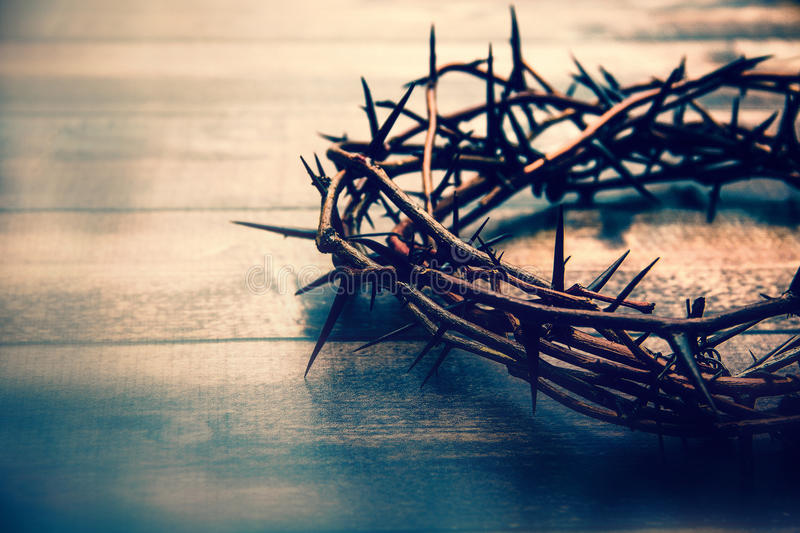
Aslan commands Eustace to drive a thorn into his paw and allows his blood to fall on Caspian's body. First off, the use of a thorn is significant. C. S. Lewis purposefully recalls the Crown of Thorns that pierced and drew blood across the brow and head of Jesus during His Passion and Crucifixion. Aslan's blood is also important. Even though Caspian's body lies in the water of the stream - as though washed by the waters of Baptism - it is Aslan's blood that resurrects King Caspian, for it is by Jesus' blood that we are redeemed and resurrected. As in the blood of the Eucharist, we receive Jesus' own life within us.
The Last Battle -
Christian Allegory & SymbolismWhere to start? C. S. Lewis really brings home many of his Christian themes in The Last Battle. Even the title, The Last Battle, is a reference to the last battle of Armageddon.
More to come!