Pilgrimage to the Utah Monolith What a time to be alive. The...
Pilgrimage to the Utah Monolith
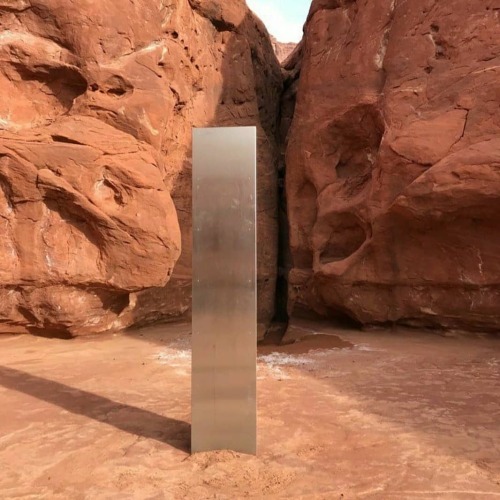
What a time to be alive. The discovery of a metal monolith in the Utah desert on November 18th quickly went viral as a new mystery. The now increasingly fabled story of wildlife workers from the Utah Department of Public Safety spying the monolith from a helicopter resulted in the sharing of some remarkable images. Keen to not attract visitors who might find the hike to the remote spot precarious, the location was kept secret.
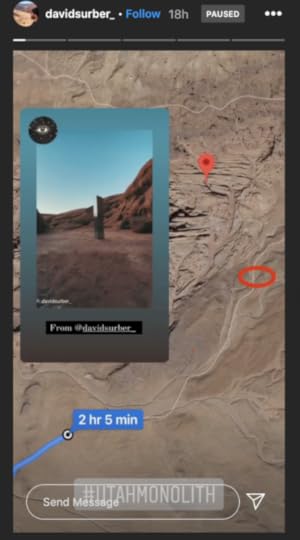
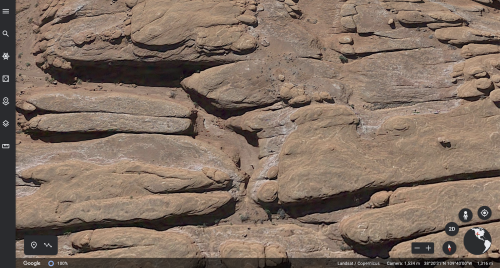
But in the digital age little can be kept secret. Time Slaine, a reddit sleuth, quickly tracked down the location by following the clues of the helicopter flight path and the rock formations pinpointing it on Google Earth. As soon as this information was available it took less than 48 hours for people to arrive at the location and to explore for themselves just what this object might be.
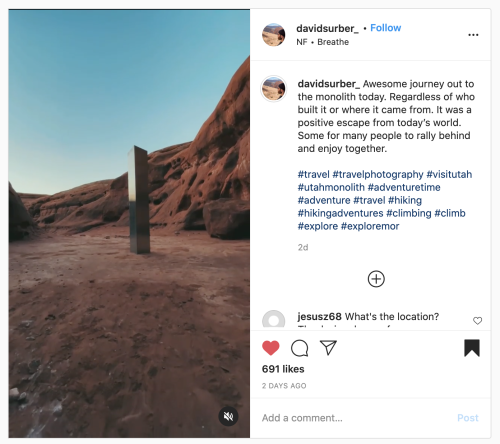
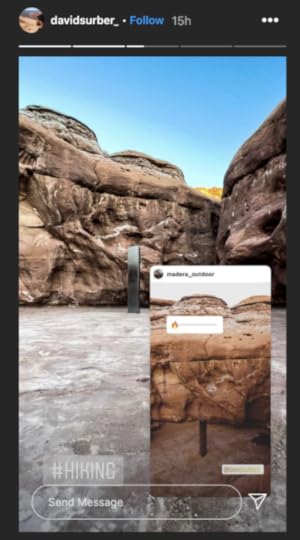
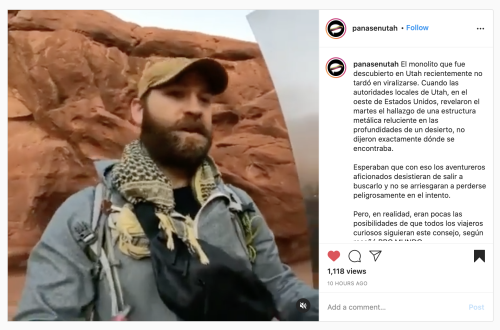
David Surber has been the most successful in physically finding the monolith using the Google Earth data and posting videos and images on his Instagram. We learn that the monolith is hollow and is not magnetic. It is constructed of three pieces and is riveted together. This information seems to confirm that the object is a human construction and is not some alien mystical sign.
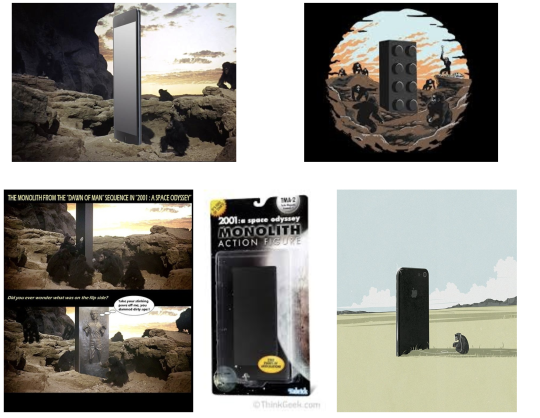
Part of the mystique surrounding the monolith is connected to Stanley Kubrick’s 2001: A Space Odyssey. The desert scenery of the Utah monolith appears to be chosen to look alike the iconic scene from the opening of the film where primates discover the monolith and evolve by using tools. It goes without saying that the monolith has become a potent pop-culture symbol. It is has been revisited in film, artwork, and extensively in memes. In one sense we have been performing a pilgrimage to Kubrick’s (and Arthur C Clarke’s) monolith for decades. It comes as no surprise therefore that the Utah monolith would become a site of secular, pop-culture, and digital pilgrimage.
This title of pilgrim is precisely how David Surber and others are being described. The Guardian reports that the Utah DPS decided to keep the location secret because of potential pilgrims.
“They did not share its coordinates, hoping to put people off trying to make their own pilgrimages in case they got lost in the remote area.”
Modern pilgrimages are fascinating because we are flooded with accessible information. Almost no part of the world in a mystery. With dedication and an internet connection you can perform a virtual hajj, or work out the locations of your favourite films. Modern pilgrimage is uniquely mediated but also reveals where our myths and passions lie.
For more on pilgrimage from my blog click here.