Basic Safety Rules For Blogging
When I originally came up with the idea to do this blog, I wasn't sure where to start. For the most part, I am ahead of the ballgame. My mystery, Mask of Shadows, will be out in the spring of 2012 and my thriller, Darker Than Night, is due out later in the summer. If someone would have told me last year at this time, I would have two books coming out in the next year, I would've thought they were crazy. I would have said the same thing if they would have told me I would also quit my full-time job to pursue this crazy writing dream.
Where do you start?
Now that this is my job, I have to approach it as such. So I started this path to successful authorship by searching the Internet for other successful small press and ebook authors. I found some good suggestions in a post from Writers Digest (http://www.writersdigest.com/whats-new/50-simple-ways-to-build-your-platform-in-5-minutes-a-day). Most often though, I was bombarded by writers telling me how I could sell a million books if I used their method or how to gain thousands of fans/followers on twitter and Facebook if I buy their books. Now, I am all for supporting my fellow authors, but I'm not trying to send anyone else's kids to college. I read through a few previews of these books, but the tactics weren't for me. I know that I have to come out of my shell a little, but I still have to be true to myself.
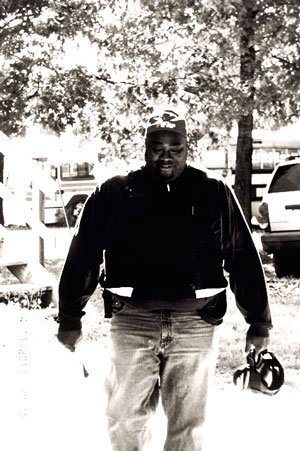
I spent almost ten years of my life working in law enforcement. Why not apply those same principles to my writing/blogging career?
Basic Safety Rules
1. Treat all guns as if they are loaded - If my books are guns, then my words are bullets. Be mindful of your words and what you post online. Once something is out there, you can't take it back. Before I post anything, I make sure to get someone that I trust and respect to proofread and critique it for me (I'll touch more on this later). Sometimes, when you write from a place of pure emotion, you lose track of common sense and etiquette. If your goal is to connect with your readers, be sure not to alienate them with insensitive posts. I try to steer clear of incendiary topics like politics, religion and Tyler Perry.
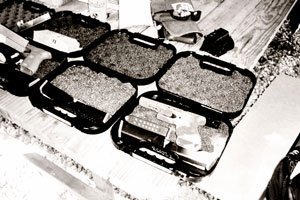
2. Keep the muzzle pointed in safe direction - At the firing range, this is usually downrange or toward the ground. Don't waste your ammo (words) on folks that won't appreciate your work, comment on it or pass it on to others. Fire your words to people in your target audience. Use tools like Facebook and twitter to identify your readers. I know most of my fans are women, age 25-54. These are the people who make the money and decide how to spend it. Though I remain true to myself and my vision, I try to blog about topics that will be meaningful to this demographic. That's not to say I don't have readers that fall into other demos, but it's pretty safe to say that I'm not writing for the SpikeTV crowd (the category I'm in).
3. Keep your finger off the trigger until you are ready to fire - Bad writing is like a squib load, lots of smoke with very little bang. I've found out the hard way that being in a hurry to get published, is worse than not getting published at all. I jumped the gun with my first book and ended up with a product that could have been so much better, if I had taken the time to find the right publisher and the right fit. My first book, Under Abnormal Conditions, is like that first love you had in junior high. At the time, she is the most wonderful thing ever! Then you get to high school and are exposed to new people, places and things. After that is college and your horizons expand even more. When you go back home for a visit and see her, though she still has a special place in your heart, you know that you've moved past that stage. Always strive to put your best writing foot forward, because you never know who may be reading your work for the first time (you don't want it to be the last).
4. Know your target and surrounding. - Hopefully, you have identified your target audience. Once you do, check out other writers who share your demos. Don't look at them as competitors, but as colleagues. Read their blogs, make comments on their posts and give them good reviews. We know Stephen King doesn't need a plug or good review from you, but you could have a hand in helping to discover the next big thing. Bring attention to other writers like yourself and hopefully, they will return the favor. We all have to start somewhere, so don't be afraid to connect with the author and maybe even cross promoting your work (networkedblogs.com).
BONUS TIP
I commented earlier on having someone you trust and respect critique your work. When you work in law enforcement, you have to rely on your partner or your team. Being a writer is the same way. Surround yourself with people you trust and respect. If you are reading this blog, it's because you want to become a better writer. Allow your confidants to help you with editing, web design, marketing, etc. Carefully assemble your team, and allow them to help you succeed. Spend your time writing. We have our own talents and friends who may be gifted in other areas. The people who care about you want you to be successful and won't mind devoting a few hours a week to contribute to that success. (Remember you aren't paying these people, so don't be a jerk)
Filed under: Journal, Writing