
Wanting to Be There
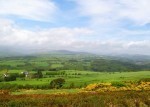 Not too long ago, another writer asked me what I, personally, look for in a story's setting. That's one of those thought-provoking questions that, when confronted with it, I couldn't answer right away but had to consider it as it related to some of the novels I've read ... and remembered.
I finally decided that I look for a setting that can draw me into the thick of it, that can make me forget my immediate surroundings and become a part of the story's center, enabling me to see and feel and taste the place, to live there in the midst of its characters and experience their world with them. As a writer, I know that requires a great deal more than the "travelogue" type of description or a quick overview of a landscape. A writer has to work for encapsulated reality, for mood and atmosphere, and relation to character--all of which involve significant, intricate details, all carefully chosen.
Here are a few examples that accomplish what I'm talking about better than I could ever explain it:
From Homer Hickam, Jr.'s October Sky (the novel on which the movie was based): "There was a breeze coming down the hollow. The dogwoods low on the mountain waved as if asking me to look at their glory. They were like white bouquets God had stuck in the stands of ancient oaks and hickories, glistening green in their own new growth. I heard something and looked up and down the road for its source. It wasn't just a single sound. It was Coalwood moving, talking, humming its eternal symphony of life, work, duty, and job. I stood alone on the side of the road and listened to my town play its industrial song."
From Irene Nemirovsky's Suite Francaise--a masterpiece of a novel. Set at the beginning of the Nazi occupation of Paris in 1940, Parisians are fleeing the city in an eerie hush: "Silently, with no lights on, cars kept coming, one after the other, full to bursting with baggage and furniture, prams and birdcages, packing cases and baskets of clothes, each with a mattress tied firmly to the roof. They looked like mountains of fragile scaffolding and they seemed to move without the aid of a motor, propelled by their own weight down the sloping streets to the town square. Cars filled all the roads into the square. People were jammed together like fish caught in a net, and one good tug on that net would have picked them all up and thrown them down on to some terrifying river bank. There was no crying or shouting; even the children were quiet. Everything seemed calm. From time to time a face would appear over a lowered window and stare up at the sky for a while, wondering. A low, muffled murmur rose up from the crowd, the sound of painful breathing, sighs and conversations held in hushed voices, as if people were afraid of being overheard by an enemy lying in wait ..."
From Denise Giardina's novel, The Unquiet Earth: "The coal camps are strung along Blackberry Creek like beads on a necklace, and each looks much the same. Every house is painted white with black trim. Some of the houses hang from the hillsides, their fronts supported by fragile columns of brick and wood. Others sit in the creek bottom on streets of mud and red dog from the slate dumps, raised at four corners by short brick piles with space beneath the house for spare tires and sleeping dogs. Fences of wood and wire separate each house. In winter a truck comes from the mine and fills the coal houses in the corner of each yard so people can feed their stoves. Several times a day the black trains scream through the camps, and often the whistle at the mine blows for an accident ..."
This is what I mean when I say that, as a reader, I want to be there. And as a writer, I do my best to take the reader there.
BJ


B.J. Hoff's Blog

- B.J. Hoff's profile
- 146 followers

