
Ancient Stone Circles and Other Mysteries: A Look at the Orkneys of Scotland
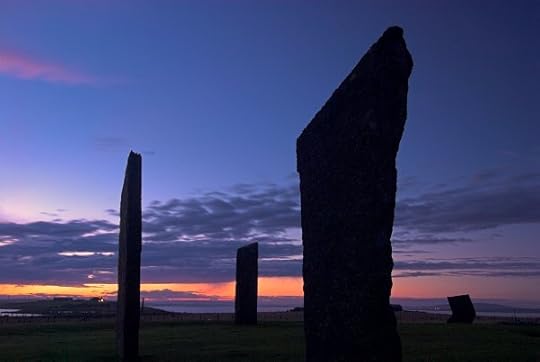 Stones of Stenness in the Orkneys, Scotland’s prehistoric wonderland (image: britainexpress)
I’m always on the lookout for mysterious places around the world as I work on my upcoming 4-book series. Why place a dramatic scene on a bland, everyday street corner when you can find inspiration from one of the world’s many ancient ruins, remote landscapes and historic cities?
So when I came across some accounts
of an amazing cluster of Neolithic sites on the main isle of Orkney in northern
Scotland, I sat up and started to dig deeper. Here’s what I learned about this
fascinating part of the world.
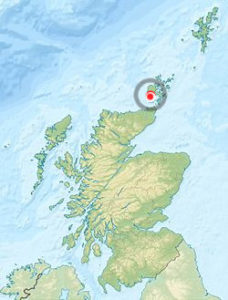 The Heart of Neolithic Orkney
is a World Heritage Site in northern Scotland
The Heart of Neolithic Orkney
is a World Heritage Site in northern ScotlandSoaring Stones on a Remote Isle
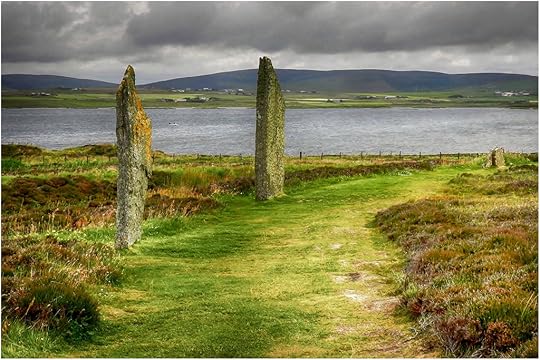 Still standing after 5000 years, these huge stones are the survivors of an Orkney hen
ge
(image: cc)
Still standing after 5000 years, these huge stones are the survivors of an Orkney hen
ge
(image: cc)These are the Standing Stones of Stenness… tall,
thin megaliths that shoot up from the ground like an array of giant stone
spears.
Erected some 5000 years ago, the site is older than Stonehenge and the Great Pyramids of Egypt. Only four of these huge stones remain, but clues within the landscape reveal that they were once part of a larger circle and henge.
Three other fascinating Stone Age sites lie nearby, and together with the Stenness Stones they form a World Heritage Site, The Heart of Neolithic Orkney
Ancient Stone Circles Abound in This Region
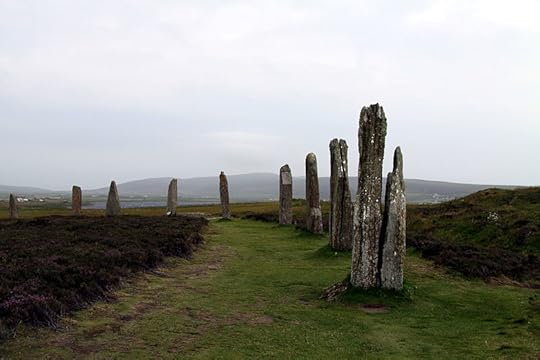 A nearby site: The Ring of Brodgar – a spectacular Stone Age circle, third largest in Britain
(image:cc)
A nearby site: The Ring of Brodgar – a spectacular Stone Age circle, third largest in Britain
(image:cc)Nearby there’s another Stone Age circle, the Ring of Brodgar. (I love these names.) Why were so many ancient sites built close to each other on the island of Orkney? It’s another one of those mysteries that captures our imagination.
In the long-ago past, 60 stones stood around the perimeter of the Ring. Now only 36 stones remain, but they give ample testimony to the impressive nature of the site.
Framed by a huge circular ditch that was carved by stone-age peoples from solid sandstone bedrock (how did they do it?), these stones were erected perhaps 500-1000 years after the Stenness Stones, but a firm date is still pending as archeologists continue to investigate the matter.
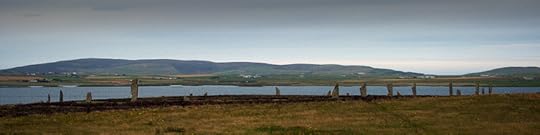
What a setting! The Ring of Brodgar lies between two lochs, with the blueness of sea and sky all around (image: cc)
The Winter Solstice: a Special Time for this Ancient Tomb
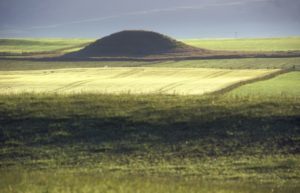 The famous Maeshowe chambered tomb, constructed by Neolithic peoples thousands of year ago
This is Maeshowe, an amazing chambered tomb that was carefully aligned by its ancient builders so that a shaft of sunlight may enter the small entrance at sunset on the winter solstice and shine deep within the tomb.
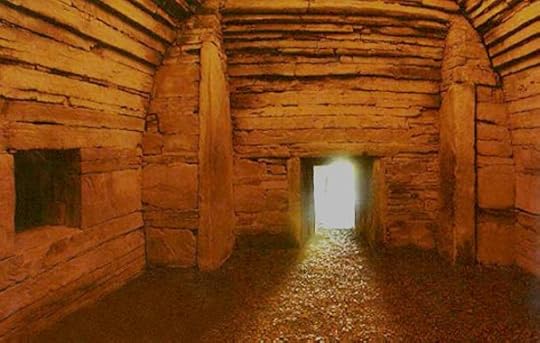 The interior of the Maeshowe chambered tomb
Was the shaft of solstice light meant to fall on the body buried within the tomb – a chieftain, perhaps? It makes me wonder if the ancient builders believed in an afterlife of the spirit.
Ancient Mysteries of Village Life Exposed by a Storm
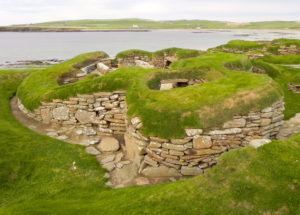 Stone Age Skara Brae
Here’s the fourth site, just as amazing as the others: the miraculously preserved village of Skara Brae.
When a storm washed away some dunes in 1850, the stone foundations of a long-buried Neolithic village were exposed to view, showing beds, fireplaces and shelves. It’s an archaeological wonder, giving insight into daily life of Stone Age island-dwellers 5000 years ago.
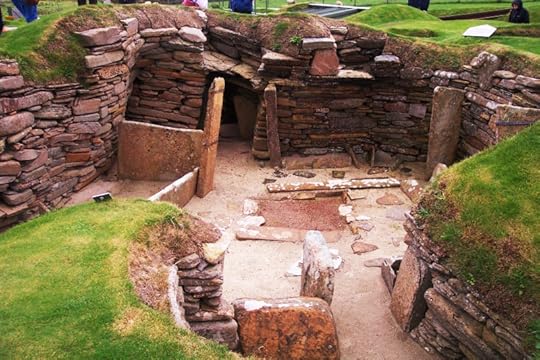 It’s
not hard to im
agine living here. With a warm fire, it’d be almost cozy!
It’s
not hard to im
agine living here. With a warm fire, it’d be almost cozy!
And Now for Some Local Lore: The Story of the Odin Stone
 The Viking God of War
From my April newsletter…
Until about two hundred years ago, a large, lumpy
megalith known as the Odin Stone stood
in a field just north of the Stenness Stones.
Interestingly, the Odin
Stone was pierced through with a hole.
Because of the hole, it’s not surprising that it
featured in various rituals of recent centuries. For instance, it’s said that couples
used to hold hands through the hole to plight their troth.
Note to self – good idea for a scene in a paranormal romance novel
But if Odin himself had any connection to this stone,
the Viking god of war must have been really mad in 1814.
That’s when a local landowner had the Odin Stone smashed to prevent further trespassing on his land.
 Not to be toyed with
I can’t help wondering – with a bit of a shudder- what
happened to the landowner. Did he live to regret his decision?
Note to self – good idea for a reckless hero or heartless villain
My very own ancient stone circle
Can’t afford an overseas trip at the moment? No problem, when
you’re a writer!
Inspired by Britain’s stone-age circles, I decided to send my
characters into danger at a fictional stone circle in Somerset England, not far
from the real-life city of Bath.
I named it The Devil’s Dance, and it appears in my upcoming novel Threshold of Destiny (Vampires and Mirabilim, Book 1).
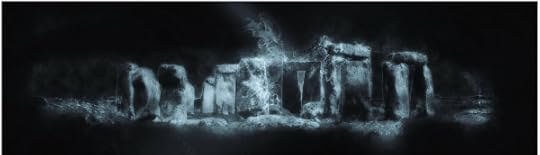 The
Devil’s Dance appears near the end of my novel, Threshold of Destiny
The
Devil’s Dance appears near the end of my novel, Threshold of Destiny
When my protagonists in Threshold of Destiny arrive at The Devil’s Dance, they know that a number of enemies – both human and vampire – are already present within the shadows.
But no one, friend or foe, can see the malevolent being from
another world who’s also there, waiting
inside the circle that night.
The post Ancient Stone Circles and Other Mysteries: A Look at the Orkneys of Scotland appeared first on Linn Chapel.





.JPG)
