Coping with COVID-19
Have you been feeling way more stressed out
than usual, like you’re teetering on the edge of a breakdown with all the uncertainty
around coronavirus? For those of us who live with a mental illness and who
already need to make intentional daily efforts to manage and maintain our
mental health, the added stress of a pandemic could be seriously destabilizing,
and the practice of self-isolation could trigger anxiety or depression.
I, for one, am finding it really hard to focus on anything other than the pandemic, and I’m getting tired much earlier in the evening these days. Falling into a depression is definitely a worry for me because I know (from analyzing all my previous bipolar episodes) that getting any type of flu could likely trigger a depression.
Despite all the understandable attention
being placed on avoiding becoming physically
sick, now—more than ever—it’s vital that we take extra precautions to stay
“sane” and protect our mental health.
Here are some effective strategies to help you fight off the exceptional
anxiety and/or depression that this pandemic may be triggering in you.
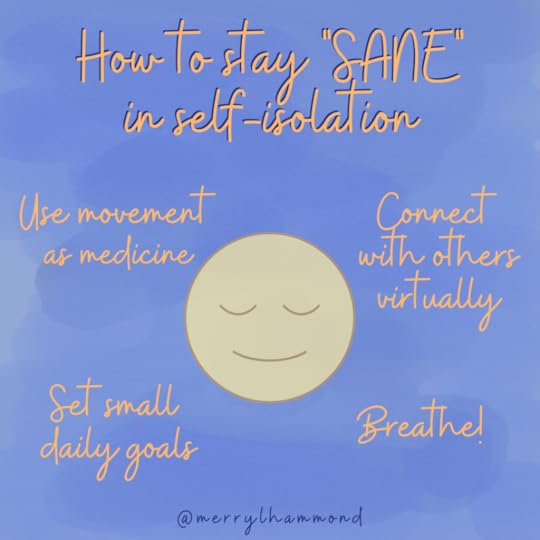
1. Movement as medicine
When
the body moves, the brain quite literally grooves! We all know about the
powerful positive effects that exercise has on our mental health, and there’s
no reason why you shouldn’t keep up with daily exercise just because you can’t
go to the gym.
If
possible, get out into nature and go for walks or jogs. If you don’t have a
yard or a park nearby to get your nature-fix, step out onto your balcony or
stick your head out the window to breathe some fresh air, and then do an
at-home workout. There are thousands of workout options on YouTube, but to get
you started, here’s one video demonstrating a 16-minute high-intensity workout for
small spaces with absolutely no equipment needed: https://www.youtube.com/watch?v=TwOuh73cGGQ
If
you have an exercise machine like a treadmill or stationary bike at home, you
can watch a nature scene on your laptop or tablet while you exercise. I find they’re
quite realistic!
For example, here are two options for biking through nature:
https://www.youtube.com/watch?v=I-waCkPftQk
https://www.youtube.com/watch?v=USUJa3N3TOM
And this one is a relaxing walk on the beach: https://www.youtube.com/watch?v=lOGE7nNkL0Y
2. Use the internet to connect
Use the
internet (apps like WhatsApp, Skype, etc.) to connect with friends, family, and
coworkers. This will help you feel less isolated and shut out from the world.
However,
don’t allow yourself to obsess over the news. Keep a healthy distance from
things that will stress you out more.
For example, set a limit on the number of times or number of minutes per day
that you’ll listen to or watch the news. You don’t need to hear about every
single new confirmed case of COVID-19 infection, or death, etc.
3. Set small daily goals
Setting
yourself simple, achievable daily goals (e.g. I will exercise for x minutes,
and write x words in my journal, and email at least x people to stay in touch) will
give you a sense of purpose and control and help to decrease feelings of
powerlessness. I find that sticking as much as possible to my normal daily
routine (time of waking, mealtimes, exercise, bedtime, etc.) helps to normalize
this strange bubble we’re all living in during self-isolation.
Setting yourself simple, achievable daily goals (e.g. I will exercise for x minutes, and write x words in my journal, and email at least x people to stay in touch) will give you a sense of purpose and control and help to decrease feelings of powerlessness. I find that sticking as much as possible to my normal daily routine (time of waking, mealtimes, exercise, bedtime, etc.) helps to normalize this strange bubble we’re all living in during self-isolation.
4. Take one minute every hour or so to breathe
This
is a simple mindfulness practice that will bring your attention into the
present and rein in your anxious thoughts as you focus on the simple task of
inhaling and exhaling.
Instructions:
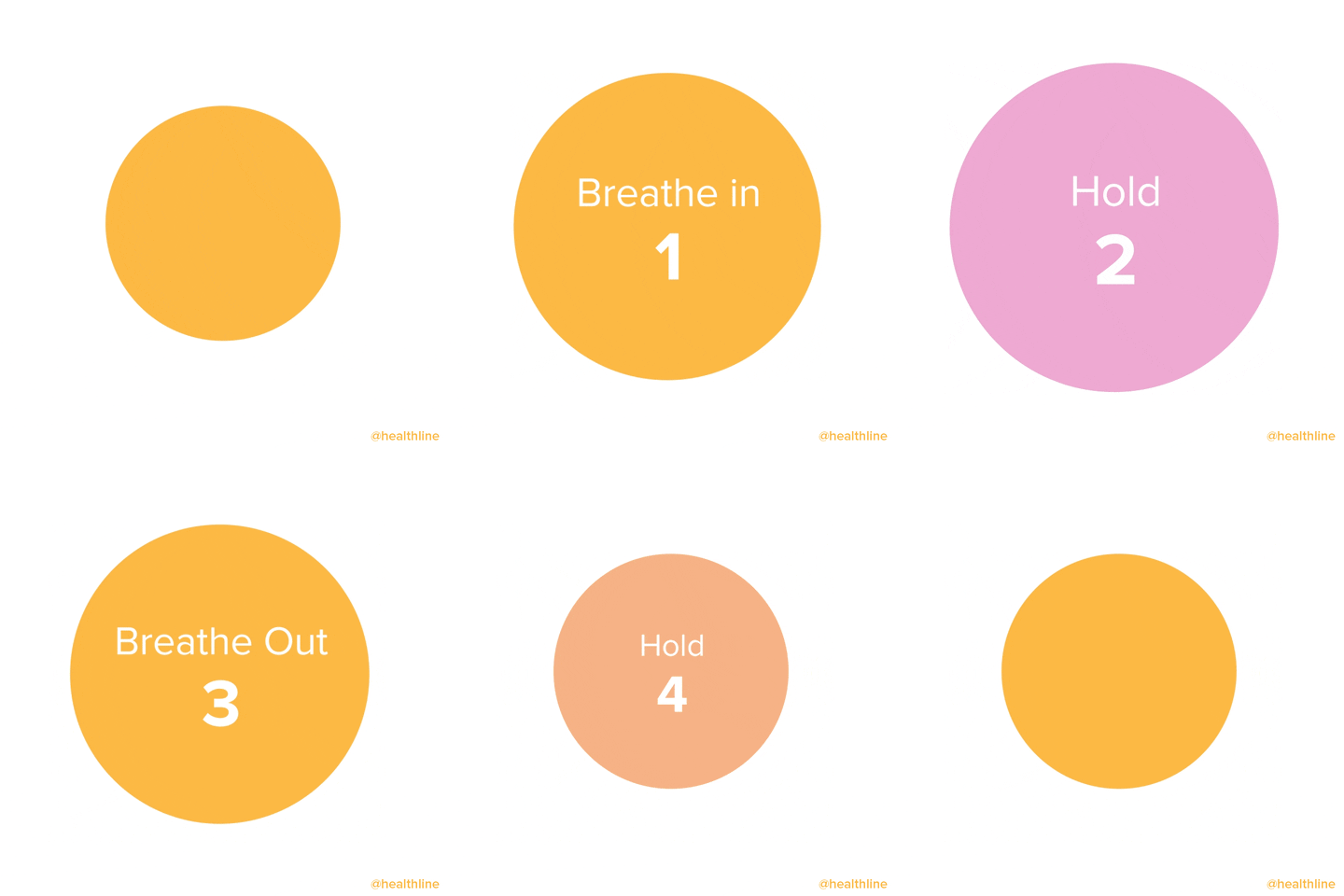
Set an alarm for every couple of hours to remind you to take a breathing breakSet a timer for the length of time you want to breathe for (1-2 minutes is a good start)Bring your attention to your slow breaths; to the feeling of air flowing into and out of your lungsEmpty your lungs fully with each exhalationIf your mind starts to wander, visualize the air as it comes in through your nose, gliding down your windpipe, flowing into your lungs and filling the air sacs (“alveoli” or tiny balloon-like structures) that make up your lungs. Hold the air there for a moment, and then picture the alveoli contracting and expelling the air back into the branches of your lungs, up into your windpipe, and out of your mouth.
If
it helps you to have a guided visual aid to concentrate on as you breathe, you
can try one of these methods:
A) Recommended for beginners:
(Or use this tool if you want to breathe for
longer than the 50-second video: https://www.calm.com/breathe)
B) For slower breaths (beginners beware: you may feel dizzy after a few breaths!):
Tip:
If you have an Apple watch like I do, I recommend using the Breathe app which
sends automatic breathing reminders and also has the animation to guide your
breaths.
Of
course, if you can manage to do a full mindfulness meditation, that’s
even better. Just search “guided meditation” on YouTube, and choose “sleep” or
“relaxation” or “anxiety” etc. One of my favourite YouTubers is Jason
Stephenson, whose voice and accent I really enjoy listening to, and he has
endless free videos ranging from fifteen minutes to several hours long. But I
urge you to experiment until you find someone you click with.

Know
that our main priority right now is to protect our mental health even as we
follow the guidelines of our public health authorities and politicians. By
keeping a positive attitude we will protect ourselves and can help others
around us who may not have the same strategies we have developed to stay sane.
Above all, remember that whatever else happens, this too shall pass!
Hang
in there, friends! And please let me know what you’re doing to cope with the
COVID-19 pandemic.
Cheers,

The post Coping with COVID-19 appeared first on Merryl Hammond.