Revisiting a time of conflict
If there is one thing I like about researching a new book, it is learning about people, places, and times I have never met or experienced. I particularly like seeing a historical period through the eyes of the people who lived in that period.
This is especially true when exploring significant eras and events, such as World War II, which was a backdrop for The Mine , Mercer Street , Hannah's Moon , and Indian Paintbrush , and the American Civil War, which will be the primary setting for my next work.
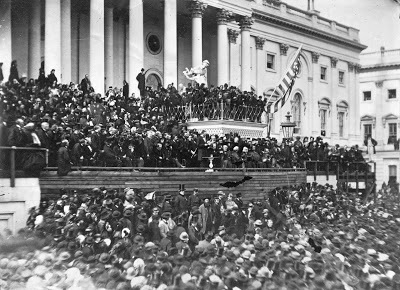
In October, I began reintroducing myself to a conflict that claimed 600,000 lives and forged a modern nation. Though I had read or watched many of the works at least once before, I enjoyed them nonetheless. I expect to peruse many more before I begin writing the first novel of my fourth series, set mostly in Washington, D.C. and northern Virginia in early 1865.
Some of the less familiar sources -- like Abraham Lincoln: A History by John M. Hay and John George Nicolay, Mary Boykin Chesnut's Civil War Diary from Dixie , and The Lady Nurse of Ward E by Amanda Akin Stearns -- are in the public domain and available online. All three were produced by individuals with a front-row seat to history. Filmmaker Ken Burns cited Chesnut's diary often in his epic 1990 television series, The Civil War, which I revisited in September.
I have also begun reading more recently published books, like A Guide to Civil War Washington, D.C.: the Capital of the Union by Lucinda Prout Janke, The Willard Hotel: An Illustrated History by Richard Wallace Carr and Marie Pinak Carr, and The Civil War in Spotsylvania County: Confederate Campfires at the Crossroads by Michael Aubrecht.
My next work, the first in a new time-travel saga, will follow a modern family from 2021 to the final three months of the Civil War and focus on the civilian side. Though most of the characters will be fictional, a few, such as Abraham Lincoln, Robert Lincoln, John Hay, Edwin Stanton, and John Wilkes Booth, will not. I learned more about Robert Lincoln, the president's oldest son, and Hay, one of his secretaries, by reading Jason Emerson's Giant in the Shadows and John Taliaferro's All the Great Prizes , the definitive works on the two men.
I hope to begin writing the first draft in January and publish by June. (Photo: Lincoln's Second Inaugural Address, March 4, 1865. Image courtesy of Wikimedia Commons.)
This is especially true when exploring significant eras and events, such as World War II, which was a backdrop for The Mine , Mercer Street , Hannah's Moon , and Indian Paintbrush , and the American Civil War, which will be the primary setting for my next work.
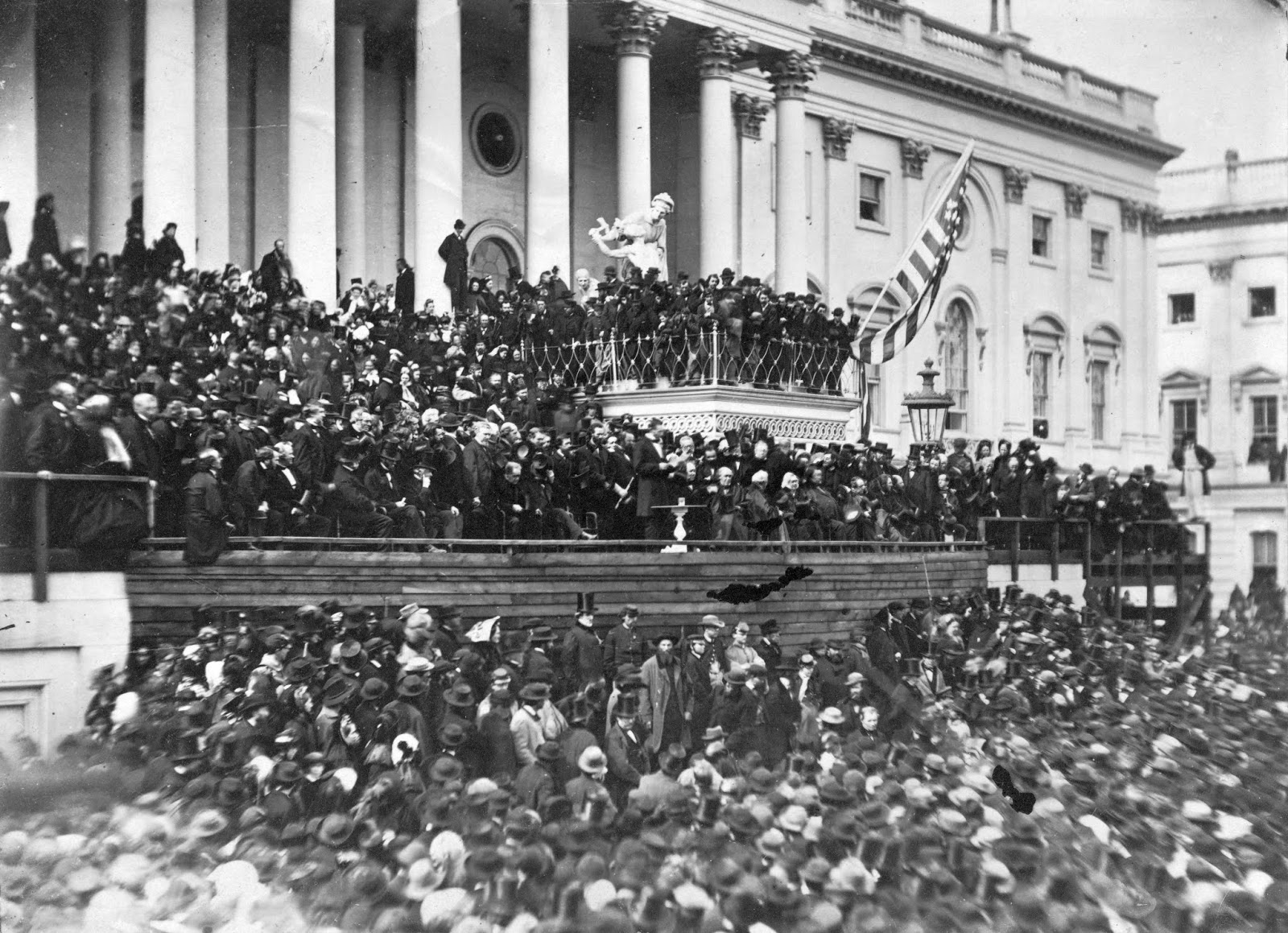
In October, I began reintroducing myself to a conflict that claimed 600,000 lives and forged a modern nation. Though I had read or watched many of the works at least once before, I enjoyed them nonetheless. I expect to peruse many more before I begin writing the first novel of my fourth series, set mostly in Washington, D.C. and northern Virginia in early 1865.
Some of the less familiar sources -- like Abraham Lincoln: A History by John M. Hay and John George Nicolay, Mary Boykin Chesnut's Civil War Diary from Dixie , and The Lady Nurse of Ward E by Amanda Akin Stearns -- are in the public domain and available online. All three were produced by individuals with a front-row seat to history. Filmmaker Ken Burns cited Chesnut's diary often in his epic 1990 television series, The Civil War, which I revisited in September.
I have also begun reading more recently published books, like A Guide to Civil War Washington, D.C.: the Capital of the Union by Lucinda Prout Janke, The Willard Hotel: An Illustrated History by Richard Wallace Carr and Marie Pinak Carr, and The Civil War in Spotsylvania County: Confederate Campfires at the Crossroads by Michael Aubrecht.
My next work, the first in a new time-travel saga, will follow a modern family from 2021 to the final three months of the Civil War and focus on the civilian side. Though most of the characters will be fictional, a few, such as Abraham Lincoln, Robert Lincoln, John Hay, Edwin Stanton, and John Wilkes Booth, will not. I learned more about Robert Lincoln, the president's oldest son, and Hay, one of his secretaries, by reading Jason Emerson's Giant in the Shadows and John Taliaferro's All the Great Prizes , the definitive works on the two men.
I hope to begin writing the first draft in January and publish by June. (Photo: Lincoln's Second Inaugural Address, March 4, 1865. Image courtesy of Wikimedia Commons.)


No comments have been added yet.