Around the World with Virginia Campbell
CHRISTMAS AROUND THE WORLD WITH VIRGINIA CAMPBELL
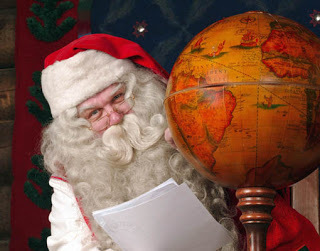
Santa Claus is the original globe-trotter and multi-tasker. What a guy! Although he has many different aliases, such as Father Christmas, Old Saint Nick, Kris Kringle, or just plain "Santy", the image of a jolly old soul with a white beard and a hearty belly-laugh is recognized around the globe. The original St. Nicholas was born in the third century in the area that eventually became the country of Turkey. Selfless and devout, Nicholas became Bishop of Myra in the city now known as Demre, Turkey. Living his whole life as a follower of the principles of Jesus Christ, Nicholas worked for justice and cared for those in need. There are some who say St. Nicholas existed only in legend, without any reliable historical record. Legends usually do grow out of real, actual events, though they may be embellished to make more interesting stories. Many of the St. Nicholas stories seem to be truth interwoven with imagination. St. Nicholas followed the words of the Lord, to "lay up treasure for yourself in Heaven," by praying every day, by fasting, and by performing good deeds. The legend of St. Nicholas began with the perception that God worked many miracles through Nicholas. People began to call him a "wonderworker" (a person who works wonders or performs miracles). Many people were so inspired by his life of service to others that they too aspired to perform good deeds and show compassion for the inhabitants of the world around them. Throughout the centuries, the personas and images of St. Nicholas have been changed and reinvented, although he is always perceived as a kindly old man who is capable of a great many miraculous and magical deeds. Whatever your conception of St. Nicholas or Santa Claus may be, and whether or not you are a person of faith of any denomination, there is no denying that the holiday season is celebrated around the world with time-honored customs and festivities.
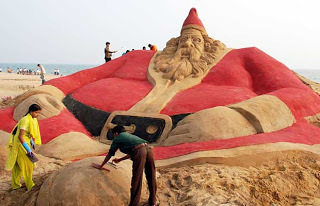 "INDIA'S "SANDA CLAUS"
Christians are a minority in India, comprising only a very small percentage of the population. However, Christmas is celebrated in India not only by Christians, but by people of other religions as well. The tradition of Christmas observance was introduced here with the colonization of Europeans. Though the country gained its independence in 1947, many European customs and festivals stayed on. The fact that there is the presence of a Christian community in India helped to maintain these traditions. Today, Christmas is the biggest and most-loved festival of Indian Christians. The festival is also enthusiastically celebrated by people of other religious denominations. As in many other countries, Christmas is observed in India on 25th December. Everyone gears up for the festival from nearly a week before. Stores are decked up for the occasion with every gift shop packed with Christmas trees, presents, ornaments and other items of decoration for those who embrace the season
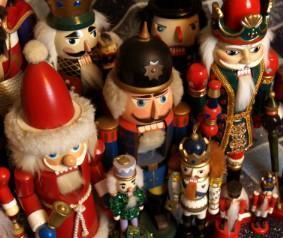
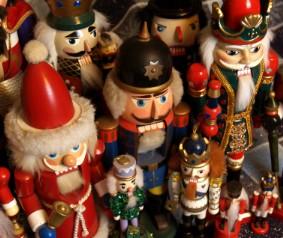
According to legend, on Christmas Eve in Germany rivers turn to wine, animals speak to each other, tree blossoms bear fruit, mountains open up to reveal precious gems, and church bells can be heard ringing from the bottom of the sea. Of course, only the pure in heart can witness this Christmas magic. All others must content themselves with traditional German celebrating, of which there is plenty. As a matter of fact, there is so much celebrating that is has to begin on December 6th, St. Nicholas Day. As in many other European countries, on the eve of Dec. 6th children place a shoe or boot by the fireplace. During the night, St. Nicholas, the patron saint of children, hops from house to house carrying a book of sins in which all of the misdeeds of the children are written. If they have been good, he fills the shoe or boot with delicious holiday edibles. If they have not been good, their shoe is filled with twigs. The custom of trimming and lighting a Christmas tree had its origin in pre-Christian Germany, the tree symbolizing the Garden of Eden. It was called the "Paradise Baum," or tree of Paradise. Gradually, the custom of decorating the tree with cookies, fruit and eventually candles evolved. Other countries soon adapted the custom. The combination of a useful tool and a figural form with a human appearance, the nutcracker is a much-loved holiday decoration. The job of the nutcracker was to work hard for the children of the family by biting open the nuts. The Nutcracker King made his appearance in 1891 as an enchanted prince in Peter Tchaikovsky's "Nutcracker Suite", and to this day, he continues to win the hearts of children of all ages. The famous ballet contributes to the ever-increasing popularity of the nutcrackers as collectible objects.
In France, Christmas is a time for family and for generosity, marked by family reunions, gifts and candy for children, gifts for the poor, Midnight Mass, and le Réveillon. The celebration of Christmas in France varies by region. Most provinces celebrate Christmas on the 25th of December, which is a bank holiday. However, in eastern and northern France, the Christmas season begins on 6 December, la fête de Saint Nicolas, and in some provinces la fête des Rois* is one the most important holidays of the Christmas season. In Lyon, 8 December is la Fête de lumières, when Lyonnais pay homage to the virgin Mary by putting candles in their windows to light up the city. In 1962, a law was passed decreeing that all letters written to Santa would responded to with a postcard. When a class writes a letter, each student gets a response. Although fewer and fewer French attend la Messe de Minuit on Christmas Eve, it is still an important part of Christmas for many families. It is followed by a huge feast, called le Réveillon (from the verb réveiller, to wake up or to revive). Le Réveillon is a symbolic awakening to the meaning of Christ's birth and is the culinary high point of the season, which may be enjoyed at home or in a restaurant or café that is open all night. Each region in France has its own traditional Christmas menu, with dishes like goose, chicken, capon, turkey stuffed with chestnuts, oysters, and boudin blanc (similar to white pudding). Another important aspect of French Christmas celebrations is the crèche , which is displayed in churches and many homes. Living crèches in the form of plays and puppet shows based on the Nativity are commonly performed to teach the important ideas of Christianity and the Christmas celebration. Mistletoe is hung above the door during the Christmas season to bring good fortune throughout the year. In Provence, an area of southeastern France, the entire family helps bring in the Yule Log, which must be large enough to burn from Christmas Eve until New Year's Day. Many years ago, part of this log was used to make the wedge for the plough as good luck for the coming harvest.
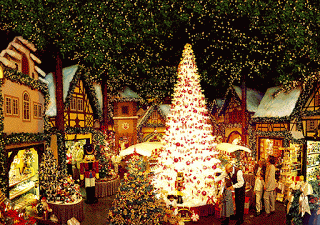
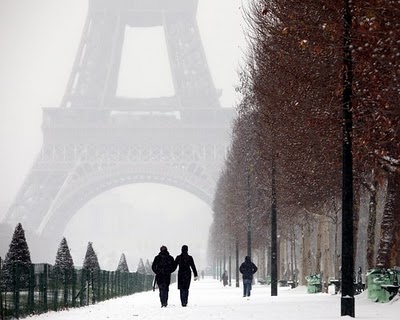
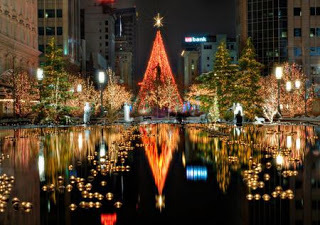 CHRISTMAS IN PARIS, FRANCE
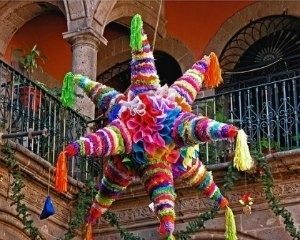
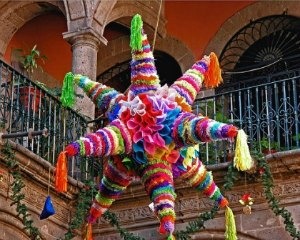
Christmas in Mexico, in both traditional homes and rural areas, is a religious holiday. Every home will have a Nativity scene. The hosts of the home are the innkeepers, and the neighborhood children and adults are Los Peregrinos, the Pilgrims going to Bethlehem. The Peregrinos will ask for lodging in three different houses but only the third one will allow them in. Once the innkeepers let them in, the group of guests comes into the home and kneels around the Nativity scene to pray the Rosary. After all the prayer is done, then it comes the party for the children. There will be a Piñata, filled with peanuts in the shell, oranges, tangerines, sugar canes, and hard candy. The children will sing while the child in turn is trying to break the Piñata with a stick while he/she will be blindfolded. Although the Piñata was originally from Italy, it has become a Mexican tradition for celebrations where there are children involved. The Piñata was originally made out of a clay pot and decorated with crepe paper in different colors. Today's piñatas are made out of cardboard and paper mache techniques and decorated with crepe paper. This change was made to prevent the children from cutting their hands when going for the fruit and candy when the Piñata was broken and the clay piece would become a hazard. They have all kinds of designs besides the traditional star.
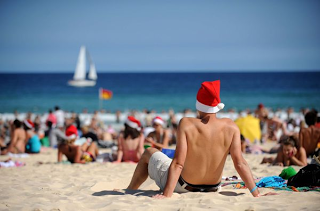
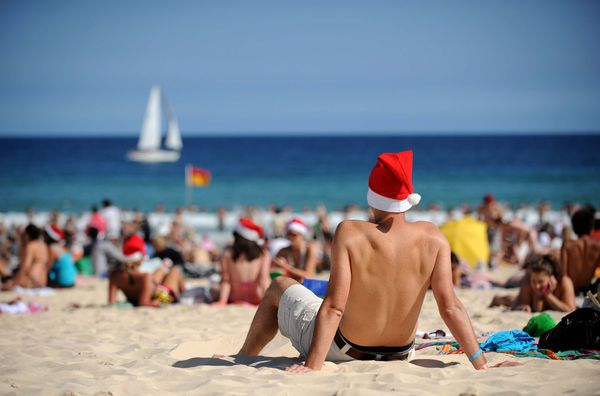
Christmas in Australia is celebrated during the Australian Summer. So, no snow and log fires, but Australia is a multicultural country and traditions are often mingled and derived from a mixture of other countries. Christmas Trees, Father Christmas, Christmas Carols and gifts are part of the celebration, and Christmas Dinner may be a barbeque in the backyard or a picnic on a beach. Champagne may be served instead of eggnog, and Pavlova is favored over Plum Pudding. Christmas also coincides with the Summer Holidays and quite often families will celebrate Christmas away from home. The big events of the Christmas season are the Carols By Candlelight. These began in Melbourne in 1937 and are outside concerts in the warm summer evenings where people sit on blankets light candles and join together to sing Christmas Carols. Most towns have a concert and two major ones are televised across Australia from Sydney and Melbourne. The trend for Christmas in Australia has been toward seafood - prawns, lobsters, crabs, mussels, scallops, pippies, and cold salad as Christmas fare. Fine Australian wine and robust Australian beer are perfect for holiday cheers.
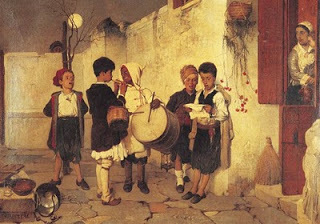
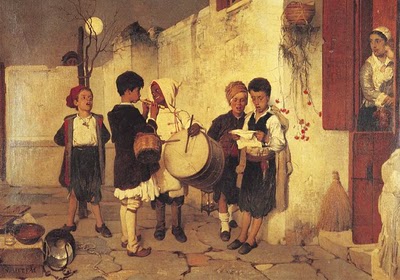
On Christmas Eve in Greece, carols are usually sung by small boys to the beating of drums and the tinkling of triangles. They go from house to house and are rewarded with dried figs, almonds, walnuts, sweets and, sometimes, small gifts. Very few presents are exchanged between friends and family during Christmas. Instead, small gifts are given to hospitals and orphanages. Priests sometimes visit homes sprinkling holy water around in order to dispel any bad spirits which may be hiding in the houses. Most Greek families decorate their tress with tinsel and a topmost star. Any gifts which are exchanged are done so on January 1st, Saint Basil's Day. On Christmas Eve, groups of people gather around the holiday table to feast upon figs which have been dried on rooftops, served with spicy, goden Chrisopsomo bread, and such sweets as kourambiethe, a Greek nut cookie. During the twelve days of Christmas, there is a tradition called kallikantzeri when, it is believed, mischievous goblins appear from below the earth.
Have you ever celebrated the holidays in a country different from where you make your home? Is there somewhere in the world that is your dream holiday destination? What customs from other countries are part of your heritage? What is your most cherished holiday tradition or favorite recipe? I wish you all the happiest of holidays and a fabulous new year in 2012!
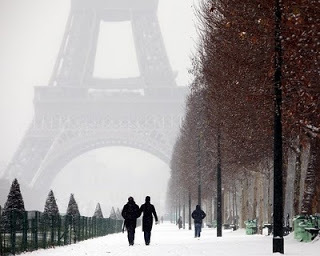 "WE'LL ALWAYS HAVE PARIS"
FOR SANTA'S COOKIE PLATE:
KULKULS--made all over India at Christmas time
4 cups all purpose flour
1/2 tsp baking powder
2 eggs
1 cup coconut cream
4 tbsps sugar, powdered
1 tbsp butter
Oil for deep frying
1 cup sugar (granulated)
3-4 tbsps water
Mix the flour and baking powder well. Add the butter a little at a time, mixing gently. Beat the eggs in a separate bowl and add them to the flour-butter mix. Add the powdered sugar and coconut milk to this and mix into a soft dough. Form the dough into small marble-sized balls. Grease the back of a fork with some oil and flatten and press a ball of dough onto it. Starting at one end, roll the dough off the fork and into a tight curl. The end result will be a tube-like curl with the design from the fork on it! Make the remaining dough in the same manner till it is all used up. Heat the oil in a deep, heavy-bottomed pan on a medium flame. When hot, fry the kulkuls in it, making sure to turn often, till they are a light golden brown in color. Drain and cool on paper towels. Put the granulated sugar and water in a separate pan and cook till the sugar melts fully. Put the cooled kulkuls into this sugar syrup and coat well. Remove and allow to sit in a plate till the sugar encrusts on the kulkuls. When fully cooled, you can store the kulkuls for a considerable amount of time if kept in an air-tight container.
Pfeffernusse Cookies--German Tradition
1/2 cup molasses
1/4 cup honey
1/4 cup shortening
1/4 cup margarine
2 eggs
4 cups all-purpose flour
3/4 cup white sugar
1/2 cup brown sugar
1 1/2 teaspoons ground cardamom
1 teaspoon ground nutmeg
1 teaspoon ground cloves
1 teaspoon ground ginger
2 teaspoons anise extract
2 teaspoons ground cinnamon
1 1/2 teaspoons baking soda
1 teaspoon ground black pepper
1/2 teaspoon salt
1 cup confectioners' sugar for dusting
Stir together the molasses, honey, shortening, and margarine in a saucepan over medium heat; cook and stir until creamy. Remove from heat and allow to cool to room temperature. Stir in the eggs. Combine the flour, white sugar, brown sugar, cardamom, nutmeg, cloves, ginger, anise, cinnamon, baking soda, pepper, and salt in a large bowl. Add the molasses mixture and stir until thoroughly combines. Refrigerate at least 2 hours. Preheat oven to 325 degrees F (165 degrees C). Roll the dough into acorn-sized balls. Arrange on baking sheets, spacing at least 1 inch apart. Bake in preheated oven 10 to 15 minutes. Move to a rack to cool. Dust cooled cookies with confectioners' sugar.
FRENCH CHRISTMAS COOKIES
1/2 c. butter
3/4 c. sugar
1/2 c. honey
2 egg yolks
1/4 c. milk
1 tsp. vanilla
3 1/2 c. sifted cake flour
Cream butter until soft, add sugar and beat. Add honey and egg yolks. Add milk, vanilla, and beat. Add flour gradually. Beat after addition. Chill dough. Roll out and cut. Bake 10 minutes at 375 degrees. Cool and frost with white or chocolate icing.
Mexican Christmas Cookies: Galletas de Navidad
1 1/2 cups butter, at room temperature
1/3 cup sugar
3 cups flour
1 1/2 teaspoons vanilla extract
4 eggs, separated
3/4 cup sugar
juice of 1 lime
2 1/2 cups fruit preserves
1/2 cup Grand Marnier
1/2 cup confectioners' sugar
3/4 cup chopped walnuts
Preheat oven to 350ºF. Grease two cookie sheets. Mix the butter, 1/3 cup sugar and flour until well blended. Add the vanilla and egg yolks and mix until a large ball can be formed. Knead the dough 4 to 5 minutes, dust with flour, cover with plastic and refrigerate 30 minutes to 1 hour. Beat the egg whites until stiff, lower mixer speed and gradually add ¾ cup sugar and the lime juice. Beat for 1 minute, until the mixture is shiny. On a large, floured surface roll out the dough.
Transfer it to the greased cookie sheets and continue to roll out until very thin. Combine the preserves and the Grand Marnier, then spread the mixture over the dough. Cover the preserves with the beaten egg white mixture and sprinkle with confectioners' sugar and chopped walnuts. Bake for 45-60 minutes or until egg whites are golden brown and crispy. Remove from oven, allow to cool and cut into squares. Makes about 2 ½ dozen.
Kourambiedes (A Greek Christmas Cookie)
2 cups butter, softened
2 egg yolks
1 teaspoon baking powder
1/2 teaspoon baking soda
3 -4 cups flour
1 cup confectioner's sugar
1 tablespoon brandy
1/2 teaspoon almond extract (optional)
1 cup almonds, chopped and roasted
some rose water or orange flower water (available in many ethnic groceries) or ouzo
extra confectioner's sugar, for rolling the cookies in
Cream the butter and sugar in a mixer for 15 minutes, until it begins to turn white. Mix in the baking powder and baking soda. Add the egg yolks, the brandy, and gradually add the flour, until you have a dough that is neither too soft nor too firm (you may need to add slightly more than the amount I've written); stir in the almonds. Let the dough stand for an hour in a warm place (away from drafts - the inside of your oven is fine) covered by a towel. Next, with small amounts (about 1 1/2 teaspoons of dough), shape small rounds by gently rolling the dough around between the palms of your hands. Arrange the round cookies on a buttered pan and flatten ever so slightly on top with your hand. Bake at 350F for 15-20 minutes.
ANZAC BISCUITS--Australian favorite
1 cup rolled oats
1 cup plain flour
1/2 cup sugar
3/4 cup flaked coconut
2 tablespoons golden syrup*
1/2 cup butter
1/2 teaspoon bicarbonate of soda
1 tablespoon boiling water
Mix oats, flour, sugar and coconut. Melt syrup and butter together. Mix soda with boiling water and add to melted butter and syrup, add to dry ingredients. Place teaspoonfuls of mixture well spaced on a greased baking sheet. Bake at 300 F for 20 minutes.
Note: * if you are unable to locate golden syrup, try substituting it with 2 parts light corn syrup and 1 part molasses or equal parts of honey and light corn syrup.
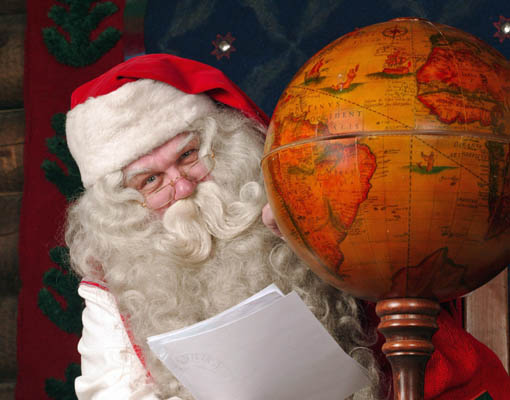
Santa Claus is the original globe-trotter and multi-tasker. What a guy! Although he has many different aliases, such as Father Christmas, Old Saint Nick, Kris Kringle, or just plain "Santy", the image of a jolly old soul with a white beard and a hearty belly-laugh is recognized around the globe. The original St. Nicholas was born in the third century in the area that eventually became the country of Turkey. Selfless and devout, Nicholas became Bishop of Myra in the city now known as Demre, Turkey. Living his whole life as a follower of the principles of Jesus Christ, Nicholas worked for justice and cared for those in need. There are some who say St. Nicholas existed only in legend, without any reliable historical record. Legends usually do grow out of real, actual events, though they may be embellished to make more interesting stories. Many of the St. Nicholas stories seem to be truth interwoven with imagination. St. Nicholas followed the words of the Lord, to "lay up treasure for yourself in Heaven," by praying every day, by fasting, and by performing good deeds. The legend of St. Nicholas began with the perception that God worked many miracles through Nicholas. People began to call him a "wonderworker" (a person who works wonders or performs miracles). Many people were so inspired by his life of service to others that they too aspired to perform good deeds and show compassion for the inhabitants of the world around them. Throughout the centuries, the personas and images of St. Nicholas have been changed and reinvented, although he is always perceived as a kindly old man who is capable of a great many miraculous and magical deeds. Whatever your conception of St. Nicholas or Santa Claus may be, and whether or not you are a person of faith of any denomination, there is no denying that the holiday season is celebrated around the world with time-honored customs and festivities.
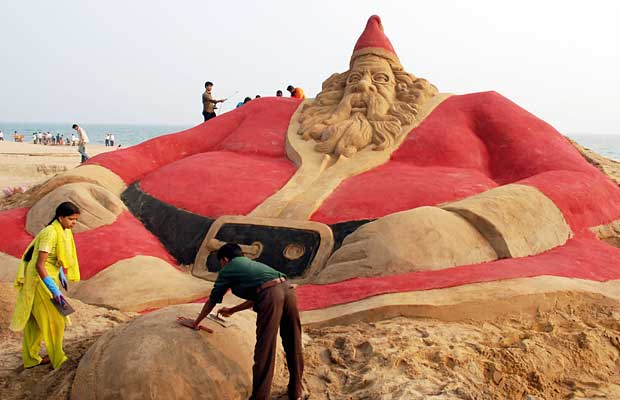 "INDIA'S "SANDA CLAUS"
 Christians are a minority in India, comprising only a very small percentage of the population. However, Christmas is celebrated in India not only by Christians, but by people of other religions as well. The tradition of Christmas observance was introduced here with the colonization of Europeans. Though the country gained its independence in 1947, many European customs and festivals stayed on. The fact that there is the presence of a Christian community in India helped to maintain these traditions. Today, Christmas is the biggest and most-loved festival of Indian Christians. The festival is also enthusiastically celebrated by people of other religious denominations. As in many other countries, Christmas is observed in India on 25th December. Everyone gears up for the festival from nearly a week before. Stores are decked up for the occasion with every gift shop packed with Christmas trees, presents, ornaments and other items of decoration for those who embrace the season
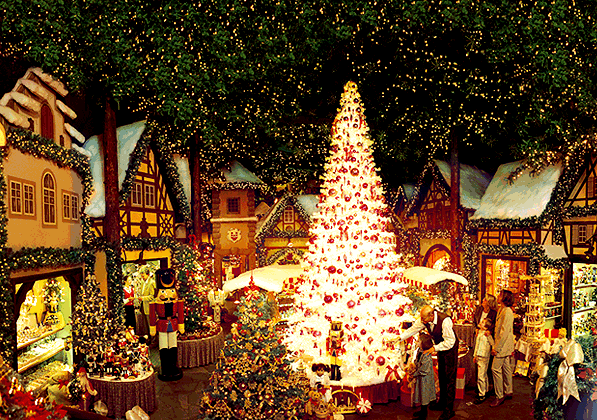
According to legend, on Christmas Eve in Germany rivers turn to wine, animals speak to each other, tree blossoms bear fruit, mountains open up to reveal precious gems, and church bells can be heard ringing from the bottom of the sea. Of course, only the pure in heart can witness this Christmas magic. All others must content themselves with traditional German celebrating, of which there is plenty. As a matter of fact, there is so much celebrating that is has to begin on December 6th, St. Nicholas Day. As in many other European countries, on the eve of Dec. 6th children place a shoe or boot by the fireplace. During the night, St. Nicholas, the patron saint of children, hops from house to house carrying a book of sins in which all of the misdeeds of the children are written. If they have been good, he fills the shoe or boot with delicious holiday edibles. If they have not been good, their shoe is filled with twigs. The custom of trimming and lighting a Christmas tree had its origin in pre-Christian Germany, the tree symbolizing the Garden of Eden. It was called the "Paradise Baum," or tree of Paradise. Gradually, the custom of decorating the tree with cookies, fruit and eventually candles evolved. Other countries soon adapted the custom. The combination of a useful tool and a figural form with a human appearance, the nutcracker is a much-loved holiday decoration. The job of the nutcracker was to work hard for the children of the family by biting open the nuts. The Nutcracker King made his appearance in 1891 as an enchanted prince in Peter Tchaikovsky's "Nutcracker Suite", and to this day, he continues to win the hearts of children of all ages. The famous ballet contributes to the ever-increasing popularity of the nutcrackers as collectible objects.
In France, Christmas is a time for family and for generosity, marked by family reunions, gifts and candy for children, gifts for the poor, Midnight Mass, and le Réveillon. The celebration of Christmas in France varies by region. Most provinces celebrate Christmas on the 25th of December, which is a bank holiday. However, in eastern and northern France, the Christmas season begins on 6 December, la fête de Saint Nicolas, and in some provinces la fête des Rois* is one the most important holidays of the Christmas season. In Lyon, 8 December is la Fête de lumières, when Lyonnais pay homage to the virgin Mary by putting candles in their windows to light up the city. In 1962, a law was passed decreeing that all letters written to Santa would responded to with a postcard. When a class writes a letter, each student gets a response. Although fewer and fewer French attend la Messe de Minuit on Christmas Eve, it is still an important part of Christmas for many families. It is followed by a huge feast, called le Réveillon (from the verb réveiller, to wake up or to revive). Le Réveillon is a symbolic awakening to the meaning of Christ's birth and is the culinary high point of the season, which may be enjoyed at home or in a restaurant or café that is open all night. Each region in France has its own traditional Christmas menu, with dishes like goose, chicken, capon, turkey stuffed with chestnuts, oysters, and boudin blanc (similar to white pudding). Another important aspect of French Christmas celebrations is the crèche , which is displayed in churches and many homes. Living crèches in the form of plays and puppet shows based on the Nativity are commonly performed to teach the important ideas of Christianity and the Christmas celebration. Mistletoe is hung above the door during the Christmas season to bring good fortune throughout the year. In Provence, an area of southeastern France, the entire family helps bring in the Yule Log, which must be large enough to burn from Christmas Eve until New Year's Day. Many years ago, part of this log was used to make the wedge for the plough as good luck for the coming harvest.
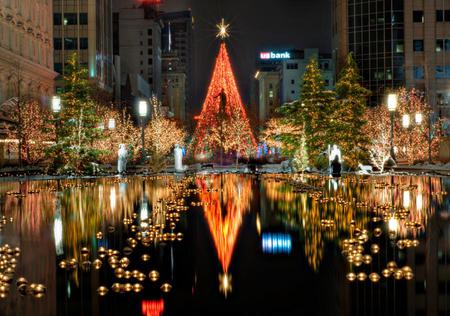 CHRISTMAS IN PARIS, FRANCE
Christmas in Mexico, in both traditional homes and rural areas, is a religious holiday. Every home will have a Nativity scene. The hosts of the home are the innkeepers, and the neighborhood children and adults are Los Peregrinos, the Pilgrims going to Bethlehem. The Peregrinos will ask for lodging in three different houses but only the third one will allow them in. Once the innkeepers let them in, the group of guests comes into the home and kneels around the Nativity scene to pray the Rosary. After all the prayer is done, then it comes the party for the children. There will be a Piñata, filled with peanuts in the shell, oranges, tangerines, sugar canes, and hard candy. The children will sing while the child in turn is trying to break the Piñata with a stick while he/she will be blindfolded. Although the Piñata was originally from Italy, it has become a Mexican tradition for celebrations where there are children involved. The Piñata was originally made out of a clay pot and decorated with crepe paper in different colors. Today's piñatas are made out of cardboard and paper mache techniques and decorated with crepe paper. This change was made to prevent the children from cutting their hands when going for the fruit and candy when the Piñata was broken and the clay piece would become a hazard. They have all kinds of designs besides the traditional star.
Christmas in Australia is celebrated during the Australian Summer. So, no snow and log fires, but Australia is a multicultural country and traditions are often mingled and derived from a mixture of other countries. Christmas Trees, Father Christmas, Christmas Carols and gifts are part of the celebration, and Christmas Dinner may be a barbeque in the backyard or a picnic on a beach. Champagne may be served instead of eggnog, and Pavlova is favored over Plum Pudding. Christmas also coincides with the Summer Holidays and quite often families will celebrate Christmas away from home. The big events of the Christmas season are the Carols By Candlelight. These began in Melbourne in 1937 and are outside concerts in the warm summer evenings where people sit on blankets light candles and join together to sing Christmas Carols. Most towns have a concert and two major ones are televised across Australia from Sydney and Melbourne. The trend for Christmas in Australia has been toward seafood - prawns, lobsters, crabs, mussels, scallops, pippies, and cold salad as Christmas fare. Fine Australian wine and robust Australian beer are perfect for holiday cheers.
On Christmas Eve in Greece, carols are usually sung by small boys to the beating of drums and the tinkling of triangles. They go from house to house and are rewarded with dried figs, almonds, walnuts, sweets and, sometimes, small gifts. Very few presents are exchanged between friends and family during Christmas. Instead, small gifts are given to hospitals and orphanages. Priests sometimes visit homes sprinkling holy water around in order to dispel any bad spirits which may be hiding in the houses. Most Greek families decorate their tress with tinsel and a topmost star. Any gifts which are exchanged are done so on January 1st, Saint Basil's Day. On Christmas Eve, groups of people gather around the holiday table to feast upon figs which have been dried on rooftops, served with spicy, goden Chrisopsomo bread, and such sweets as kourambiethe, a Greek nut cookie. During the twelve days of Christmas, there is a tradition called kallikantzeri when, it is believed, mischievous goblins appear from below the earth.
Have you ever celebrated the holidays in a country different from where you make your home? Is there somewhere in the world that is your dream holiday destination? What customs from other countries are part of your heritage? What is your most cherished holiday tradition or favorite recipe? I wish you all the happiest of holidays and a fabulous new year in 2012!
 "WE'LL ALWAYS HAVE PARIS"
 FOR SANTA'S COOKIE PLATE:
KULKULS--made all over India at Christmas time
4 cups all purpose flour
1/2 tsp baking powder
2 eggs
1 cup coconut cream
4 tbsps sugar, powdered
1 tbsp butter
Oil for deep frying
1 cup sugar (granulated)
3-4 tbsps water
Mix the flour and baking powder well. Add the butter a little at a time, mixing gently. Beat the eggs in a separate bowl and add them to the flour-butter mix. Add the powdered sugar and coconut milk to this and mix into a soft dough. Form the dough into small marble-sized balls. Grease the back of a fork with some oil and flatten and press a ball of dough onto it. Starting at one end, roll the dough off the fork and into a tight curl. The end result will be a tube-like curl with the design from the fork on it! Make the remaining dough in the same manner till it is all used up. Heat the oil in a deep, heavy-bottomed pan on a medium flame. When hot, fry the kulkuls in it, making sure to turn often, till they are a light golden brown in color. Drain and cool on paper towels. Put the granulated sugar and water in a separate pan and cook till the sugar melts fully. Put the cooled kulkuls into this sugar syrup and coat well. Remove and allow to sit in a plate till the sugar encrusts on the kulkuls. When fully cooled, you can store the kulkuls for a considerable amount of time if kept in an air-tight container.
Pfeffernusse Cookies--German Tradition
1/2 cup molasses
1/4 cup honey
1/4 cup shortening
1/4 cup margarine
2 eggs
4 cups all-purpose flour
3/4 cup white sugar
1/2 cup brown sugar
1 1/2 teaspoons ground cardamom
1 teaspoon ground nutmeg
1 teaspoon ground cloves
1 teaspoon ground ginger
2 teaspoons anise extract
2 teaspoons ground cinnamon
1 1/2 teaspoons baking soda
1 teaspoon ground black pepper
1/2 teaspoon salt
1 cup confectioners' sugar for dusting
Stir together the molasses, honey, shortening, and margarine in a saucepan over medium heat; cook and stir until creamy. Remove from heat and allow to cool to room temperature. Stir in the eggs. Combine the flour, white sugar, brown sugar, cardamom, nutmeg, cloves, ginger, anise, cinnamon, baking soda, pepper, and salt in a large bowl. Add the molasses mixture and stir until thoroughly combines. Refrigerate at least 2 hours. Preheat oven to 325 degrees F (165 degrees C). Roll the dough into acorn-sized balls. Arrange on baking sheets, spacing at least 1 inch apart. Bake in preheated oven 10 to 15 minutes. Move to a rack to cool. Dust cooled cookies with confectioners' sugar.
FRENCH CHRISTMAS COOKIES
1/2 c. butter
3/4 c. sugar
1/2 c. honey
2 egg yolks
1/4 c. milk
1 tsp. vanilla
3 1/2 c. sifted cake flour
Cream butter until soft, add sugar and beat. Add honey and egg yolks. Add milk, vanilla, and beat. Add flour gradually. Beat after addition. Chill dough. Roll out and cut. Bake 10 minutes at 375 degrees. Cool and frost with white or chocolate icing.
Mexican Christmas Cookies: Galletas de Navidad
1 1/2 cups butter, at room temperature
1/3 cup sugar
3 cups flour
1 1/2 teaspoons vanilla extract
4 eggs, separated
3/4 cup sugar
juice of 1 lime
2 1/2 cups fruit preserves
1/2 cup Grand Marnier
1/2 cup confectioners' sugar
3/4 cup chopped walnuts
Preheat oven to 350ºF. Grease two cookie sheets. Mix the butter, 1/3 cup sugar and flour until well blended. Add the vanilla and egg yolks and mix until a large ball can be formed. Knead the dough 4 to 5 minutes, dust with flour, cover with plastic and refrigerate 30 minutes to 1 hour. Beat the egg whites until stiff, lower mixer speed and gradually add ¾ cup sugar and the lime juice. Beat for 1 minute, until the mixture is shiny. On a large, floured surface roll out the dough.
Transfer it to the greased cookie sheets and continue to roll out until very thin. Combine the preserves and the Grand Marnier, then spread the mixture over the dough. Cover the preserves with the beaten egg white mixture and sprinkle with confectioners' sugar and chopped walnuts. Bake for 45-60 minutes or until egg whites are golden brown and crispy. Remove from oven, allow to cool and cut into squares. Makes about 2 ½ dozen.
Kourambiedes (A Greek Christmas Cookie)
2 cups butter, softened
2 egg yolks
1 teaspoon baking powder
1/2 teaspoon baking soda
3 -4 cups flour
1 cup confectioner's sugar
1 tablespoon brandy
1/2 teaspoon almond extract (optional)
1 cup almonds, chopped and roasted
some rose water or orange flower water (available in many ethnic groceries) or ouzo
extra confectioner's sugar, for rolling the cookies in
Cream the butter and sugar in a mixer for 15 minutes, until it begins to turn white. Mix in the baking powder and baking soda. Add the egg yolks, the brandy, and gradually add the flour, until you have a dough that is neither too soft nor too firm (you may need to add slightly more than the amount I've written); stir in the almonds. Let the dough stand for an hour in a warm place (away from drafts - the inside of your oven is fine) covered by a towel. Next, with small amounts (about 1 1/2 teaspoons of dough), shape small rounds by gently rolling the dough around between the palms of your hands. Arrange the round cookies on a buttered pan and flatten ever so slightly on top with your hand. Bake at 350F for 15-20 minutes.
ANZAC BISCUITS--Australian favorite
1 cup rolled oats
1 cup plain flour
1/2 cup sugar
3/4 cup flaked coconut
2 tablespoons golden syrup*
1/2 cup butter
1/2 teaspoon bicarbonate of soda
1 tablespoon boiling water
Mix oats, flour, sugar and coconut. Melt syrup and butter together. Mix soda with boiling water and add to melted butter and syrup, add to dry ingredients. Place teaspoonfuls of mixture well spaced on a greased baking sheet. Bake at 300 F for 20 minutes.
Note: * if you are unable to locate golden syrup, try substituting it with 2 parts light corn syrup and 1 part molasses or equal parts of honey and light corn syrup.


No comments have been added yet.