Creating a New Halloween Myth
Warning: Minor spoilers ahead!!!
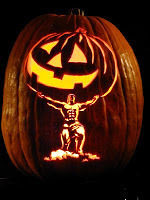 Probably the question I've receivedmost often about A Soul to Steal iswhether its central mythology, a legend called "The Prince of Sanheim," isbased on something real. I've had friends admit that they Googled the term afterfinishing the book, and others who suggested they had heard of it before.There is very little as gratifyingfor a writer, since the truth is that I made up the entire story. What makes mehappy is that it doesn't feel fake. A good mythology should seem real orvaguely familiar, the kind of thing you heard once but have since forgotten.I'm not sure exactly when the ideacame to me. I know a lot about Halloween, and much of what we think we know isnot actually true. Occult fanatics and religious zealots in the 19thcentury invented a past for All Hallow's Eve which has very little to do withactual history.Instead of rejecting that, however,I wanted to embrace it. I wanted a legend that drew from those old myths—real andfictional—and created something new. And I needed something that would go to mycentral theme: the nature of fear.What I wanted to know was this: doyour fears define you as a person? What would it be like if your worstfear—whatever that is—suddenly took shape? Would you have the strength andcourage to face it?I also wanted something that drewfrom a dark place. Fear is a powerful thing. We tend to view it negatively, butit's also a great motivator, among other advantages. Still, it cuts both ways.It can either save you or paralyze you, depending on the person and circumstances.So I needed a legend that drew onold Halloween myths, explored the nature of fear, but also was somethingunique.
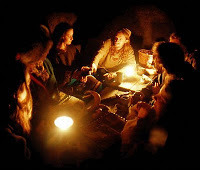 Here's what I came up with. Do youwant to hear a new Halloween legend -- even if it is right around Christmas? Pull up your chair and I'll tell you astory: Centuries ago, a Celtic tribe was on the verge of annihilation, facingthe increasing incursions of a rival. In desperation, they made a deal withSanheim, the Celtic god of the dead. Despite the fact that most of their youngpeople were killed as a result of the neighboring tribe's attacks, they agreedto sacrifice one man and one woman to Sanheim. They tied them to a post, boundtheir wrists together and left them there to die.But they didn't die. A few dayslater, they returned to the village and the young man—who had seemed like justa boy before—was now a powerful warrior. The woman was his priestess. The townelders were frightened, but pleased. The two left the next day to wreakvengeance on the rival tribe. Except when they returned, instead of takingorders from the town elders, they took control.The two had immense powers—and wereintimately bound together. When there was a battle to be fought, the man ledthe charge. But it was the woman guiding the tribe, making most of thedecisions. Apart they were nothing. Together they were what became known as the"Prince of Sanheim."But there was a weakness. Theirpowers waxed and waned with the changing of the seasons. They were strongest atSamhain, the harvest festival we now call Halloween. They were weakest the nextday, what Christians call All Soul's Day. And the power they wielded tended tocorrupt them.Every generation, a man and a womanhad the chance to become the Prince of Sanheim, but there was a catch. The manmust first face his Cennad—a Celtic word for ambassador—that embodied his worstnightmare. If the man could defeat his Cennad, he and the woman would haveaccess to great powers. The woman, too, would have to face her own test, but ofa different nature.That was the basic legend, but Icouldn't really stop there. I didn't want to just have an old myth with noechoes through history. So I invented stories for several Princes of Sanheimthrough the ages. In the original version of the novel, there were flashbacksto many of them so that the reader got a greater sense of their powers andvulnerabilities.In the end, however, I cut most ofthat, simply because my novel already has a lot going on. The entire backdropof the Prince of Sanheim unfolds while on the hunt for a serial killer with hisown twisted history and I was wary of throwing too much at the reader.The story I did tell was that ofthe most famous Prince of Sanheim: a Romantic-era poet named Robert Crowley. OnHalloween night in 1873, he hosted a party at his estate in Scotland. Over50 men showed up and history does not record the number of women who alsoattended. What is important, however, is that all but one disappeared. Only aman named Horace Camden survived and he shouted to anyone who would listen thatCrowley hadfound his bride and become the Prince of Sanheim.
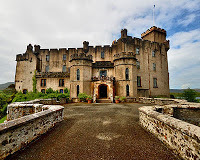 I've been to this castle. It's awesome.The event was so mysterious it gavebirth to a creepy rhyme: "Fifty men went up a hill, none of them came down.Fifty men went to see him, but none of them were found." Camden went on to become a priest of themovement, talking about the coming of the next Prince of Sanheim. The final step was to set up anenvironment where this new legend was born again. Quinn O'Brion and KateTassel, the main characters of the novel, don't know anything about the "Princeof Sanheim" when the book starts. Instead, they are more worried about catchingthe killer named Lord Halloween before he strikes again. But as the novel goeson, they eventually realize that the key to finding the killer may lie in uncoveringthe mystery of the ancient Celtic myth.They also have to learn somethingelse: you are what you fear.
For more on A Soul to Steal, please "like" the Facebook page at: www.facebook.com/asoultosteal.
The novel can be bought for Kindle and print here: http://www.amazon.com/A-Soul-To-Steal-ebook/dp/B005JVEXX0/ref=sr_1_1?ie=UTF8&qid=1319678520&sr=8-1
It can be bought for Nook here: http://www.barnesandnoble.com/w/a-soul-to-steal-rob-blackwell/1105546995?ean=2940013024366&itm=1&usri=a%2bsoul%2bto%2bsteal
 Probably the question I've receivedmost often about A Soul to Steal iswhether its central mythology, a legend called "The Prince of Sanheim," isbased on something real. I've had friends admit that they Googled the term afterfinishing the book, and others who suggested they had heard of it before.There is very little as gratifyingfor a writer, since the truth is that I made up the entire story. What makes mehappy is that it doesn't feel fake. A good mythology should seem real orvaguely familiar, the kind of thing you heard once but have since forgotten.I'm not sure exactly when the ideacame to me. I know a lot about Halloween, and much of what we think we know isnot actually true. Occult fanatics and religious zealots in the 19thcentury invented a past for All Hallow's Eve which has very little to do withactual history.Instead of rejecting that, however,I wanted to embrace it. I wanted a legend that drew from those old myths—real andfictional—and created something new. And I needed something that would go to mycentral theme: the nature of fear.What I wanted to know was this: doyour fears define you as a person? What would it be like if your worstfear—whatever that is—suddenly took shape? Would you have the strength andcourage to face it?I also wanted something that drewfrom a dark place. Fear is a powerful thing. We tend to view it negatively, butit's also a great motivator, among other advantages. Still, it cuts both ways.It can either save you or paralyze you, depending on the person and circumstances.So I needed a legend that drew onold Halloween myths, explored the nature of fear, but also was somethingunique.
 Here's what I came up with. Do youwant to hear a new Halloween legend -- even if it is right around Christmas? Pull up your chair and I'll tell you astory: Centuries ago, a Celtic tribe was on the verge of annihilation, facingthe increasing incursions of a rival. In desperation, they made a deal withSanheim, the Celtic god of the dead. Despite the fact that most of their youngpeople were killed as a result of the neighboring tribe's attacks, they agreedto sacrifice one man and one woman to Sanheim. They tied them to a post, boundtheir wrists together and left them there to die.But they didn't die. A few dayslater, they returned to the village and the young man—who had seemed like justa boy before—was now a powerful warrior. The woman was his priestess. The townelders were frightened, but pleased. The two left the next day to wreakvengeance on the rival tribe. Except when they returned, instead of takingorders from the town elders, they took control.The two had immense powers—and wereintimately bound together. When there was a battle to be fought, the man ledthe charge. But it was the woman guiding the tribe, making most of thedecisions. Apart they were nothing. Together they were what became known as the"Prince of Sanheim."But there was a weakness. Theirpowers waxed and waned with the changing of the seasons. They were strongest atSamhain, the harvest festival we now call Halloween. They were weakest the nextday, what Christians call All Soul's Day. And the power they wielded tended tocorrupt them.Every generation, a man and a womanhad the chance to become the Prince of Sanheim, but there was a catch. The manmust first face his Cennad—a Celtic word for ambassador—that embodied his worstnightmare. If the man could defeat his Cennad, he and the woman would haveaccess to great powers. The woman, too, would have to face her own test, but ofa different nature.That was the basic legend, but Icouldn't really stop there. I didn't want to just have an old myth with noechoes through history. So I invented stories for several Princes of Sanheimthrough the ages. In the original version of the novel, there were flashbacksto many of them so that the reader got a greater sense of their powers andvulnerabilities.In the end, however, I cut most ofthat, simply because my novel already has a lot going on. The entire backdropof the Prince of Sanheim unfolds while on the hunt for a serial killer with hisown twisted history and I was wary of throwing too much at the reader.The story I did tell was that ofthe most famous Prince of Sanheim: a Romantic-era poet named Robert Crowley. OnHalloween night in 1873, he hosted a party at his estate in Scotland. Over50 men showed up and history does not record the number of women who alsoattended. What is important, however, is that all but one disappeared. Only aman named Horace Camden survived and he shouted to anyone who would listen thatCrowley hadfound his bride and become the Prince of Sanheim.
 I've been to this castle. It's awesome.The event was so mysterious it gavebirth to a creepy rhyme: "Fifty men went up a hill, none of them came down.Fifty men went to see him, but none of them were found." Camden went on to become a priest of themovement, talking about the coming of the next Prince of Sanheim. The final step was to set up anenvironment where this new legend was born again. Quinn O'Brion and KateTassel, the main characters of the novel, don't know anything about the "Princeof Sanheim" when the book starts. Instead, they are more worried about catchingthe killer named Lord Halloween before he strikes again. But as the novel goeson, they eventually realize that the key to finding the killer may lie in uncoveringthe mystery of the ancient Celtic myth.They also have to learn somethingelse: you are what you fear.
For more on A Soul to Steal, please "like" the Facebook page at: www.facebook.com/asoultosteal.
The novel can be bought for Kindle and print here: http://www.amazon.com/A-Soul-To-Steal-ebook/dp/B005JVEXX0/ref=sr_1_1?ie=UTF8&qid=1319678520&sr=8-1
It can be bought for Nook here: http://www.barnesandnoble.com/w/a-soul-to-steal-rob-blackwell/1105546995?ean=2940013024366&itm=1&usri=a%2bsoul%2bto%2bsteal


No comments have been added yet.