
RAVISHED, ANOTHER EXCERPT
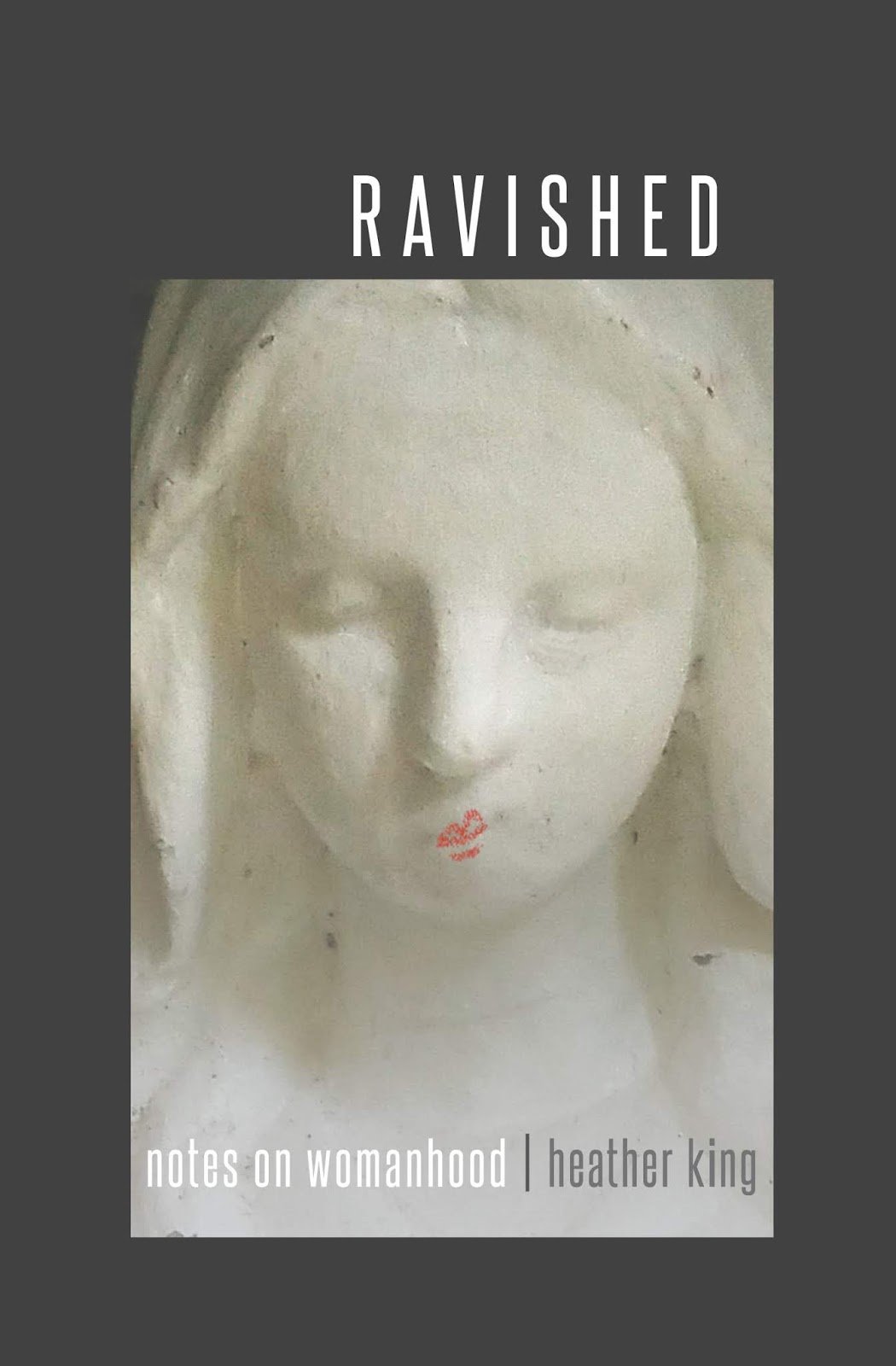 BUY ITMonday, June 3, I'll be on Jon Leonetti in the Morning on Iowa Catholic Radio, 7:15 am CT. 1150 AM 88.5 FM 94.5 FM. Discussing my new book RAVISHED.
HERE'S AN EXCERPT:
PREFACE
I’m an ex-gutter drunk who graduated from law school in a blackout, sobered up, quit my job as a Beverly Hills litigation attorney, converted to Catholicism, and in the mid-1990’s embarked on the precarious life of a creative writer. My history includes promiscuity, abortions, adultery, a 14-year marriage that ended in divorce, and a life-long tendency toward romantic obsession.Divorced, childless, single, aging, as a woman, in and out of the Church, I often feel I have nowhere to lay my head. In and out of the Church as well, I’m also often challenged by my fellow women to be angrier. “How can you belong to a church that won’t allow female priests?” for example, is a question I hear often. The short answer is because Christ set it up that way. The long answer is that just because men do something women should be able to do it, and vice versa, is a notion that strikes me as moronic. I want to glorify womanhood, not water it down. Any woman who wants to be a priest for the right reasons—which is to die to self, to serve—will already have naturally ordered her life so as to be acting in a priestly capacity. Beneath the anger is fear. Beneath the anger is the one fact we’re really not “allowed” to say: that we long with all our hearts for the male gaze. To live with the tension of not having that gaze returned with the intensity we ache for, or maybe at all—and to react with patience, kindness, and creative nonviolence, while still loving men—that is the way of the real warrior and the real feminist.So is trying to be kind, understanding, and compassionate to all women: the pregnant teenager, the trans recovering alcoholic, the gun-toting, home-schooling Republican. To hold such tension, all our lives, is the way of suffering. Not dumb, wearily-resigned suffering, but active, conscious suffering. “Stay awake!” said Christ. And before we start pointing the finger at everyone else, let’s remember that, being human, every one of us comes to the table with our egos, our agendas, our wounds. Even those of us sufficiently well-educated, well-traveled, and well-experienced perhaps to consider ourselves above the fray come with deep vulnerabilities and fears: that we’re not pretty enough, thin enough, loud enough, quiet enough. To acknowledge our vulnerabilities and fears—and to devote our lives to trying to live fully with many of them intact—is the way of strength, not weakness. Many of us come with a hard-wired propensity to “pick” and then to compulsively pursue emotionally unavailable men. For most of my life, I’ve counted myself squarely among that last group. In fact, to have longed for a man and never to have had a truly reciprocal, healthy loving relationship with a man---partly because I’ve been blueprinted for another vocation, partly because my own temperament has engineered against it—is my deepest, tenderest wound. My “failure” at romance is the part of my story that tends to make me feel most ashamed, humiliated, exiled, and like a loser. It touches upon my fear that I’m not worthy of love nor capable of loving others. It goes to the heart of my womanhood and my humanity.To accept this reality—to have come to see my situation, even, as a strange grace—has been a long, painful crucifixion. But to have suffered the wound these last three decades without anesthesia—no matter how lonely, frustrated, and crazy I’ve felt; never knowing how long the suffering might last—has formed in me, at last, something useful, something eternal.I want to tell the story of those years of purification. I want to tell of what has been the adventure, the pilgrimage, the gamble of my life. Here’s what I’ve learned: Our deepest identity does not lie in our gender, our sexual orientation, our wounds. Our identity lies in Christ.





No comments have been added yet.


