What Do I Know? I'm Just a Teacher.
With each passing year, I become more concerned and disheartened by the direction public education is taking, and that concern is due to a combination of reasons.
Large Class Sizes, Lack of Funding, and Lack of Resources
I teach computers, so I’m lucky that my classes are capped at forty because that’s how many computers are in my lab. However, many classes are not. When class sizes are upwards of forty, the learning environment suffers. Off-task and misbehaviors increase, and instruction is often replaced by crowd control. When Betsy DeVos claims that students benefit from larger class sizes, I’d love to ask her what she’s smoking. Sure, Betsy! After all, that’s one of the main reasons people send their kids to private schools – for the LARGER class sizes. (Insert eye roll.)
  Lack of funding is one of the reasons classes are so large. Unfortunately, even if adequate funding were provided, currently there aren’t enough going into the teaching profession - or staying in it – to reduce the student to teacher ratio. And many people who do go into education end up leaving because the stress and demands of the job aren’t worth the paycheck.
  Developmentally Inappropriate Standards, Overloaded Curriculum, and Test Score Obsession
Kindergarten used to be about socialization, sharing, and learning letters, sounds, and numbers. However, when I taught kindergarten thirteen years ago, I couldn’t believe some of the skills that 5-year-olds were expected to attain by the end of the year.
When I taught fifth grade the following year, I was frustrated that most of my students didn’t even know their multiplication facts, but after seeing firsthand how loaded the math curriculum was, I understood why. Curricula seem to be all breadth and no depth. Sure, concepts are revisited each year, but students aren’t given enough time for mastery of the basics and as a result, are ill equipped for more complex concepts down the road. Test scores. Let’s not even get started on the emphasis on test scores. Of course, we need standards by which to assess whether students are learning, but the almighty standardized test has been given far too much importance. Our students are tested to death. Ineffective Academic Policies and Behavior Protocols
Minimum F
For those of you who aren’t teachers, you may not be familiar with minimum F. Basically, that’s when it's mandated that students can’t be given anything lower than a certain percentage in the gradebook – ever. This means that students can do absolutely nothing and still receive a 40% or 50% on the assignment! I can get on board with a policy such as this for when a student shows genuine effort but bombs a test. One or two low scores can really tank a grade. But for doing nothing? When and where does this happen in adult life? What happens when students get to high school or college and discover they won’t be given credit for doing nothing, and they can’t understand why they’re no longer able to squeak by with D’s that were partially “earned” through minimum F’s?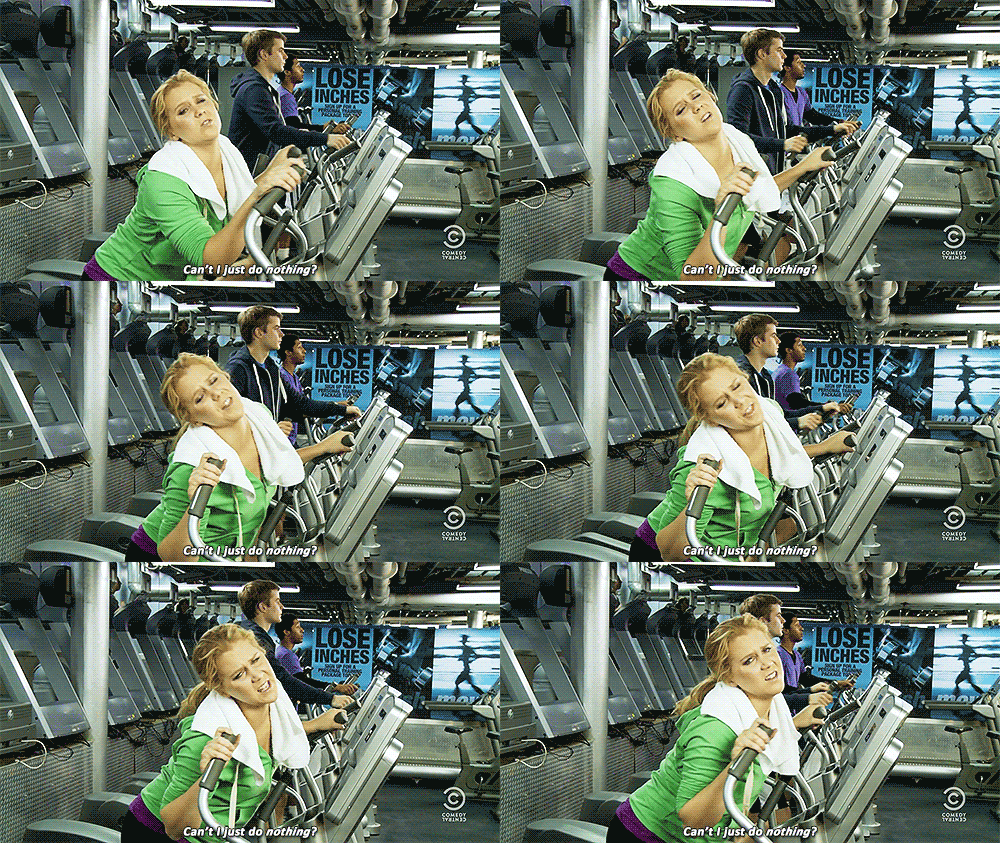 Token Economies
I see nothing wrong with rewarding primary age students for appropriate behavior and gradually weaning them as they approach upper elementary grades. But by the time students are in middle school, we shouldn’t be dangling rewards in front of them to improve behavior. Rewards and recognition have their place, but too often they’re used as bribery to get poorly behaved students to act appropriately, and much of the time the students who always behave are are overlooked. I’ll be the first to admit my worst behaved students are the ones who receive most of my attention, and I can sometimes go an entire semester without learning the names of the nicest kiddos. It makes me feel terrible.
Aside from all of that, these policies are not helping the students they are meant to help. Instead, we’re sending a message that if you don’t feel like meeting your responsibilities, that’s okay. You’ll still be given something for nothing. I can’t tell you how many times teachers hear, “I don’t want to do that. I don’t like it. It’s boring…,” etc. Well, suck it up, buttercup! Because life is chock-full of things we don’t want to do, but we do them anyway.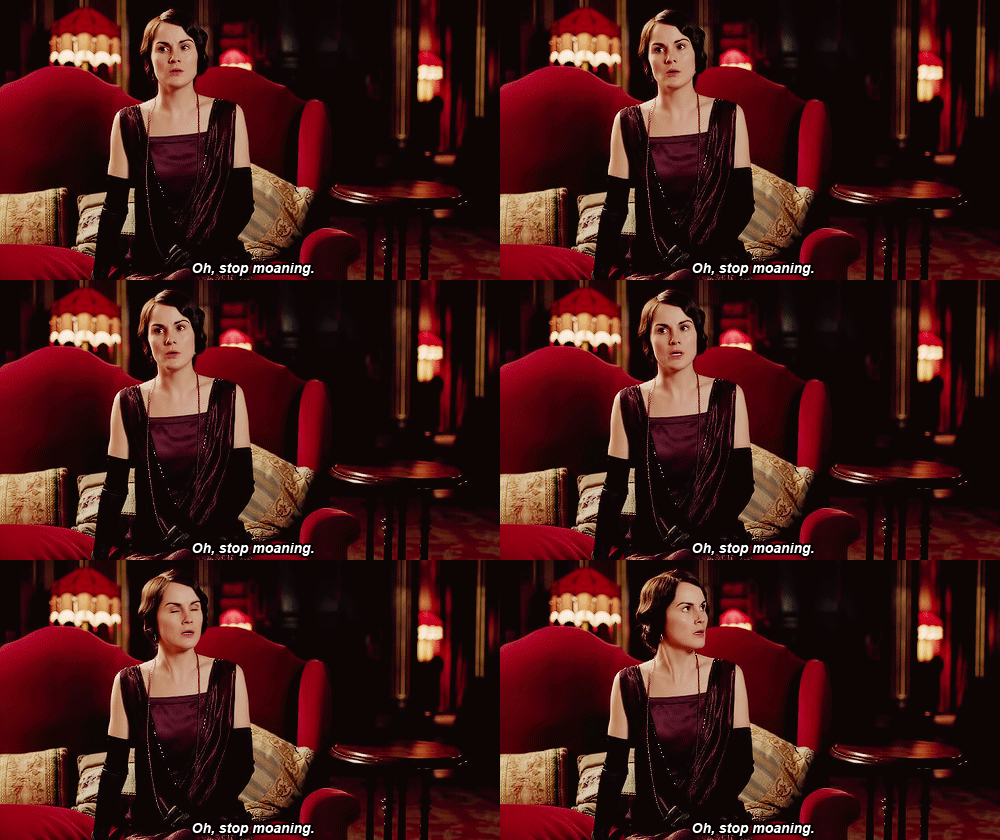 District imposed programs where students are rewarded for demonstrating the most basic of societal norms and given a bazillion opportunities to correct bad behavior with little to no consequences - aren’t effective in the long term. In my opinion, they teach young people that they can curse out their teacher or intimidate and harass another student and be back in class the next day. Try that in the adult world, and you will lose your job.
I understand that we can’t kick kids out of school in droves. That’s not going to help them. I get that many kids have things going on at home that we can’t even fathom – things that are very likely making them act out the way they do and not give a crap about school. I’m wrapping up year nine at a Title I middle school, so yes, I get it. But in my opinion, these systems only cripple our students.
Instead, how about we offer character education, teach coping skills to help students deal with disappointment, sadness, depression, anger, and conflict? And teach empathy. Yes, empathy. Something many adults these days seem to be lacking. Is it any wonder many of our students do?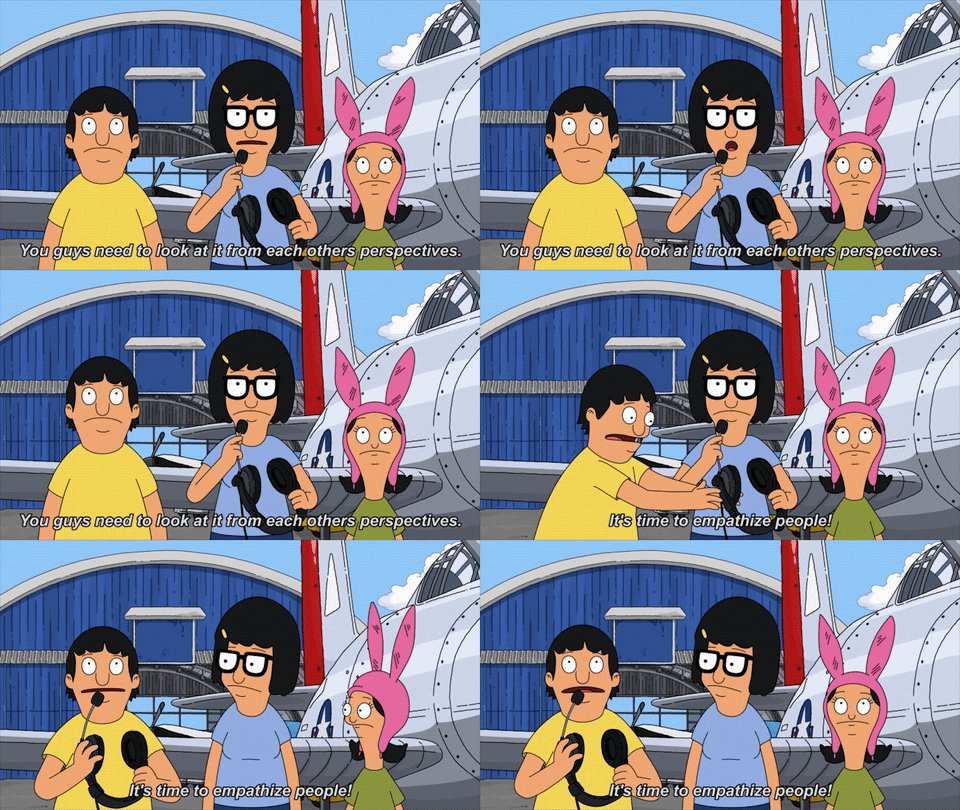 Our young people live in a world where they have fewer and fewer face to face interactions with others. We see it everywhere – families in restaurants who don’t even speak to each other because they’re all glued to their screens. I stand at my classroom door each morning and greet students as they come in, and some of them don’t even acknowledge me, let alone make eye contact. How can young people understand how their actions may affect others if they can’t even connect on a personal level?
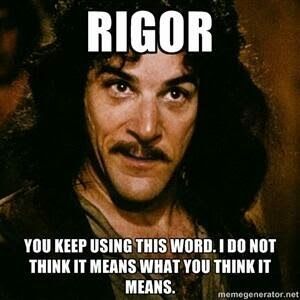
Today’s students face stressors that didn’t even exist when I was their age, but instead of setting expectations and providing tools that will help them grow into capable adults, we are doing just the opposite. For all the lip service teachers are given about establishing rigor and high expectations for our students, too often systems are set in place that undermine our efforts to do that.
 I’m not sure how we can turn some of these problems around, but a nice start would be for those making the big decisions in education to regularly enlist feedback from those of us who are on the front lines every day.
A thriving society begins with a strong, functional, and valued public education system. We have the capacity to make public ed a priority - for the sake of all our citizens - and enact policies that serve our students. We just have to come together and do it.
But what do I know? I’m just a teacher.
Large Class Sizes, Lack of Funding, and Lack of Resources
I teach computers, so I’m lucky that my classes are capped at forty because that’s how many computers are in my lab. However, many classes are not. When class sizes are upwards of forty, the learning environment suffers. Off-task and misbehaviors increase, and instruction is often replaced by crowd control.
When Betsy DeVos claims that students benefit from larger class sizes, I’d love to ask her what she’s smoking. Sure, Betsy! After all, that’s one of the main reasons people send their kids to private schools – for the LARGER class sizes. (Insert eye roll.) Lack of funding is one of the reasons classes are so large. Unfortunately, even if adequate funding were provided, currently there aren’t enough going into the teaching profession - or staying in it – to reduce the student to teacher ratio. And many people who do go into education end up leaving because the stress and demands of the job aren’t worth the paycheck. Developmentally Inappropriate Standards, Overloaded Curriculum, and Test Score ObsessionKindergarten used to be about socialization, sharing, and learning letters, sounds, and numbers. However, when I taught kindergarten thirteen years ago, I couldn’t believe some of the skills that 5-year-olds were expected to attain by the end of the year.
When I taught fifth grade the following year, I was frustrated that most of my students didn’t even know their multiplication facts, but after seeing firsthand how loaded the math curriculum was, I understood why. Curricula seem to be all breadth and no depth. Sure, concepts are revisited each year, but students aren’t given enough time for mastery of the basics and as a result, are ill equipped for more complex concepts down the road.
Test scores. Let’s not even get started on the emphasis on test scores. Of course, we need standards by which to assess whether students are learning, but the almighty standardized test has been given far too much importance. Our students are tested to death. Ineffective Academic Policies and Behavior ProtocolsMinimum F
For those of you who aren’t teachers, you may not be familiar with minimum F. Basically, that’s when it's mandated that students can’t be given anything lower than a certain percentage in the gradebook – ever. This means that students can do absolutely nothing and still receive a 40% or 50% on the assignment! I can get on board with a policy such as this for when a student shows genuine effort but bombs a test. One or two low scores can really tank a grade. But for doing nothing? When and where does this happen in adult life? What happens when students get to high school or college and discover they won’t be given credit for doing nothing, and they can’t understand why they’re no longer able to squeak by with D’s that were partially “earned” through minimum F’s?
Token EconomiesI see nothing wrong with rewarding primary age students for appropriate behavior and gradually weaning them as they approach upper elementary grades. But by the time students are in middle school, we shouldn’t be dangling rewards in front of them to improve behavior. Rewards and recognition have their place, but too often they’re used as bribery to get poorly behaved students to act appropriately, and much of the time the students who always behave are are overlooked. I’ll be the first to admit my worst behaved students are the ones who receive most of my attention, and I can sometimes go an entire semester without learning the names of the nicest kiddos. It makes me feel terrible.
Aside from all of that, these policies are not helping the students they are meant to help. Instead, we’re sending a message that if you don’t feel like meeting your responsibilities, that’s okay. You’ll still be given something for nothing. I can’t tell you how many times teachers hear, “I don’t want to do that. I don’t like it. It’s boring…,” etc. Well, suck it up, buttercup! Because life is chock-full of things we don’t want to do, but we do them anyway.
District imposed programs where students are rewarded for demonstrating the most basic of societal norms and given a bazillion opportunities to correct bad behavior with little to no consequences - aren’t effective in the long term. In my opinion, they teach young people that they can curse out their teacher or intimidate and harass another student and be back in class the next day. Try that in the adult world, and you will lose your job.I understand that we can’t kick kids out of school in droves. That’s not going to help them. I get that many kids have things going on at home that we can’t even fathom – things that are very likely making them act out the way they do and not give a crap about school. I’m wrapping up year nine at a Title I middle school, so yes, I get it. But in my opinion, these systems only cripple our students.
Instead, how about we offer character education, teach coping skills to help students deal with disappointment, sadness, depression, anger, and conflict? And teach empathy. Yes, empathy. Something many adults these days seem to be lacking. Is it any wonder many of our students do?
Our young people live in a world where they have fewer and fewer face to face interactions with others. We see it everywhere – families in restaurants who don’t even speak to each other because they’re all glued to their screens. I stand at my classroom door each morning and greet students as they come in, and some of them don’t even acknowledge me, let alone make eye contact. How can young people understand how their actions may affect others if they can’t even connect on a personal level?Today’s students face stressors that didn’t even exist when I was their age, but instead of setting expectations and providing tools that will help them grow into capable adults, we are doing just the opposite. For all the lip service teachers are given about establishing rigor and high expectations for our students, too often systems are set in place that undermine our efforts to do that.
I’m not sure how we can turn some of these problems around, but a nice start would be for those making the big decisions in education to regularly enlist feedback from those of us who are on the front lines every day.A thriving society begins with a strong, functional, and valued public education system. We have the capacity to make public ed a priority - for the sake of all our citizens - and enact policies that serve our students. We just have to come together and do it.
But what do I know? I’m just a teacher.


No comments have been added yet.