Develop Your Characters with “Nice to Meet” Cards
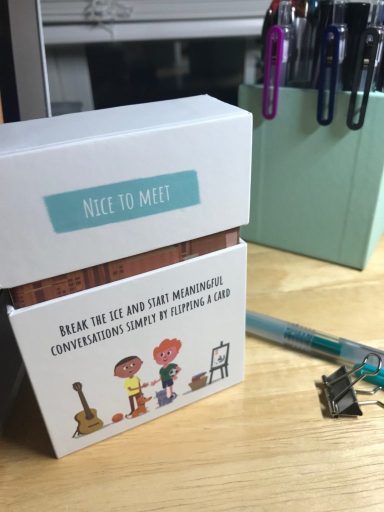 Break the ice and start meaningful conversations with your characters.
I’m a plot person.
Most writers I know either start with a character and work to find the plot from there or they start with a situation and then find the right character to put into it. For me, the situation is usually how the story idea first appears in my head. Which means that I have to work hard to find the character. I’ve learned a few different techniques to help me tune into my character and I’m always on the lookout for interesting and helpful tools.
Let me introduce you to my new favorite: “Nice to Meet,” a game from Feeloty. (Don’t worry; I don’t work for Feeloty or have any kind of relationship with them. I’m just sharing a nifty product and how I like to use it.) This is a deck of cards meant for parents, teachers, and therapists to talk to children and get to know them better. It works really well for writers, too, since we need to find out what makes our characters tick.
The cards come packaged in a nice box that makes it easy to retrieve them. The idea is pretty simple: Each card has images of two different, but related places, objects, or ideas. The people playing the game discuss which one of the two images they feel more connected to and why. I should also add that the cards are meant for kids, but most of them apply to adults as well. I write middle-grade novels, so most of my characters are the perfect age for this.
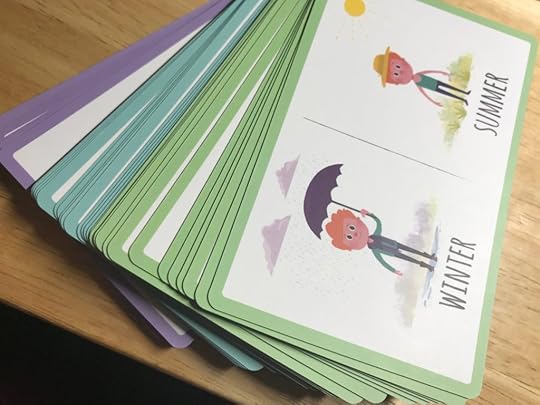
You’ll notice right away that the cards come in three colors: green, blue, and purple. The green cards are straightforward and a little easier to open up about. Blue gets a little more abstract, and purple gets deeper still. But none of them are awkward or weird.
Instructions come with the cards, and the purpose and suggested gameplay is explained. I’ll explain how I use the cards, but you’ll probably have your own ideas about how they can be helpful.
First, I try to imagine my character sitting down with me to play. I try to think about what they look like, what they’re wearing and whether they brought anything with them and why. Then I pull out a card that I want to discuss.
Next I imagine myself responding to the card as genuinely as I can. I do this because I find that it’s easier to get someone to talk to you if you share your own feelings as well. It feels balanced that way. (True for real people and fictional people alike.) Second, it helps me separate my own feelings from my characters feelings, which can get jumbled up sometimes.
After I give my answer, I try to imagine what my character would say as their response. In addition, I also imagine what their body language is. Do they seem confident? Shy? Annoyed? Uncomfortable? And where is that emotion coming from? What’s the subtext hiding under the surface?
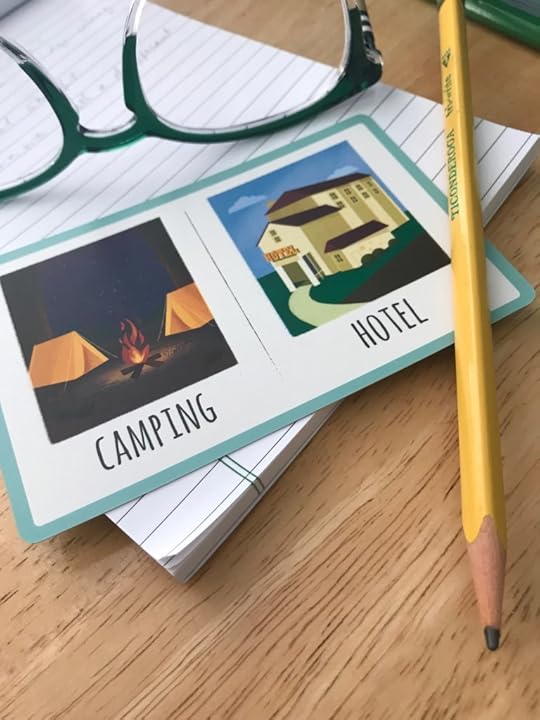
Take this card, for example. My character is drawn to camping because she has happy memories of camping with her dad, and that leads me to explore that relationship. The camping connection also gives me a great idea for a scene in the book where she goes camping with her dad. I can think of a lot of great ways that a camping scene can work into my plot.
I don’t have to put everything I know about her into the book–in fact I won’t have room for that. But as the author, I need to know her well enough to understand what’s going on in her head. I need to get the hows and whys of her reactions to events that are unfolding.
After the character’s initial answer, I think about if I would ask a follow-up question or not. Some characters get downright chatty and sometimes you get the feeling that you can’t really push them any further until you spend more time with them and get to know them better. I suppose the trick to getting a realistic response is to treat them as if they were a real person.
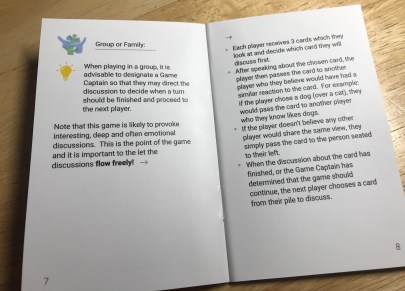
If you feel awkward about doing this exercise in isolation, try it with writing friends or a writing group. In the instruction booklet, find the gameplay instructions listed under “Group or Family.” Each writer should choose one of their characters and answer as that character would. This is great fun (for writers, anyway) and a helpful character exercise.
Check out “Nice to Meet” and see if it helps you with your characters. You might uncover some surprising things!