Did He or Didn't He?
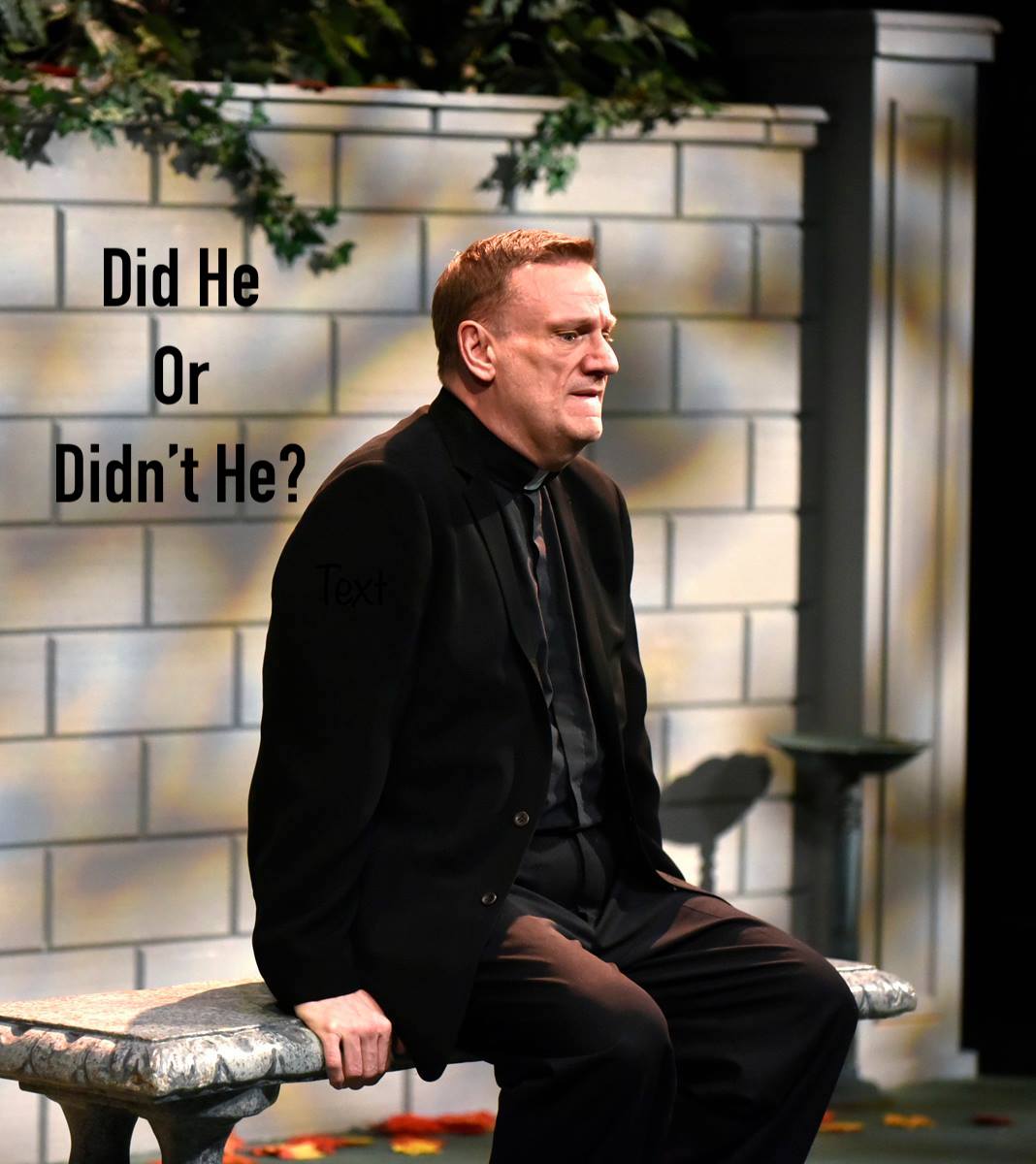 I hate when a show comes to an end. Perhaps because I don't do them that often (every year or longer in between). Maybe it's the friendships you make during the process. Or maybe it's letting go of the character you are playing. Most people know I'm picky about what I do as I need it to be something I can really sink my teeth into and that's what happened while playing Father Flynn in the Pulitzer Prize winning play Doubt by John Patrick Shanley. For those that haven't seen the play or the film with Meryl Streep and Philip Seymour Hoffman, a nun in 1964 makes it her quest to bring down a priest she believes is having (or has had) inappropriate relationships with a young male student. The fascinating thing about this play is that the playwright does not give you the answers - he wants an audience to decide for themselves.
When I started on this journey, people would say to me "oh, you're playing the creepy priest" and in a way, I got that. After seeing the film in 2008, I thought Hoffman played him pretty creepy and I didn't see much doubt in the film. I also assumed that people bring their own past to the theater and see what they want through their own filter. The director told me I needed to decide my own truth and not share it with the actresses in the play. Only the director would know my decision. I wrote back stories for Father Flynn from every different angle. I started out deciding he was guilty as that would be more of a challenge for me as an actor to portray a heinous person, yet show some sort of humanity. That was a huge word with our director: the humanity of these characters. Each believing their own truth. Often emotions winning out over fact. A few weeks into the process, something kept nagging at me about the character. What if he is truly innocent and has been railroaded by the nun. There are lines in the play which lead one to believe he is hiding a secret. What was it? I decided my father Flynn was innocent.
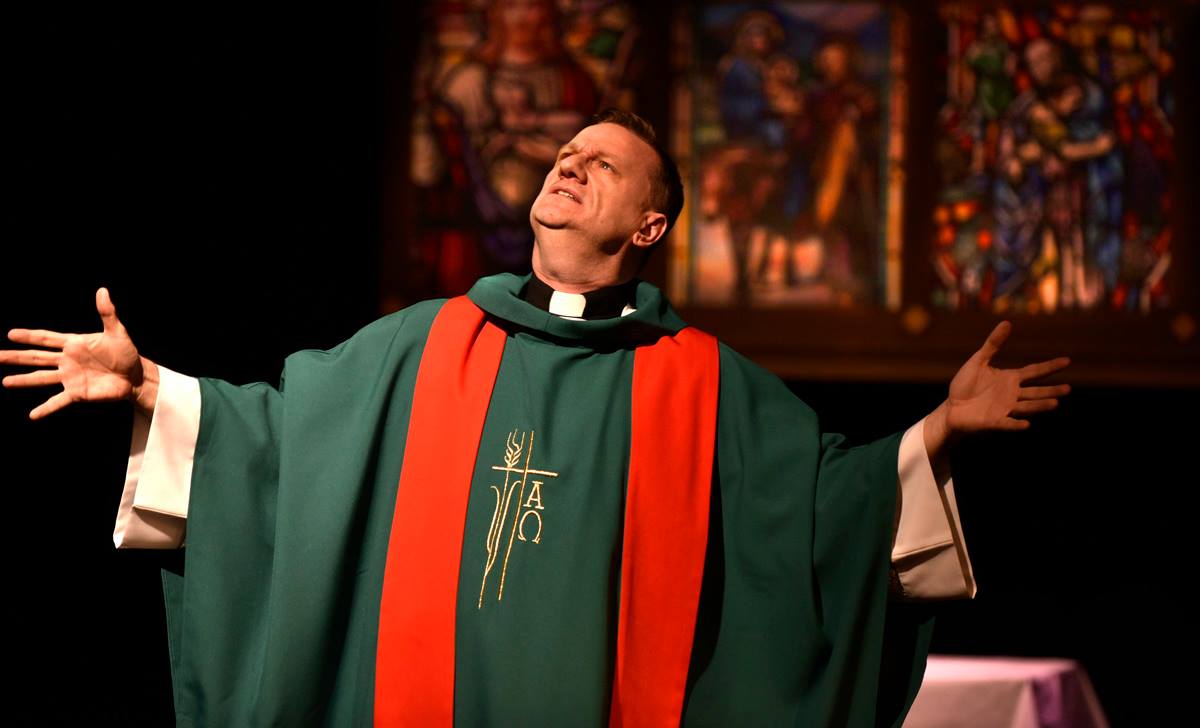 The easy way for me to handle his 'strange behavior' would be to say he was secretly gay and he didn't want that coming out. That felt too easy...I don't like easy OR what would be expected by many as cliche. I kept going back to the fact that Father Flynn has long fingernails. Why was this so important to playwright Shanley? What does it mean? The nun brings it up a few times as a dig against the priest. There had to be something around that.
Now, I mentioned we bring our own past to the theater and lately in the news there has been much about transgender, plus my own younger sibling came out to us two years ago that she was transitioning. It all hit me. Father Flynn in 1964 is dealing with being a woman trapped in a man's body. That was his secret. He entered the priesthood in the 40s and would not even conceive of knowing how to deal with the thought of actually being a woman. So he wore his fingernails long (one of the few things he could do and make it ok), he was able to wear robes in the priesthood (which was closest to a dress he could get), and he was able to tap into his maternal instincts with his love of children. Something he mocks the nun for not having. It's subtle. It's not in the text. But it was my backstory playing the character. When he denied on stage, he denied the wrongdoings he was accused of, but knew he was hiding a secret that this nun would surely uncover as someone had come close before and he had to leave a previous church. He will never get to be his truly authentic self, which often broke my heart on stage. He wanted desperately to tell her when he says "I can't say everything, do you understand?" and I would say the line thinking of all those living a lie who can't live their truth. In one of his final moments, the nun tells him to cut his nails....this got a laugh from the audience every night. They had just witnessed a huge fight between the two characters and needed something to relieve their tension so they would laugh. That laugh was a punch in the gut of my Father Flynn as was the line Sister Aloysius would say to him. She was telling him to deny who he truly was and with that - he decided it was time to move on. Not as a confession: as a protective barrier.
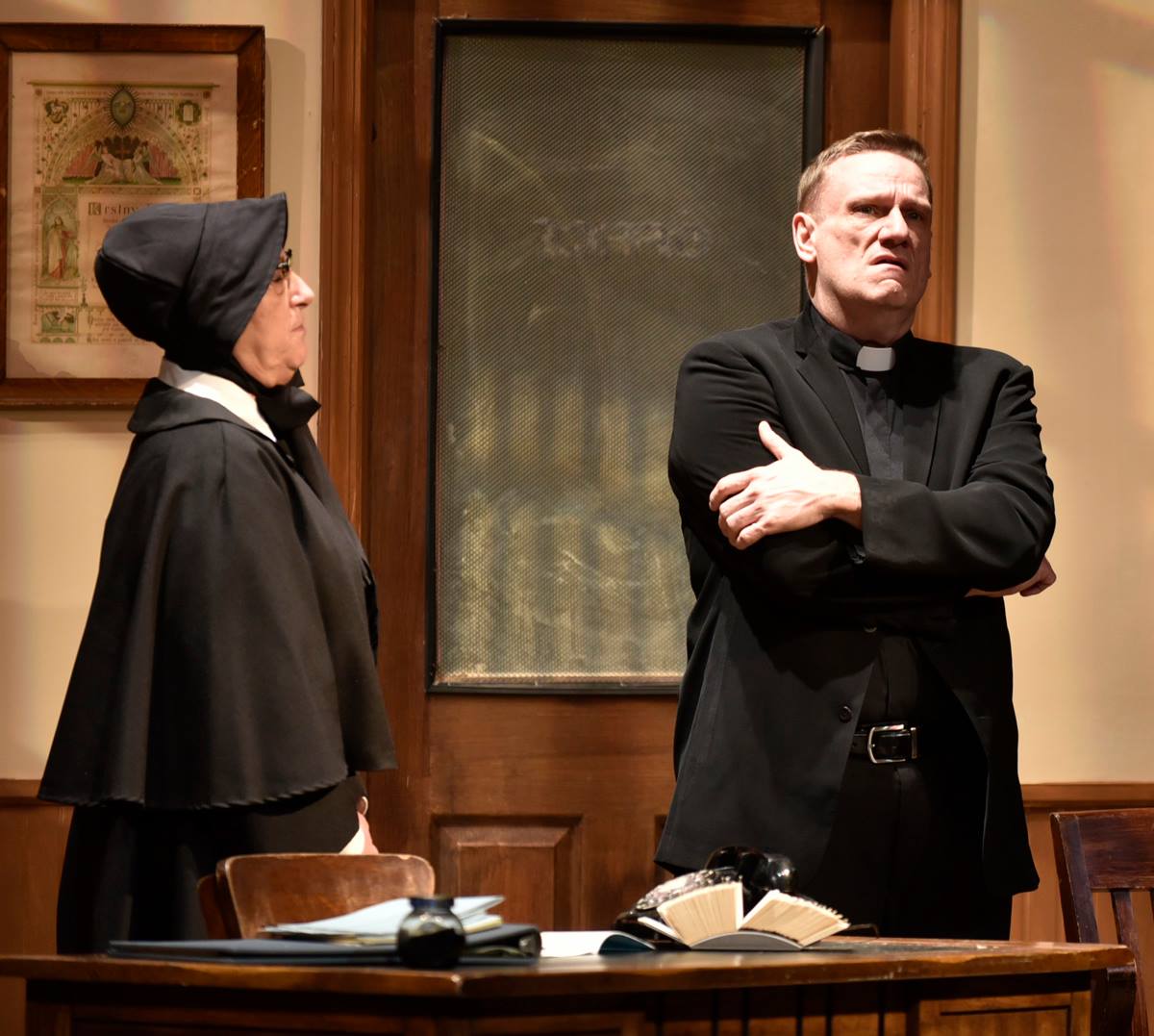 With Carla Kendall: All photos Joe Gigli Now, I did not change one word of the text nor did this change the audience experience. I just tapped into this subtext I created to bring out the humanity of the character. There's that word again. Thank you to Mr. Shanley for writing such an incredible play. Thank you to my director for going on the journey with me when I told him (what I'm sure he thought was an odd choice). Thank you to the audiences who would debate after seeing the same performance, showing that we can take away different things from seeing the same thing.
 Perhaps another actor has gone there with this character, but I just needed a reason to justify why those damn nails were so important in this script. Here's hoping all the Father Flynns out there wrongly accused, yet hiding their true selves, can someday find peace.


No comments have been added yet.