
2018 Reflections + Looking Forward to 2019
December 30, 2018
Papers of the Week: Crystal Metal & Electric Zigzag Lokta
I’m reviewing my 100 x 100 Days of Paper Weaving Project from 2013 (some of you followed my blog back then where I kept a pseudo diary about the project). I started The Sunday Paper shortly after that project. Those 100 weavings are the inspiration behind my upcoming class Weave Through Winter (although we’ll be creating 30 weavings over 30 days).
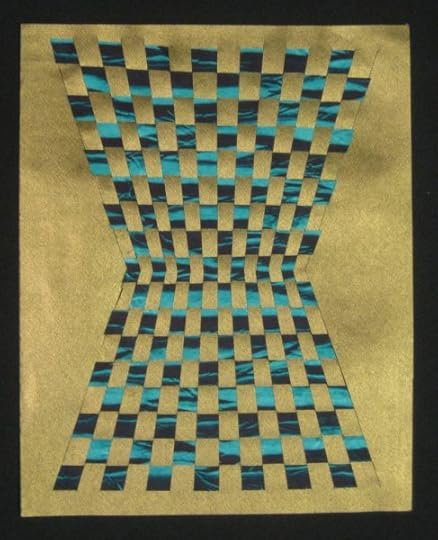
A few years ago, I had the pleasure of visiting Wet Paint, an art supply store in St. Paul, Minnesota, with a fabulous paper selection. This weaving is a blend of two papers that I purchased there: crystal metal and electric zigzag lokta Paper.
Here’s the blog post I wrote when I started that project, in which I describe the first paper weavings I did to kick off the 100 days + some stories about where I found the papers.
Does this sound intriguing to you? I’d love to have you join us in the Weave Through Winter Classroom (early bird pricing ends Jan 5)!
I’m hosting a free webinar where you can learn more about the class and ask questions this Thursday, January 3rd. Find out more and register for the webinar.
———————————————————————————————–––––––
In the Studio
I spent some time this past week reflecting on what transpired in my business in 2018 and thinking about what is coming up in 2019. Read my 2018: It’s a Wrap newsletter here.
———————————————————————————————–––––––
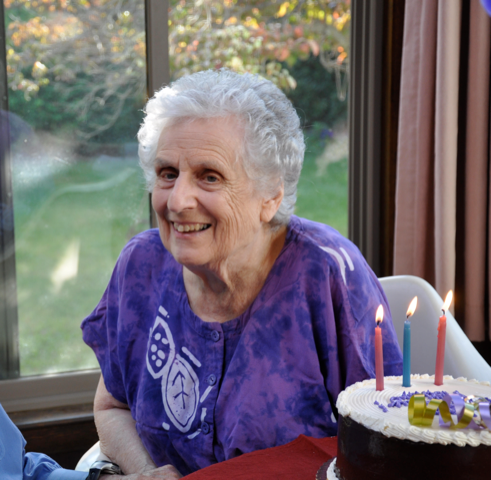
I share the sad news of the passing of Elaine Koretsky (1932–2018). Over the years, I enjoyed hearing and reading about her travels and watching the wonderful videos she created with her husband Sidney about their papermaking research/adventures in Asia.
I once wrote to Elaine, asking about abaca, and as far as I know, she and her daughter Donna are responsible for bringing it the hand papermaking community in America. Here’s an informative excerpt from an e-mail Elaine wrote to me in 2008:
“In the 70’s, I learned that abaca was being used by some specialty mills in Massachusetts and Connecticut for the making of filter papers and teabags. I visited the research and development departments of those mills, and was told that originally they had tried using paper mulberry fiber from Asia, which worked, but it was very expensive, and they sought an alternative, which was abaca. I obtained samples of the abaca pulp in sheet form, and it was wonderful for my work. At that time, in 1976, I was on my way to Asia on my first papermaking expedition, and my friends at the paper mill furnished me with the information about the pulp mill where they obtained the abaca. I visited there, and came back with loads of sheets of abaca. Meanwhile, I also found another mill in western Mass. that had bought many bales of abaca to try out for a specific project, but they decided not to use it, and sold me quite a bit of it. This enabled me to not only use it myself, but also to use it in teaching. My students loved it – it was a fantastic alternative to cotton linters, as it could be easily pulped and could be used to make very thin, yet strong paper. That’s why it was used for teabags – the abaca has tremendous wet strength as well as dry strength. Throughout the 70’s and 80’s Donna and I did a lot of teaching all over the U.S., mainly using abaca, since it made great paper without the need for a Hollander beater. Our students wanted to buy the abaca from us, and that’s how our Carriage House studio began selling papermaking supplies.”
Thank you for your contributions to the field of hand papermaking, Elaine!
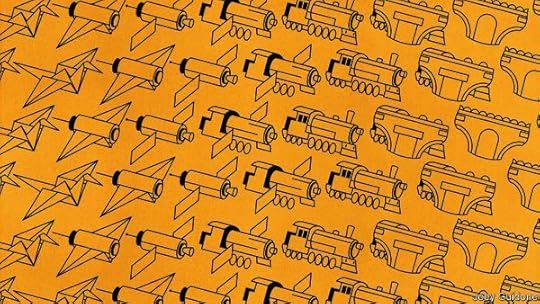
This is a fascinating article in The Economist about the the conversations at a recent international meeting on origami in science, mathematics and education. It also provides a nice history of origami in the artistic, scientific and mathematical realms and explains how the Miura-ori fold provides a crucial link between origami and science.
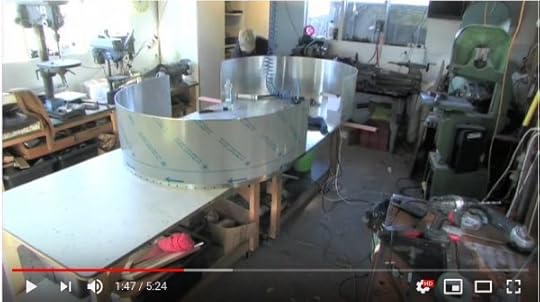
Many of you know of Mark Lander’s critter beaters. Here’s a time-lapse video of Mark building a huge Hollander beater for Green Banana Paper in Micronesia. You can listen to my interview with the CEO of Green Banana Paper here (and I’ll have to interview Mark soon too). Search for Papermaking with Mark Lander Part II to see him processing New Zealand flax.
Sam Pierpoint is living a paper dream life: making paper sculptures for advertising or awareness campaigns in the events, public relations, environmental and travel and tourism sectors. Be sure to watch the video at the link about the piece Pierpoint created for the City of Strasbourg’s #CapataledeNoel campaign in collaboration with French design agency @citeasen.
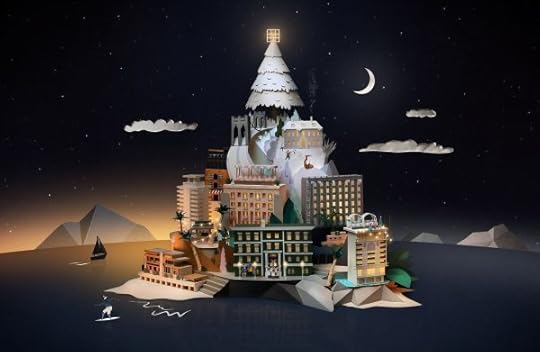
Soho House, December Magazine Cover. Credit: Client @sohohouse, Art Direction @niklasjuil, Photography: Mike Foyle
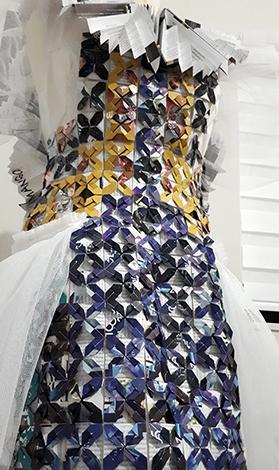
James Dimech made this dress from the pages of Pink. Wowza!
I thoroughly enjoyed this video by The Origami Lady on how to create a paper volcano. What a great project to make and to watch in action!
———————————————————————————————–––––––
 If you read this blog regularly, would you consider making a donation to support the research, writing, design and delivery of The Sunday Paper? Click on the paper button at the left to learn how. Or, perhaps you’re interested in promoting your business in The Sunday Paper.
Thanks to everyone who has already pledged your support!

SHARE THIS blog post with your paper-loving friends:


