
WHAT YOU KNOW WHEN YOU KNOW THE END
Dikkon Eberhart
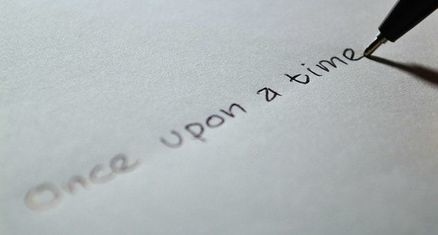
The hardest moment when you are beginning the writing your new book comes when you are at the end of your first chapter. That’s when your enthusiasm about your first chapter—this fresh new story and fresh new voice that is so exciting—that’s when you are skunked.
Chapter Two confronts you not only with a blank new page but with an entirely blank new chapter .
In writing a new book there’s a second hardest moment, too.
That’s where I am right now with my new memoir. I’m into it to the tune of about 37,000 words (160 pages as laid out on my screen), with six of its seven parts written.
I’ve been writing this book for close to two years, minus the months I took off earlier this year when my wife had broken bones, I developed a minor cancer, and I was uncertain where the book intended itself to go at its end.
Today I believe I know the book’s intent for its end.
Memoirs have the difficulty that you are writing about yourself, and you yourself are not done. I had a birthday this past week, and all my grandchildren who live close to us here in Virginia (four of our five; the fifth lives in New York)—they all guessed right about my age now, except our three-year-old granddaughter who missed my age by one year. I’m not seventy-one, I’m seventy-two, and I’m not finished yet.
But the book needs to be finished. A proper memoir purports to be about its author’s story—that’s what draws the reader in—but the reader only stays in if it turns out that the theme of the memoir relates to the reader.
I’ve discarded about ten titles for my new memoir. The discarding of a title is an act that occurs, by me, when I have learned one more thing than I knew before concerning what my memoir is about. Each title is a billboard, and when I learn something new about the book, I need to change the billboard.
I said I’m at the second hardest moment right now. My present idea for the title has remained and has not been rejected during most of the last rewrite up to the spot where I am now. When a title remains that long, I realize I am close enough to the end of the book that maybe I really do know what the book is about…or at least I think I do.
Being that close to knowing what my book is about produces both a heady feeling of excitement--it’s all downhill from here—but also of nervous anxiety.
What if it’s not all downhill?
Those 37,000 words are in their fourth complete rewrite, to here. Obviously, that includes their third rewrite, which was necessitated when my wife told me, “No, Dikkon. You’ve got the voice all wrong. Fix the voice, and you might have a good book.” Once she explained what she meant, I could see of course that she was right. The voice did need to be fixed.
I believe I have fixed the previous voice. Having fixed the voice, now I’m in my fourth rewrite and, as I said, now I think I know what my book is about.
Now, it’s about my story as told to a reader in that voice.
Since it’s in that voice, the world of the story now is one step further away from the world the story was in using my earlier and less disciplined voice. That distance now provides increased room for the reader’s interest to live in.
People read memoirs pleasurably when they find that the memoirs are about themselves. Any reader of a memoir is captivated by himself or herself—not by the author—and wants access to truth as it applies to the reader.
Now, obviously, the subject of a memoir is its author. However—to the reader—the function of a memoir is to interest its reader by the fact that the memoir’s story—what the memoir is about —is closely related to the reader’s concerns.
Readers want truth in their lives, and they study memoirs when the theme of the memoir mirrors the struggles or the joys in their own. A relationship is forged on the page--did that thing that happened to you, too?
Oh, goodness, I must read on!
So I’ll continue writing downhill from here, in that voice.
See how it goes.
I hope that it goes well, in that voice, because I need to be done.
Not because I have a deadline—I never do contracts until I’m done, just in case I not really done—but because I want this memoir to be finished…because I have a burning idea about the next book after this one…and I want soon to experience its heady, first-chapter excitement!
Some of you who are reading this piece are writers, and some among those writers write memoirs. Tell me—am I correct to identify those two hardest moments? I’m curious to know your experience.
Let’s connect!



No comments have been added yet.
The Longer View

Many excellent bloggers concern themselves with what is happening right now. That is important. My blog is called The Longer View. I attempt to report how the past or the future impacts me as I live i
...more
- Dikkon Eberhart's profile
- 11 followers

