A Warning Against Making Assumptions about Crypto to Stock Market Correlations
Yesterday’s stock market selloff, which was then followed by a crypto market selloff has once again reignited the debate of whether and how digital assets are correlated to other markets. It’s an important question that impacts everything from short term trading to long term hodling, and even I have speculated on the possibilities. But I would strongly warn against reading anything into what happened in a single day.
First, the crypto nose-dive happened hours after US stocks closed. In fact, while the Nasdaq was tanking, Bitcoin was actually trading up, as you can see here:
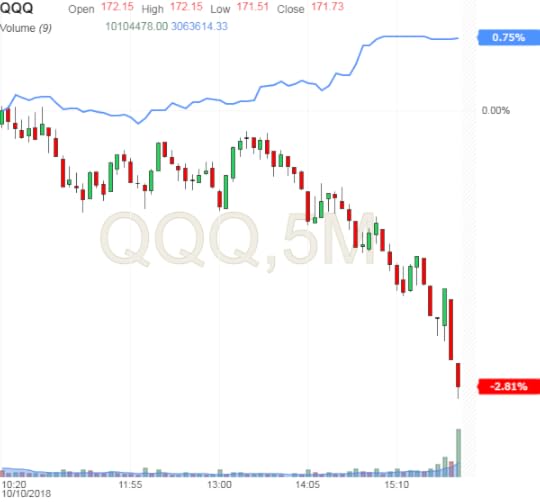
This is not how correlated assets work in an age when information travels instantaneously. Contagion is usually immediate and almost simultaneous, as was the case with the fall in oil yesterday along with stocks.
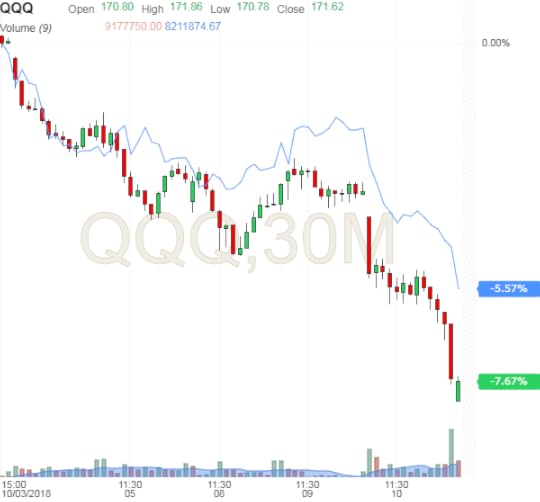
It also doesn’t make sense that crypto would play catch-up with a 24 hour move in equities in just a matter of minutes.
More importantly, crypto and stocks have entirely different volatility profiles, and that makes reliably measuring correlations almost impossible. If you are measuring something that might move 15% within a year against something that might move 500%, your results becomes entirely dependent on the time frame you chose.
For example, in January of this year, the Nasdaq 100 gained almost 10% while Bitcoin lost 25%, therefore, strong negative correlation. But in the ensuing 2 months, the NDX lost around 5% while Bitcoin lost 40%. So now the correlation is positive.
This problem persists throughout time and across different scales. If we use month-month data for the past 12 months, a back of the envelope calculation shows the NDX and BTC having a strong negative correlation of 0.6, which makes sense, because the past year has seen tech stocks mostly go up and crypto mostly go down. But look at the same period using weekly data and the correlation changes to negative 0.4. Different magnitude, but at least the same direction, right? Not if you look at monthly data for the past 5 years, because then the correlation jumps to a super positive 0.85!
(I’d love to do this analysis using daily and even hourly data, but since Crypto trades 24/7 and stocks don’t, doing so requires more data massaging than my envelope can handle. I’d love to see someone else do that analysis.)
If I had to guess, I would say yesterday’s move in crypto had a lot more to do with reports of deposit issues at Bitfinex than the stock market. So once again, we don’t know — and can’t know — what these correlations are until crypto volatility settles down and becomes less a slave to industry specific reports and more to global macro developments.