
The All-Inclusive Neighborhood
This is an introduction to an integral-holistic approach for transformation to sustainable communities by Patricia van der Haak and Carla Onderdelinden, Co-Founders of Transitiereizen, The Netherlands.
 Organizing abundance and sustainability
You probably know the concept of the all inclusive holiday with as much food, sunshine, and swimming as you wish? The impact of the all inclusive neighborhood is the same: how much healthy food, work, leisure, happiness, labour, care or energy do you wish? It is all possible when you decide to work toghether and purchase and act as a collective.
Doing so, gives a whole new spectrum of:
urban business models: citizen to citizen, business to community, community to business, community to government, government to community.
integral-holistic organs and infrastructure in a neighborhood: like social purchase companies, social networks, social enterprises, social big data / algorithms. As we suggest below: these organs and infrastructure work like the lungs and veins of a community (to the interest of all).
The all-inclusive neigborhood (in Dutch: de all inclusive wijk)
This is a community based business model and a method to realize socio-economic transformation in communities like a neighborhood, a village or a city. The model shows how a neighborhood can work as a collective, using community owned structures to organize daily life. This way of working together opens new opportunities for community entrepreneurship, socio-economic transformation and the introduction of MVC (multiple value creation) business models.
How does it work?
Seeing a neighborhood as a whole, as a body or one household (instead of a number of separated, family-based households), with an infrastructure that facilitates food, healthcare, work, energy, maintenance and more to the benefit of all, it becomes possible to start organizing a sustainable, circular and inclusive neighborhood.
At this moment, communities aren’t organized very efficiently:
every household organizes all aspects of daily life themselves. For instance their own food, their own house, their own insurance, car, furniture, maintenance, etc. A neighborhood has none of its own organs and none of its own infrastructure to attract or produce what it needs for its own good (it has public infrastructure, like roads of shopping malls but they are owned by government or companies and not by the community as a whole).
From the point of view of an organism this is strange. Imagine that your body had no lungs or veins to bring oxygen to your cells and every cell had to move towards your skin all the time to get some air. That would be an impossible or at least very inefficient and busy way of life (for your fragmented self: the community of cells). But that’s what we do in our daily life in our communities and that is why you meet your neighbors at the check out point of your supermarket and not at home. This makes the costs of our metabolism unnecessarily high. This is profitable for your supermarket, insurance company, internet provider and so on, but it doesn’t serve the community as a whole.
Every community has its own specific, beautiful and valuable forms of capital: social capital, physical capital, ecological capital, economic capital, human capital, cultural capital. Much of it stays unused because it doesn’t fit into the system. For instance, using the talent and knowledge of elderly people or an empty building or the fruits and nuts in a local forest. Or in the city of Arnhem (neighborhood Spijkerkwartier): where citizens want to grow mushrooms on the waste product of the coffee machines from the local cafes. They can’t get a permit to do this because it is not allowed in the Netherlands to produce food with garbage. And the waste product of coffee machines is labelled as garbage, so it can’t become soil for growing mushrooms.
Not using what is available, and making what you can make yourself as a community instead of buying your needs from elsewhere, costs a lot of money. This forces people to work outside their community just to make money to buy mushrooms at the supermarket. At Transitiereizen we think this is not efficient and not sustainable.
The concept of the all inclusive neighborhood tries to transform these kinds of inefficiencies. In such a neighborhood, unused capacity (like talent or assets) gets activated, exporting of talent and assets to outside the system gets contained and a huge amount of money, materials, energy and CO2, can be saved due to much more efficient local organization. Also, when it start acting as a whole (more or less like a company or a living organism) it becomes possible for a community to give assignments to local government to really integrate and work together as partners on social, economic or ecological wicked issues, such as transformation to sustainable houses, energy, environment, food, welfare and more.
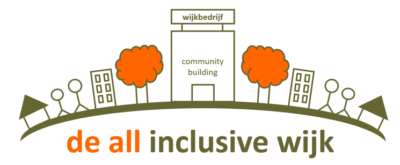
The concept of the all-inclusive neighborhood has already been introduced in several cities / neighborhoods in the Netherlands, such as Nijmegen, Arnhem, Wageningen, Zutphen and Zwolle.
In this article we’d like to introduce and reveal this new infrastructure and urban business model through exploring two of our projects: Wageningen and Arnhem.
Project – Wageningen, The Netherlands
Most households in The Netherlands heat their houses and cook their meals on natural gas. But the gas extraction in the northern part of The Netherlands will stop within a few years: it is causing more and more earthquakes. This makes national, regional and local governments ambitious to transform the natual gas system to a decentralized, sustainable energy system. In pursuit of this objective, the local government of the city of Wageningen asks: can we link the disconnecting of the natural gas network with the realization of social goals that residents consider important and other work that has to be done in this area?

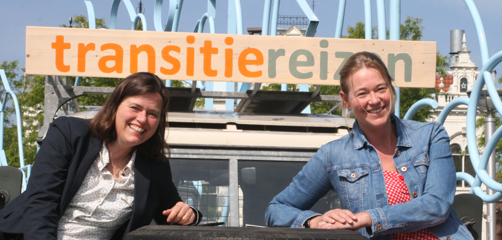
Team Wageningen (citizens, local government, civil servants, business innovators) visiting Arnhem, summer 2018.
“The Hood” or “De Nude”[1] neighborhood in Wageningen is labeled as an innovative ”district of the future ”: one of the first neighborhoods in the Netherlands that wants to disconnect from the natural gas network and transform the energy system. It is also a neighborhood where major maintenance is necessary: houses, sewage system, public green areas and pavement need to be renovated and renewed. By looking not only at the energy proposition but also at this public maintenance assignment and the social community goals of the citizens themselves, we helped them to develop an integrated vision for this neighborhood. This vision is a basis for an integrated value case and co-creation process for the development of this neighborhood for the years ahead.
[1] In Dutch Nude is just a ordinary name for a neighborhood, you say Nuu-the 


Marilyn Hamilton's Blog

- Marilyn Hamilton's profile
- 3 followers

