
When Russian writer Anton Chekhov changed the effect of the word Randi in a kotha in Kolkata
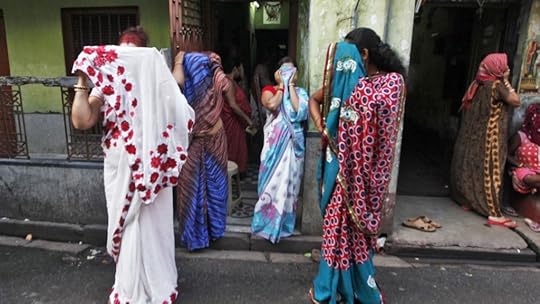 Image for illustrative purpose only. Credit: (Reuters/Rupak De Chowdhuri)
Loiters shouting randi ka beta was like a hallelujah exclaiming the arrival of a messiah. Or in the lanes of Bandook Gully in Bowbazar, where the courtesans of Kolkata thrived, and where the prophet had not reached, the words boomeranged in the air as if someone had announced the title of a new grindhouse hit: Shaitaan Ka Beta, Jungle Ka Beta, Alladin Ka Beta, Randi Ka Beta.
I was never pleased about the radio broadcast every time I stepped out of the kotha, but who went to see such tacky films anyways, I thought. I was 15 years old, and I was watching Wild At Heart, The Piano, and My Own Private Idaho on television (and obsessing over their unusual storylines). The hubbub of insults would die out soon, when the boys grew up, or if I had the temerity to approach them and cup their tiny balls. In which case, I would not be alive to write this and even curse them in my head randi ka beta.
Verbal abuse made me unflappable, the more they laughed, the more resilient I became. Unless you charge at me with a shimmering scimitar, and even then I will look unfazed (partly because I will have frozen in fear), waiting for you to plunge the bloodthirsty blade into my kidney, I have grown accustomed to not buckling under any kind of pressure. Or ducking, when the sword comes down. It is not bravery, just a kind of surrender that is equal parts cowardice and fait accompli triggered by randi ka beta.
The kotha was a dilapidating fort that protected me from the prying eyes of men. The same prying eyes that bore through the women’s artifice of sequinned blouses and scented gajras, could not find a trace of me when they entered the courtyard. The women made sure the children were hidden behind a purdah after sunset because they would be addressed as randi ka beta.
Porous musical notes floated into the streets in the evening, stirring the hearts and loins of men. Roadside ruffians who mocked me in the day time wished that I would lead them to the mujra dens as their sycophant pimp. They used to beckon me with sharp whistles and hoots when their wallets and crotches were tumescent with desire. An effeminate pimp’s waggish mannerisms would have suited me but it was a job I never applied for, despite my unimpeachable qualifications in their eyes as a randi ka beta.
Women, young girls, and infants were my only friends and family. Boys were missing from the house party. I was not the only adolescent boy in the kotha. There were a few others, Bunty, Sonu, Monu, Pappu, who preferred to hang out with the street rowdies more than with the womenfolk at home. The boys were not training to be pimps but to become men of honour. They were trying to groom their own macho identities away from the illicit world of their fussy mothers and sisters. Their worthless lives had no place in the contentious society outside the walls of the crumbling kotha, where there were welcomed as randi ka beta.
The boys were fighting the young men who called them randi ka beta. These kids were getting bashed, punching back, bleeding from wounds, and courting the lacklustre law and order situation in the area. Policemen would referee fights, arrest scoundrels, and demand bribe. The boys visited prostitutes, consumed drugs and came home to quarrel with their mothers. They detested their environment but did not know how to break free from the indignity of randi ka beta.
 Anton Chekov.
I was a wimp in the streets, keeping my head down and walking as far away from the crowds. I did not detest the safety the kotha offered. There were no men inside to bully and tease me. I read discarded books and magazines (borrowed from a raddi shop), and newspapers (own pocket money) like a moth reads light. It helped me deal with the chaos outside. I did not offer to have my nose broken to score a point over the humiliation I felt from a few choice words randi ka beta.
I once read a short story called The Bet, by Anton Chekhov. It was about a lawyer who accepts a bet of house arrest for 15 years. A bag full of money awaits him at the end of the term. He stays locked indoors, reads books and upon his release forfeits the cash prize for the wisdom he has gained instead. His triumph would perhaps be sullied too, haters jealously guarding their own ignorance by exalting him as a bloody fantastic son of a bitch or a randi ka beta.
The story had a powerful impact on me. My cash prize was embedded in the text. I wrote about what I saw, and heard and read every day from inside my fortress, the kotha. I kept a diary between the ages of 15 and 20. I cannot be certain of what I felt, because I had not yet grasped how to fully express my feelings, when in one of the earliest entries I noted tersely, “I am always made to feel like a haraami, a person of wedlock, a bastard. I don’t spare anyone when I write, even myself.” To hell with randi ka beta.
Writing breaks those shackles. It is where honesty stings and where truth has to loiter and listen. I am at once all of them: Shaitaan Ka Beta, Jungle Ka Beta, Alladin Ka Beta, except Randi Ka Beta.


