
that which is deathless
"It pleased the Father to crush His Son…"
Pleased. That word is too content, too almost-happy to settle well with me. The Father was pleased to crush…His…Son.
God, who is love, who speaks of being churned up inside for a people who betrayed Him, who speaks of singing over His children in love, is not the type I easily imagine subjecting His Son to torture.
I don't know of any dad that would sit by and let his child be murdered. But God would? How could that make sense?
[This was a ransom.
There was a reason, and this was the only way. The divine pair had agreed. John 17 makes it clear that Jesus and God are of the same mind. They have the same thoughts of us: Glorify the Father; help these loved ones who don't yet even see their chains—the ones who are to come and will hear this testimony.
It was a joint plan of love. The Jesus who could've exploded out of His frail human form and collapsed all of Rome's armies with a word, Hebrews 12:2 says He willingly went to His death "for the joy set before Him." The joy of our adoption.]
We sing about this gift in Church. We sing about Jesus'…pain.
Then we scream at God about ours. It's sometimes easier to think of God subjecting Jesus to pain than it is to think of God subjecting us to pain. It's easier for me to think of the death of Jesus because I was on the ransomed end of that equation. I am one of the rescued. I wasn't the one who felt the painful side of submission to the Father.
But what about when I do? What if one day I will be called to experience great pain? It's not so much a "what if," as a "when it comes."
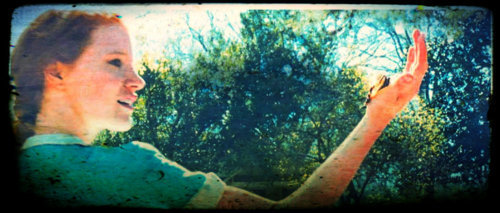
In Terrance Malick's The Tree of Life, a clergyman asks, "Is there nothing which is deathless?" While we bear the life-blood of God [who is All Source of Life], we still have a violent coexistence with death. Pain is no stranger. We're neighbors, here. If there is something that is deathless, it is certainly not us.
Michael Bleecker, the worship pastor at my church noted,
"Nero became emperor in 54 AD…[he] enacted the only law that survived his reign: the banning of Christianity.
"Christians were used as food for wild beasts…Christians were forced to act as characters murdered in plays…they were used as torches along the oldest road in Rome, called the Appian Way.
"Can you imagine Peter walking this road and hearing the cries of his brothers and sisters? I can imagine him walking back to his home and penning the words we just read:
Brothers and sisters, there will be various trials, but take great hope. An inheritance is coming. Salvation is coming. But it's not yet. Already, but not yet." (paraphrase of 1 Peter 1:1-9)
Salvation is here, but it's also yet to come. Until then, pain is here to stay.
When pain comes again, will I submit like Jesus? Romans 8:18 says the sufferings of this time are nothing compared to the joy set before us.
But ultimately, I realize that I am on the wrong side of this scenario to be looking for beauty in pain. I'm buried somewhere in the dark side of the cloud, where pain still surrounds me daily and my human, fragile-y afraid self isn't in a place to see clearly.
So here's what I know: If He could turn the deaths of Christians along the Appian Way as a loudspeaker to spread news of salvation to people who had never heard, that's a miracle of redemption. If He could bring so much good out of something as staggeringly awful as a cross, He can do anything. If He did not even spare His Son, but dove into this mess to save us, then how could I imagine that He would ever leave us to suffer alone? And even those sufferings, do we not see them as measured, hemmed-in and limited, accompanied by the grace to bear?
There is, after all, One thing that is deathless, and He has bound Himself inextricably to us.


Hannah Farver's Blog

- Hannah Farver's profile
- 12 followers

