It's a Metaphor
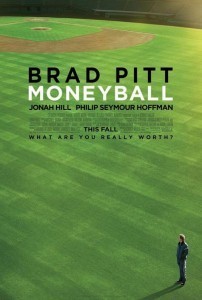
credit Columbia Sony Pictures 2011
My students are writing their first papers of the semester now and struggling with Mark Doty's essay "Souls on Ice," in which Doty describes metaphors as "containers" for emotion, or tangible vessels for intangible ideas. This definition functions much like metaphors themselves: making the complex simpler, if not simple.
Baseball, of course, is a game made for metaphors, and Moneyball (2011) is full of them. In one of the last scenes of the film, the Oakland A's assistant general manager (Jonah Hill) tries to show the general manager, Billy Beane (Brad Pitt), that some experiences that may feel like failures are really successes. He shows a great clip (is it from a real game?) of a baserunner scrambling to get to first base, then belatedly realizing he had hit a home run. There's a pause until the Jonah Hill character says "it's a metaphor." Billy/Brad, exasperated, says "I know it's a metaphor!" and we have to wonder what isn't a metaphor in this idea-driven film. The poster at left, with its tiny figure on the great green grass, puts the main idea on display: how much difference can one man make in a giant system? or, as the slogan puts it, more commercially, "what are you really worth?" The smallness of Pitt's figure seems to be in ironic juxtaposition to the huge black letters of his name, which tell us exactly what he's worth.
The movie, directed by Bennett Miller from a book by Michael Lewis, is admirably cautious in answering these questions. Since historical narratives like this one can't really have "spoilers" I feel safe in saying that Beane does make a difference to the old established ways of running baseball teams, but he still isn't exactly victorious. The big questions asked in the film– how do you evaluate talent? what is your biggest fear? what does it mean to win or lose?– are only sketched, not reduced to glib cliches. It's refreshing to see a film so comfortable with complex ideas and so ready to grapple with them respectfully. In that regard this film reminds me of Miller's last, Capote, which did an equally good job of rendering abstractions on film.
The idea that drives Doty's essay is very similar to the tentative conclusion that Miller gives us as well: "our metaphors go on ahead of us…" and they know more than we do.