
"Darjeeling: A History of the World's Greatest Tea" by Jeff Koehler
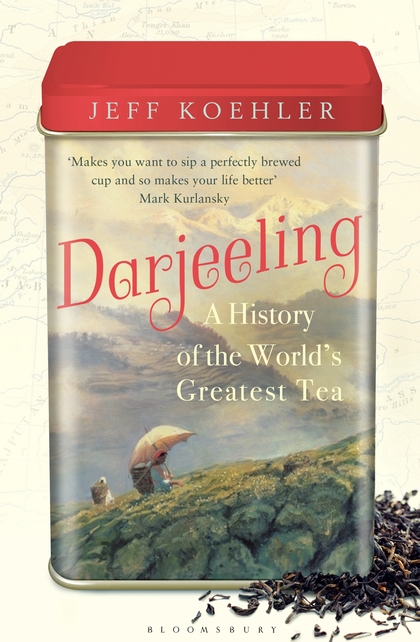 Darjeeling tea remains a favorite of many tea lovers, and I was eager to learn more about it by reading this month's selection in the Tea Lovers' Book Club, Darjeeling: A History of the World's Greatest Tea by Jeff Koehler.
Summary: Koehler has written a wide-ranging history book about Darjeeling, approaching this tea from every angle imaginable, from its "romantic" (his word) beginning to today's very real challenges of continuing to grow Darjeeling tea in a world in which both the plants and the people who tend them are rapidly changing.
My thoughts: I'm glad I got this book because I can tell it's going to be a good resource (it has a nice index too), but I'm not sure it works as a "book club" selection—even for one consisting of tea enthusiasts. When the narrative began to get a bit dry with a lot of facts and figures, I found myself skipping ahead to some of the parts that mentioned people again. Always, it is the stories of the people of tea I like best. Some of the more interesting takeaways from the book:
• Only 87 tea estates are in Darjeeling, about 48,000 acres, which is the size of Queen Elizabeth II's Balmoral Estate. When you look at it that way, it sure seems like a small amount of tea!
• The name Darjeeling itself "comes from Dorji Ling, where the thunderbolt of the Hindu deity Lord Indra—King of the Heavens, God of War, God of Rain and Storms—fell."
• A Scottish civil servant in the Indian Medical Service, Dr. Archibald Campbell, was the first to grow tea in Darjeeling. (In 1841.)
• The pluckers, always women, take only the first two leaves and a bud, and it takes 10,000 (!) of these to make one pound of Darjeeling tea.
• Mark Twain once gave a lecture in Darjeeling and stayed in the Darjeeling Planters' Club.
The gist of it: I ended this book marveling that we ever came to know Darjeeling tea at all and wondering how much longer it will be around. The author says that the bushes are dying and being replaced at a rate of only 2 percent a year. He also says that Darjeeling tea faces challenges in the areas of labor, climate, and political instability.
For discussion:
I'd like to hear what others thought about the book. And did it make you want to run buy some Darjeeling tea before we run out of it?
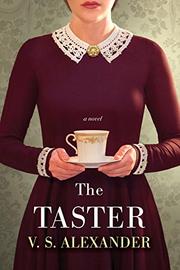 Our next book: I'm ready for some fiction again, so I'm suggesting something quite different for next time, a book that doesn't even come out till Jan. 30, but I'm eager to read it. It's The Taster by V. S. Alexander, about a young German woman whose job involved tasting Hitler's meals, and early reviews indicate there's some storyline involving a plot to poison his tea.


No comments have been added yet.


