
Carry Me
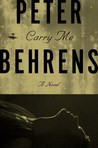 Carry Me by Peter Behrens
My rating: 4 of 5 stars
*** Possible Spoilers ***
I was quite prepared to hate this book so it came as a pleasant surprise that I rather liked it. Before starting I’d read both positive and negative reviews. The positive ones were too gushy and the negative ones stated that the book was excruciatingly boring. I suspected that they were correct and that I’d be thoroughly bored.
I wasn’t. Certainly the pace of this book is slow and the plot is fairly limited. Most of it is the narrator attempting to understand his own feelings as he encounters world after world that he doesn’t understand. He’s born in 1909 so is a small child during the First World War where his father is interned in England because he holds German citizenship – more by accident than because he was born there. The young lad can’t really understand why his father is locked up nor why the children at school bully him relentlessly; nevertheless he survives and even begins to thrive when his mother moves them to Ireland.
Following the war, the family is deported to Germany where they do quite well. The father receives employment from a wealthy German aristocrat and the narrator progresses well at school, makes friends and the family carves out a new life. However, as they are thriving we see the gradual deterioration in German society. It starts off small and gradually escalates.
The narrator of course falls in love with the daughter of the Baron for whom his father works but it is a very slow relationship. They both go their own ways for years and years. It is only after the narrator had been given a job in the Baron’s company – and a good job at that – that they reunite and gradually form bonds. The problem, of course is that the Baron is Jewish and, by extension, so is his daughter; and Jews were becoming less popular in Germany.
Gradually the society deteriorates. Hindsight, however, is twenty-twenty and neither Billy, the narrator, or Karin, the Baron’s daughter – nor any of the others with whom they are associated – can really believe that what they are seeing isn’t merely an aberration – a temporary breakdown in society that will be rectified in time. And so they stay, and things become progressively worse until they are forced to leave. But by this time the damage has been done and although they make it to America, Karin, is unable to put her life back together. Billy does, because the author realized that no matter what happens, life usually goes on, somehow. People wake up in the morning, do whatever they have to do during the day and go to bed at night. They survive. They may not be happy. They may have regrets, but they carry on – mostly.
Sometime ago I read, ‘Do not Say We Have Nothing’ and the parallels were impressive. In that book we have China’s Red Guards terrorizing the population. Here, we have the Nazi Brown Shirts doing the same thing. I watched a movie recently in which footage of the student riots in Iran were shown when the American embassy was overrun by the mob and hostages were taken. Whether it’s the Red Guards, the Nazi Brown shirts, the Iranian Students, the Colectivos in Venezuela or Antifa in North America, they’re all the same – young thugs cherry-picking from various ideologies in order to run amok and act out violently against anyone they don’t like – or who just happens to be in the wrong place at the wrong time. In North America we like to pretend that we’re immune for societal collapse. Perhaps we are – perhaps not.
Although I enjoyed this book, I don’t recommend it for everyone. I think one needs to be older to appreciate it. As noted above, the pace is very slow and rather out of touch with much of today’s fiction. One needs to have lived long enough to understand the narrators feelings as well as his shortcomings. There are times in the book he acts badly but there are times when most people fail to act in accordance with their values. I believe that the best audience for this book would be older than 65 but I could be mistaken. Read the first 15 pages. The author’s style is pretty clearly illustrated in that sample. If you don’t like the first 15 pages there’s a good chance you won’t like the rest of the book and will probably find it highly frustrating.
View all my reviews


No comments have been added yet.


