Catching the Lecturer in his Act: The Birth of Netrutva
When I completed my graduation in 1993 , I had not even dreamed that I would become a college lecturer or university 'reader' one day. It was only when I started my postgraduate studies in Baroda, that the idea of becoming a lecturer occurred to me a possibility. As an undergraduate student, I remember being a loner. I can hardly recall names of more than two of my batch-mates. In those days my friends were Vikas Upadhyay, a student of psychology who had changed from science stream to arts like me, Amit Bhatt, who was studying Economics and Hitesh Parekh who was also studying Economics. This aloofness and detachment was a product of a wall that I had built around myself in order to 'stay away' from life, others and even my own real self. This 'stay away' was the command I had given to myself, people and life before the age of six probably and I not only did not know , but I also did not know that I did not know how my entire life has unfolded within this command. It was, what we at Landmark Education, call our 'act' which has gone into our 'blind-spot' ( others can sense it, the person who has them, can't).. Everybody has their own act. It is the lie on which our identity- who we are in our eyes- is based. As they say, we don't have our 'act', our act has us.
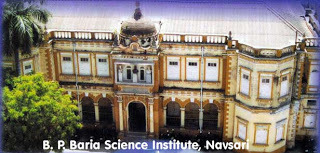 After I completed my post-graduation in 1995, I immediately got a job as an adhoc lecturer in English at the SVR college of Engineering, Surat for a couple of months, and then I got a permanent post in SB Garda College, Navsari, where I taught for almost eleven years. I joined the Department of English in 2006 in a different role. This makes me sixteen year old as far as the experience of being a lecturer or university teacher goes.
I was not at all satisfied with my own performance as a teacher. Not that I did not work hard in preparation and delivery of lectures( which I enjoyed) or shirk my other responsibilities like answer-book assessing ( which I hated) or other examination related duties, but my effectiveness as a teacher was questionable. I enjoyed talking about books to students, but I was not satisfied with my performance. Most of my teaching was about 'looking good' and 'avoiding looking bad' before students. I used to 'broadcast' simplified and digested 'knowledge' in 'chalk-and-talk' manner and I did not bother about what happened to that digested or simplified stuff after I had delivered it. I did not ask students whether they found it useful either in their studies, exams or life, because I did not care. My assumption was that I was teaching one to two percent of exceptional students, and the rest were 'masses' of faces for whom I did not care. I knew these 'masses' were warm, goodhearted youngsters, but I believed that they were simply not interested in reading or writing. I did not know their names ,where they came from, what they did or what were they dealing with in their lives or what they cared about in their life.I had no commitment or stand for them. I did not take responsibility for the entire classroom. I had no vision of what I am supposed to do as a college teacher. I had not idea of what my role was in the society or in the classroom.
My relation to my colleagues, my organization and the faculty, was equally problematic. I pretended to be nice and warm and scholarly and all that, but actually I was extremely arrogant and thought that most of the people in the faculty of arts were mediocre and the government was wasting money on teaching liberal arts. I wrote a letter to the editor of a Gujarati newspaper that the faculty of arts has become 'the last refuge of the mediocre'. It had become a 'white elephant'.I believed that Government would sooner or later discontinue arts and it would be good thing too. My accusation of mediocrity against most of the teachers in colleges goes back to my student days. Apart from a handful of teachers here or there,I thought, most of them hardly had anything to do either with English or with literature. This harsh condemnation was actually my contemptuousness. I was accusing most of other teachers of hypocrisy when I was the one who was pretending. I was blaming everyone of ineffectiveness without realizing that my own performance was rather low in effectiveness. My vision of the future of the faculty of liberal arts was bleak and derogatory.Inside this outlook towards profession, I was deeply isolated, bitter, angry and frustrated. I was extremely cynical and resigned . The difference between work and personal life makes no sense at 'ontological level'. My "being' was the same in both the domains. When you are 'being' frustrated, depressed, bitter and resigned , it means you are 'being' frustrated, depressed, bitter and resigned at home as well as at your work or anywhere else. The hidden context of my life that I was 'weak and unfit to live' which crippled me in my personal life also was my handicap in my professional life.
It was during my Landmark Curriculum for Living and the Communication Curriculum that I realized that the things that were severely limiting me in my personal life were the same things which were limiting me in profession. When I distinguished my act in the advanced course, I had my act instead of my act having me! One of the boards in the Forum titled ' Transformation: Genesis of new Realm of Possibility' reads, " Constraints that the past imposes on your view of life disappears. New possibilities of being call you powerfully into being. New openings for action call you powerfully into action. Experience of being alive, transforms." I realized powerfully that as a teacher it was a privilege to contribute to the lives of hundreds of people, and opportunity was where I was. It dawned upon me that my job was not merely to give 'knowledge' to 'ignorant' masses but to shape teachers, researchers and leaders of tomorrow. My job was not give 'information or concepts, but develop abilities to think, read, write and speak. My focus in teaching shifted from 'concepts/ information' to 'ability' and my methodology shifted too, and it changed the way I related to the students.My job was to make them see how future would look like if they had these abilities. My job was no longer to 'stay away' from them, 'look good and be popular' or 'avoid looking bad', but create real opportunities for students to develop their abilities. My job was also to "listen for and reliably deliver that which makes real difference to what students are dealing with and what they care about, and in the process to leave them with more power, freedom , self expression and peace of mind." Hence, I actually opened to counselling and mentoring. I started reaching out to them-something which I had never done before. Some students report finding my new approach more challenging and some students have reported improved results. They asked why didn't you do all this before!
During the training, I saw that the humanities is not 'the white elephant' or 'the last refuge for the mediocre' as I once believed, but a powerful space from which one could rewrite the future of the entire society, after all who would teach languages, history, economics and logic to the children of the MBAs or doctors or technocrats, bureaucrats or businessmen, but the teachers trained by us. We are the teachers who create teachers.I grasped that we have a decisive role to play in future. We are the leaders because we create leadership. It is possible that we are not equipped to deal with the challenges and issues of the twenty first century effectively, but that doesn't mean we have no say in the matter and the governments can do away with us. At Self Expression and Leadership program, I could see this 'us', earlier it was only 'me and I'- I could relate to teachers as 'community'. Community implies 'communion', certain oneness which goes into the 'us' . It was here that my project 'Netrutva' was born. It is the project to rewrite the future of humanities in the twenty-first century.
So when I was appointed the chief mentor for English in Task force for Teacher Training for recently implemented Choice Based Semester System or as coordinator of English BISAG-SANDHAN TV the state-wide classroom TV , I know it is not ' Sachin Ketkar' the act 'who is going to do his job but 'Netrutva' the project and the possibility...
(Landmark Introduction Leadership Program starts tomorrow)

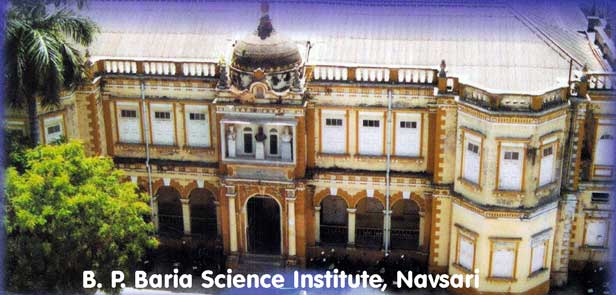 After I completed my post-graduation in 1995, I immediately got a job as an adhoc lecturer in English at the SVR college of Engineering, Surat for a couple of months, and then I got a permanent post in SB Garda College, Navsari, where I taught for almost eleven years. I joined the Department of English in 2006 in a different role. This makes me sixteen year old as far as the experience of being a lecturer or university teacher goes.
 I was not at all satisfied with my own performance as a teacher. Not that I did not work hard in preparation and delivery of lectures( which I enjoyed) or shirk my other responsibilities like answer-book assessing ( which I hated) or other examination related duties, but my effectiveness as a teacher was questionable. I enjoyed talking about books to students, but I was not satisfied with my performance. Most of my teaching was about 'looking good' and 'avoiding looking bad' before students. I used to 'broadcast' simplified and digested 'knowledge' in 'chalk-and-talk' manner and I did not bother about what happened to that digested or simplified stuff after I had delivered it. I did not ask students whether they found it useful either in their studies, exams or life, because I did not care. My assumption was that I was teaching one to two percent of exceptional students, and the rest were 'masses' of faces for whom I did not care. I knew these 'masses' were warm, goodhearted youngsters, but I believed that they were simply not interested in reading or writing. I did not know their names ,where they came from, what they did or what were they dealing with in their lives or what they cared about in their life.I had no commitment or stand for them. I did not take responsibility for the entire classroom. I had no vision of what I am supposed to do as a college teacher. I had not idea of what my role was in the society or in the classroom.
My relation to my colleagues, my organization and the faculty, was equally problematic. I pretended to be nice and warm and scholarly and all that, but actually I was extremely arrogant and thought that most of the people in the faculty of arts were mediocre and the government was wasting money on teaching liberal arts. I wrote a letter to the editor of a Gujarati newspaper that the faculty of arts has become 'the last refuge of the mediocre'. It had become a 'white elephant'.I believed that Government would sooner or later discontinue arts and it would be good thing too. My accusation of mediocrity against most of the teachers in colleges goes back to my student days. Apart from a handful of teachers here or there,I thought, most of them hardly had anything to do either with English or with literature. This harsh condemnation was actually my contemptuousness. I was accusing most of other teachers of hypocrisy when I was the one who was pretending. I was blaming everyone of ineffectiveness without realizing that my own performance was rather low in effectiveness. My vision of the future of the faculty of liberal arts was bleak and derogatory.Inside this outlook towards profession, I was deeply isolated, bitter, angry and frustrated. I was extremely cynical and resigned . The difference between work and personal life makes no sense at 'ontological level'. My "being' was the same in both the domains. When you are 'being' frustrated, depressed, bitter and resigned , it means you are 'being' frustrated, depressed, bitter and resigned at home as well as at your work or anywhere else. The hidden context of my life that I was 'weak and unfit to live' which crippled me in my personal life also was my handicap in my professional life.
It was during my Landmark Curriculum for Living and the Communication Curriculum that I realized that the things that were severely limiting me in my personal life were the same things which were limiting me in profession. When I distinguished my act in the advanced course, I had my act instead of my act having me! One of the boards in the Forum titled ' Transformation: Genesis of new Realm of Possibility' reads, " Constraints that the past imposes on your view of life disappears. New possibilities of being call you powerfully into being. New openings for action call you powerfully into action. Experience of being alive, transforms." I realized powerfully that as a teacher it was a privilege to contribute to the lives of hundreds of people, and opportunity was where I was. It dawned upon me that my job was not merely to give 'knowledge' to 'ignorant' masses but to shape teachers, researchers and leaders of tomorrow. My job was not give 'information or concepts, but develop abilities to think, read, write and speak. My focus in teaching shifted from 'concepts/ information' to 'ability' and my methodology shifted too, and it changed the way I related to the students.My job was to make them see how future would look like if they had these abilities. My job was no longer to 'stay away' from them, 'look good and be popular' or 'avoid looking bad', but create real opportunities for students to develop their abilities. My job was also to "listen for and reliably deliver that which makes real difference to what students are dealing with and what they care about, and in the process to leave them with more power, freedom , self expression and peace of mind." Hence, I actually opened to counselling and mentoring. I started reaching out to them-something which I had never done before. Some students report finding my new approach more challenging and some students have reported improved results. They asked why didn't you do all this before!
During the training, I saw that the humanities is not 'the white elephant' or 'the last refuge for the mediocre' as I once believed, but a powerful space from which one could rewrite the future of the entire society, after all who would teach languages, history, economics and logic to the children of the MBAs or doctors or technocrats, bureaucrats or businessmen, but the teachers trained by us. We are the teachers who create teachers.I grasped that we have a decisive role to play in future. We are the leaders because we create leadership. It is possible that we are not equipped to deal with the challenges and issues of the twenty first century effectively, but that doesn't mean we have no say in the matter and the governments can do away with us. At Self Expression and Leadership program, I could see this 'us', earlier it was only 'me and I'- I could relate to teachers as 'community'. Community implies 'communion', certain oneness which goes into the 'us' . It was here that my project 'Netrutva' was born. It is the project to rewrite the future of humanities in the twenty-first century.
So when I was appointed the chief mentor for English in Task force for Teacher Training for recently implemented Choice Based Semester System or as coordinator of English BISAG-SANDHAN TV the state-wide classroom TV , I know it is not ' Sachin Ketkar' the act 'who is going to do his job but 'Netrutva' the project and the possibility...
(Landmark Introduction Leadership Program starts tomorrow)


No comments have been added yet.