
Character Tags: What They Are and How to Use Them
I'm terrible at remembering people's names.
I can remember the way they talk and walk. I can remember the ways they fidget. I can even remember special features about their appearance: Their hair, the type of glasses they wear, the tattoo on their wrist.
But I can't remember names.
And, unfortunately, neither can a lot of readers.
Think about the last book you read and actually enjoyed. Do you remember the names of all of the characters? Possibly not. But you do remember specific things about each character: Their quirks, their likes, their dislikes, phrases they used a lot.
You remember their character tags.
And that, my friends, is what we will discuss today. Character tags.
 What is a character tag? It is a specific device that we, as writers, use to label a character. It is a unique action a character does that immediately calls to mind that character's personality. It is not a replacement for character development: You still need to develop a character and make each one different from the rest. Character tags are simply a way to aid in this process. For example:
Meet Fred. Fred is a very bubbly, excited person. We know this because of how you've presented him in your novel: He's always optimistic, he smiles a lot, and often gets into enthusiastic discussions with others. His character tag? He waves his hands around when he speaks. A lot. Now you can have a character walk into the room and start waving his arms and your reader immediately knows: That's Fred.
Why are they helpful? Because, as mentioned before, readers often forget a character's name. And, if you have enough characters, sometimes they all start to blend together in your readers mind, especially if there are characters with similar outlooks, goals, or names. A character tag helps remind your reader, "Oh, yeah! That's that guy! He's always happy. I know because he's always making excited gestures with his hands."
How can I use them? I'm so glad you asked. There are, in fact, dozens of different types of character tags. Let me walk you through some of the main ones:
Physical Traits
Hair color, eye color, height, voice. Take a unique physical trait and connect it to something unique in the character.
Notable Example: Merida. She has wild, fiery red hair. This is not only a tribute to her Scottish heritage, but is also connected to her wild personality and fiery disposition. Of course, other characters in this movie do have red hair, but it's not quite as red or as untamed as hers. Seriously, Disney, nobody's hair moves that way in the wind. STOP IT.It's worth noting that this is the weakest type of tag. Why? Because people don't really have any control over their physical traits, so they aren't generally indicative of personality and thus not always helpful for character building. That's not to say you can't use this tag: It just requires some extra thought. Also: perhaps consider using it in addition to another tag.
Dialogue
Speech patterns, slang, vocabulary, repetitive phrases, and accents all fall under this category.
Notable Example: Yoda. Only speaks like this, he does. Whenever we hear people speaking in anastrophe, we think: "Ah, yes. Yoda, Jedi Master." Or, depending on our level of commitment to the Star Wars fandom: "That creepy-looking green puppet from that one sci-fi movie." Speech can tell us a lot of things about a character. The dude who says "yo" all the time is memorable....Even more memorable if he is, in fact, a very intelligent though very casual professor. The character who uses large words is unique....Even more so if she is six years old. These tags help remind your readers of who the character is and what makes them special.
Body Language
Hand gestures, arm folding, slumped shoulders, constantly fidgeting with hair, etc.
Notable Example: Heath Ledger's Joker. Throughout the movie we see the Joker licking the sides of his mouth. This enforces his appearance of insanity while also making us wonder more about his scars because they appear to be uncomfortable to him. Not only should body language character tags be noticeable, but they should also tell us something about the character. Lots of hand gestures? Oh, that's the excited character. Folded arms? Mr. Grumpy Pants. Always stands with heels together and feet pointed out? That's the ballerina. Rubbing temples? He's the stressed-out one.
Possessions
You know. That one thing that your character is rarely seen without. It's either an article of clothing or something that can be carried around with them.
Notable Example: Peter Quill. He always has his walkman with him, so much so that it is elemental to his character. Not only does it have an unique backstory (his terminally ill mother made it for him), but it defines an important part of his character (his free, somewhat off-kilter spirit matches the music on his walkman tape).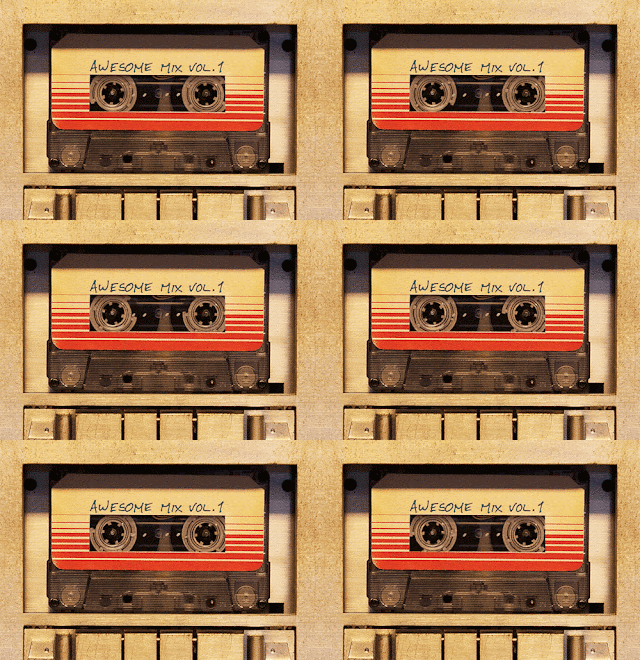 This is the most common character tag and arguably the most fun to write. The item often has a backstory, but doesn't necessarily need one. It almost always is an elemental part of the character's personality, but sometimes it's just this weird, unexplained thing a character happens to like. Have fun with it.
Scent
Errr. I don't really know how else to describe this? The way a character smells. Which sounds weird, but bear with me.Notable Example: The Pallid Man from the 12 Monkeys TV series. We don't even know his name, but we always know where he's been or if he's nearing the other characters. Why? Because he smells of jasmine and lavender. Two nice scents that now have a very negative connotation to the characters in this series because the Pallid Man is a killer.The best usages of this character tag is usually when it's done ironically. When scents that should mean one thing (lavender = peace) end up meaning something very, very different (lavender = death). But, of course, you can do whatever you want. I'm not the boss of you.
What are some issues to avoid?
Stereotyping. I see a lot of very stereotyped character tags: The innocent girl with blue eyes. The villain who always wears black. Let's get a bit more creative. Overdoing it. If your character tag is stuttering, you don't need your character to stutter every word. If it's a person constantly tapping his foot on the ground, he doesn't have to do that all of the time. You want to avoid using repetitive terms or cramming tags down readers throats. It's okay to be subtle. Relying on character tags as a substitution for character development. This is a character development aid, not a replacement. You still need to give your character a memorable personality and arc.What do you think? Did I miss anything? What are some of your favorite character tags? I'd love to hear from you!
Have writing or reading questions? Use the hashtag #ChatWithHannah in the comment section below or on social media to have them answered on my Youtube channel!
Related articles:
7 Tips for Choosing Your Character's Appearance 8 Different Kinds of Strengths to Give Your Characters5 Steps to Writing 100% Natural Dialogue - A Guest Post by Miranda Kulig
Enjoy this post? Take a look around. If you like what you see, please don't forget to subscribe by email for a new post every week!
I can remember the way they talk and walk. I can remember the ways they fidget. I can even remember special features about their appearance: Their hair, the type of glasses they wear, the tattoo on their wrist.
But I can't remember names.
And, unfortunately, neither can a lot of readers.
Think about the last book you read and actually enjoyed. Do you remember the names of all of the characters? Possibly not. But you do remember specific things about each character: Their quirks, their likes, their dislikes, phrases they used a lot.
You remember their character tags.
And that, my friends, is what we will discuss today. Character tags.
 What is a character tag? It is a specific device that we, as writers, use to label a character. It is a unique action a character does that immediately calls to mind that character's personality. It is not a replacement for character development: You still need to develop a character and make each one different from the rest. Character tags are simply a way to aid in this process. For example:
Meet Fred. Fred is a very bubbly, excited person. We know this because of how you've presented him in your novel: He's always optimistic, he smiles a lot, and often gets into enthusiastic discussions with others. His character tag? He waves his hands around when he speaks. A lot. Now you can have a character walk into the room and start waving his arms and your reader immediately knows: That's Fred.
Why are they helpful? Because, as mentioned before, readers often forget a character's name. And, if you have enough characters, sometimes they all start to blend together in your readers mind, especially if there are characters with similar outlooks, goals, or names. A character tag helps remind your reader, "Oh, yeah! That's that guy! He's always happy. I know because he's always making excited gestures with his hands."
How can I use them? I'm so glad you asked. There are, in fact, dozens of different types of character tags. Let me walk you through some of the main ones:
Physical Traits
Hair color, eye color, height, voice. Take a unique physical trait and connect it to something unique in the character.
Notable Example: Merida. She has wild, fiery red hair. This is not only a tribute to her Scottish heritage, but is also connected to her wild personality and fiery disposition. Of course, other characters in this movie do have red hair, but it's not quite as red or as untamed as hers.
 Seriously, Disney, nobody's hair moves that way in the wind. STOP IT.It's worth noting that this is the weakest type of tag. Why? Because people don't really have any control over their physical traits, so they aren't generally indicative of personality and thus not always helpful for character building. That's not to say you can't use this tag: It just requires some extra thought. Also: perhaps consider using it in addition to another tag.
Dialogue
Speech patterns, slang, vocabulary, repetitive phrases, and accents all fall under this category.
Notable Example: Yoda. Only speaks like this, he does. Whenever we hear people speaking in anastrophe, we think: "Ah, yes. Yoda, Jedi Master." Or, depending on our level of commitment to the Star Wars fandom: "That creepy-looking green puppet from that one sci-fi movie." Speech can tell us a lot of things about a character. The dude who says "yo" all the time is memorable....Even more memorable if he is, in fact, a very intelligent though very casual professor. The character who uses large words is unique....Even more so if she is six years old. These tags help remind your readers of who the character is and what makes them special.
Body Language
Hand gestures, arm folding, slumped shoulders, constantly fidgeting with hair, etc.
Notable Example: Heath Ledger's Joker. Throughout the movie we see the Joker licking the sides of his mouth. This enforces his appearance of insanity while also making us wonder more about his scars because they appear to be uncomfortable to him. Not only should body language character tags be noticeable, but they should also tell us something about the character. Lots of hand gestures? Oh, that's the excited character. Folded arms? Mr. Grumpy Pants. Always stands with heels together and feet pointed out? That's the ballerina. Rubbing temples? He's the stressed-out one.
Possessions
You know. That one thing that your character is rarely seen without. It's either an article of clothing or something that can be carried around with them.
Notable Example: Peter Quill. He always has his walkman with him, so much so that it is elemental to his character. Not only does it have an unique backstory (his terminally ill mother made it for him), but it defines an important part of his character (his free, somewhat off-kilter spirit matches the music on his walkman tape).
 This is the most common character tag and arguably the most fun to write. The item often has a backstory, but doesn't necessarily need one. It almost always is an elemental part of the character's personality, but sometimes it's just this weird, unexplained thing a character happens to like. Have fun with it.
 Scent
Errr. I don't really know how else to describe this? The way a character smells. Which sounds weird, but bear with me.Notable Example: The Pallid Man from the 12 Monkeys TV series. We don't even know his name, but we always know where he's been or if he's nearing the other characters. Why? Because he smells of jasmine and lavender. Two nice scents that now have a very negative connotation to the characters in this series because the Pallid Man is a killer.The best usages of this character tag is usually when it's done ironically. When scents that should mean one thing (lavender = peace) end up meaning something very, very different (lavender = death). But, of course, you can do whatever you want. I'm not the boss of you.
What are some issues to avoid?
Stereotyping. I see a lot of very stereotyped character tags: The innocent girl with blue eyes. The villain who always wears black. Let's get a bit more creative. Overdoing it. If your character tag is stuttering, you don't need your character to stutter every word. If it's a person constantly tapping his foot on the ground, he doesn't have to do that all of the time. You want to avoid using repetitive terms or cramming tags down readers throats. It's okay to be subtle. Relying on character tags as a substitution for character development. This is a character development aid, not a replacement. You still need to give your character a memorable personality and arc.What do you think? Did I miss anything? What are some of your favorite character tags? I'd love to hear from you!
Have writing or reading questions? Use the hashtag #ChatWithHannah in the comment section below or on social media to have them answered on my Youtube channel!
Related articles:
7 Tips for Choosing Your Character's Appearance 8 Different Kinds of Strengths to Give Your Characters5 Steps to Writing 100% Natural Dialogue - A Guest Post by Miranda Kulig
Enjoy this post? Take a look around. If you like what you see, please don't forget to subscribe by email for a new post every week!


No comments have been added yet.


