The Rosneft “Privatization”: The Farce Continues
The Rosneft deal involving Qatar and Glencore, announced with such fanfare in December, and commemorated with Putin awarding medals a few months later, has been undone. A Chinese conglomerate, CEFC (not exactly a giant name in the energy business) has agreed to invest $9.1 billion. As a result, Qatar’s stake will fall by more than half to less than five percent. Glencore, which notionally owned half of the nearly 20 percent stake sold in December, but which went to great pains to point out that it was at risk to the tune of a mere $300 million, will retain only .5 percent of Rosneft. The Italian bank which funded the deal, Intesa, will be paid off and exit the transaction.
Like the original transaction, this one raises many, many questions. And like the original transaction, no doubt few (if any) of these questions will be answered.
The most notable issue is that the transaction clearly was not done at a market price. The amount invested exactly pays off the Intesa loan, plus about $100 million to cover costs and fees: it would be miraculous if a market-price deal exactly paid off existing loans. Thus, the deal was clearly done to save Intesa from its predicament, which was quite dire given that it could not syndicate the loan, and its association with the deal put the banking some sanctions-related binds.
Further, the deal is a boon to Qatar, which is embroiled in a standoff with the Saudis and the rest of the GCC, and which has suffered some economic difficulties as a result. The deal helps its balance sheet, which was under pressure due to the economic conflict. Further, Qatar needs all the friends it can get right now, and being a major investor in Rosneft did not help its relations with the US.
Not only was the deal not at a market price, it is highly likely that the Chinese overpaid. The price was at a 16 percent premium to the average of Rosneft’s stock price over the previous month. It is extremely rare to pay a premium, let alone that big a premium, for a minority passive stake–especially in a country where minority investors are routinely raped. (And Sechin is a multiple offender in this regard.) Indeed, most such deals are done at a discount, not a premium.
Note that the original deal was at a discount, and Putin explicitly acknowledged it was at a 5 percent discount. He claimed it was the “minimum discount,” but it was a discount nonetheless.
The Chinese are not notorious for overpaying. Thus, it is almost certain that there is some side deal that makes the Chinese whole. Or better than whole. The side deals could be in the form of cash payments from Rosneft (or maybe even Qatar), but I consider this the least likely. Instead, CEFC could obtain oil at preferential prices from Rosneft, or provide financial services to the Russian company at above market prices.
Again, we will likely never know the details, but there has to be more to this deal than meets the eye.
Here is how the investor describes its business:
In recent years, CEFC China has been accelerating its strategic transformation, focusing on building an international investment bank and an investment group specialized in energy industry and financial services, which has helped boost the Company’s sustained rapid development. The Company has under it two group companies at management level, 7 level-one subsidiaries as investment platforms and an A-share listed company, with a workforce of nearly 30,000.
Underpinned by its European oil and gas terminals, CEFC China secures its position by obtaining upstream oil and gas equities and interests, building professional teams of finance and independent traders and providing financial support with a full range of licenses. The profits in the financial and logistics sectors are driven by its energy operations and financial services. In addition, CEFC China has set up its second headquarters in the Czech Republic to conduct international banking businesses and investment, and acquired controlling shares in banks and shares in important financial groups with its investment focusing on airline, aircraft manufacturing, special steel and food, in order to facilitate international cooperation in production capacity.
Hardly a major oil player, and certainly not a strategic investor that brings to Rosneft any technical expertise or access to upstream resources outside Russia. It’s just a supplier of cash. And as such, and as one that is providing cash to help previous Rosneft investors/lenders get out of a sticky wicket, you can be sure that it got a pretty good deal. Thus, like so many Russian transactions, the interesting action is not that which takes place in plain sight, but that which takes place behind many screens and curtains.
Although Sechin now boasts that Chinese investors are always the ones he wanted, that’s not what he–and notably Putin–said in December and January. Then they were saying how the participation of a noted western company–Glencore–put a stamp of legitimacy on the deal, and showed that Russia was an attractive place for western companies to invest.
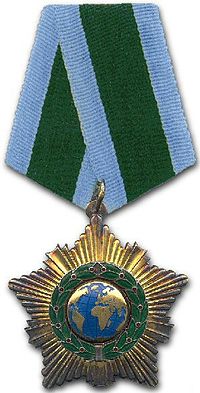
Well, Glencore never really invested anything substantial in the first place: if there was any doubt back in December and January that this was a Potemkin privatization involving western companies, there should be no doubt now. And of course, Glencore comes out a huge winner in this. The company earned a lot of goodwill from Putin and Sechin for saving them from the embarrassing situation that they faced in 2016, with a privatization deadline looming and no investors in sight. More tangibly, Glencore obtained–and retains after this deal–a lucrative concession to market Rosneft barrels. It took on very little risk in the first place, and has very little risk now. Glasenberg received a seat on the Rosneft board, and apparently retains it, even though Glencore’s equity stake is now trivial. And Ivan gets to keep that totally cool Order of Friendship medal.
But he better not fall in with the “wrong crowd,” like previous recipient Rex Tillerson, whom Putin is now very sore at! But since I doubt Ivan has any prospect or interest in becoming a diplomat, that’s probably not going to happen. Ivan knows a good deal when he sees one. And this deal was very, very good for him and Glencore.
For Rosneft and Russia, I’m guessing not so much.


Craig Pirrong's Blog

- Craig Pirrong's profile
- 2 followers