
Life Lessons from a Left-for-Dead Hydrangea
by Emily Conrad
On June fourth, I walked through the grocery store and saw a wilted hydrangea plant on an odd, wooden, makeshift rack as tall as myself, waiting for a home.
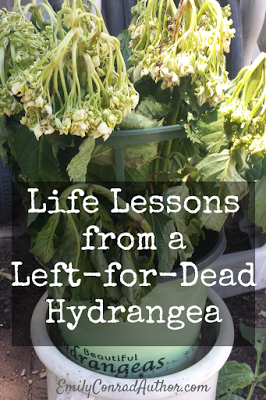
It had been marked down from $9.99 to $2.99 but was so dehydrated, I wasn't sure it would survive. (The title image is it in its original glory.) Looking for a second opinion, I sought help from a nearby shopper by asking, "Do you think it'll come back with water, or is it too far gone?"
She gave some kind of non-committal shrug and walked on.
I chewed my lip, pictured how pretty cut hydrangeas are and how small the bush is that I planted last year, and then decided I could gamble three dollars on the chance that it would survive. It was, after all, still green despite being horribly wilted.
I moved aside my groceries and fit the container in my cart then proceeded along the aisle only to meet up again with the shopper who hadn't given her opinion when I asked for it.
She saw the plant in my cart. I learned as she tried to talk with me then that there was some kind of language barrier, but both of our intentions were obvious: I had the plant in my cart, after all, and she kept shaking her head and moving her hands, flattened and horizontal to the ground, back and forth in a signal for, "No, don't do it."
Confidence badly shaken, I looked back, wondering how discretely I could return the hydrangea to it's original fate of death by dehydration. That's right: I was embarrassed to proceed with the purchase and embarrassed to put it back.
But when I looked back, I found the staff had already, in the two minutes I'd had the plant, come through and removed the entire rack it'd been displayed on.
How had they moved something so big so quickly? And without my noticing?
Read more »
On June fourth, I walked through the grocery store and saw a wilted hydrangea plant on an odd, wooden, makeshift rack as tall as myself, waiting for a home.
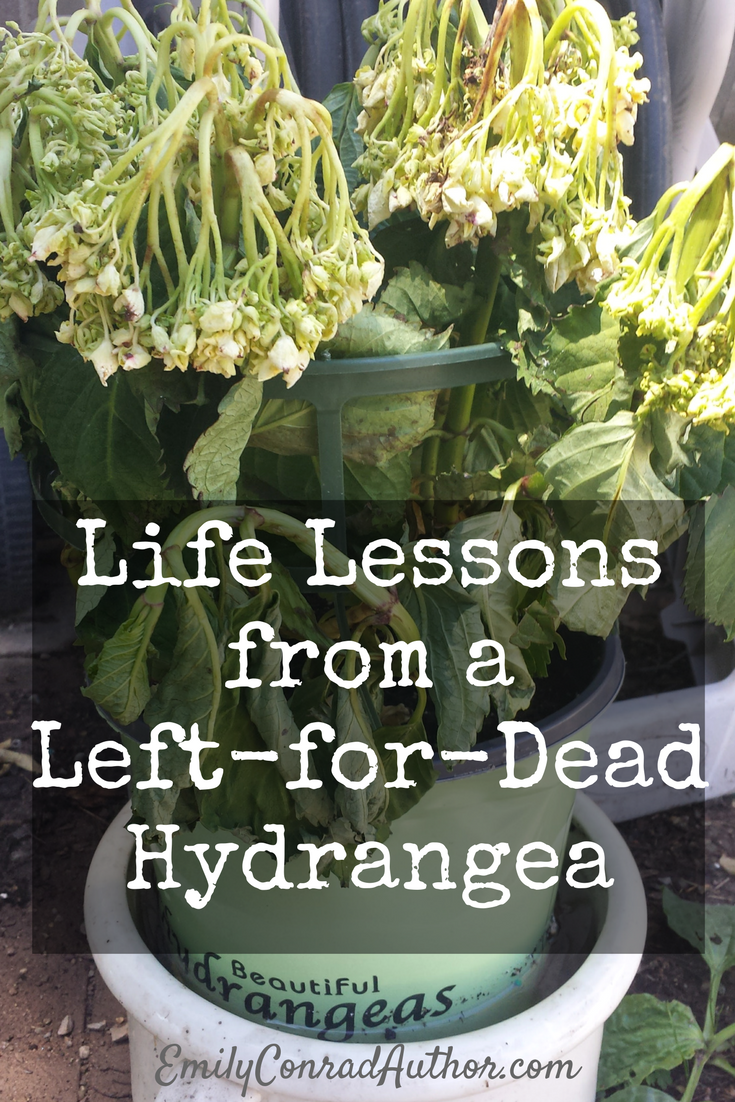
It had been marked down from $9.99 to $2.99 but was so dehydrated, I wasn't sure it would survive. (The title image is it in its original glory.) Looking for a second opinion, I sought help from a nearby shopper by asking, "Do you think it'll come back with water, or is it too far gone?"
She gave some kind of non-committal shrug and walked on.
I chewed my lip, pictured how pretty cut hydrangeas are and how small the bush is that I planted last year, and then decided I could gamble three dollars on the chance that it would survive. It was, after all, still green despite being horribly wilted.
I moved aside my groceries and fit the container in my cart then proceeded along the aisle only to meet up again with the shopper who hadn't given her opinion when I asked for it.
She saw the plant in my cart. I learned as she tried to talk with me then that there was some kind of language barrier, but both of our intentions were obvious: I had the plant in my cart, after all, and she kept shaking her head and moving her hands, flattened and horizontal to the ground, back and forth in a signal for, "No, don't do it."
Confidence badly shaken, I looked back, wondering how discretely I could return the hydrangea to it's original fate of death by dehydration. That's right: I was embarrassed to proceed with the purchase and embarrassed to put it back.
But when I looked back, I found the staff had already, in the two minutes I'd had the plant, come through and removed the entire rack it'd been displayed on.
How had they moved something so big so quickly? And without my noticing?
Read more »


No comments have been added yet.


