Unheroic Heroes
Some action movie heroes bore me to tears. They are too righteous to seem real, too shallow to command my interest. They dash into danger with no fear for their safety. They will give up their life for another without a second thought. They are not characters, but brawny action figures.
Since, as a writer, I am not interested in reading about purely heroic characters, I tend to give my fictional characters flaws. For me, moral complexity creates interest and allows my characters to surprise me in a way that is in sync with their overall personality pattern.
Flaws also create sympathy with my characters and allow me to identify with them. It rounds them out. It makes them believable. But is it possible to go too far? To make them so flawed that readers lose interest? When your fictional hero behaves un-heroically, perhaps even cowardly or cruelly, will readers jump off the ride?
This is a question I have often asked myself, and I have been obsessed with it since my mom read my recently published fantasy novel Paw. My main character is a member of an intelligent cat species, a slave who is attempting to survive and escape the unbearable living conditions of a desert mining camp. At one point in the story, she becomes completely unhinged by a devastating personal tragedy. During her meltdown, she does something horrible that she regrets terribly.
As my mom was reading the first half of my novel, she tossed heaps of praise my way. She raved over how much she was enjoying, and even loving, the book. She even said that she had not been feeling well and that my book was cheering her up.
But after she had finished it, she was strangely silent, so I asked what she thought. I soon discovered that my one sad scene had ruined the whole novel for her. She had complained that what my character did was unjust and that the scene had made her too sad.
I had known the scene was intense, but I had not expected such a sharp descent of her opinion. I reminded myself that the criticism “too sad” is one I have added to my list of criticisms to ignore. Fiction covers the entire gamut of human emotions, and the contrast of despair is what gives hope meaning.
For that reason among others, my mom is not exactly my target audience. She likes books with all-happy endings and “cute” characters. To my mom, the best books are heart-warming, funny, and adorable.
She finds most classic literature to be too depressing. Her favorite movies are by Disney. She is also a serial reader of romance mysteries whereas I have been known to enjoy Kafka-esque dystopias and the brooding Russian anti-heroes of Dostoyevsky.
I had actually been surprised that she had liked the first part of my book as much as she had, much of which was violent. However, it was impossible not to get excited about her initial enthusiasm since I have had very few reactions to my novel so far.
As a result, I was crestfallen that she had been so thrilled about my novel until my pivotal dark scene had apparently blackened out everything she had previously loved about it.
I wondered: Will all my readers react the same way? I knew of at least one exception. The scene my mom had hated was one that another reader had praised highly for is raw, uncompromising honesty. As a writer, I have to constantly remind myself that art is inherently polarizing, and that universal acclaim is impossible.
However, there had been many sad scenes preceding the one in question. I wondered if the main problem had been that my hero had behaved un-heroically
The question is worth asking: Is there a limit to how morally flawed a character can be and still maintain reader sympathy? I have read conflicting advice about this subject. One writer who wrote books for children said that characters must be flawed in order to be interesting and believable; they can in fact be horribly flawed, but they should never be evil.
This has been my guiding principle so far. However, it has problems. How do you define evil? There is an entire spectrum of misdeeds going from parking in a handicapped space to Holocaust level cruelty.
Is one misguided act enough to ruin an entire character or book for a reader? Apparently, yes. There are societal taboos and personal taboos that contribute to this phenomenon. Even I have my limits.
However, because I have been interested in this question for a while, I have consciously noticed when other writers of fiction test common assumptions about what it takes to maintain audience sympathy for a main character.
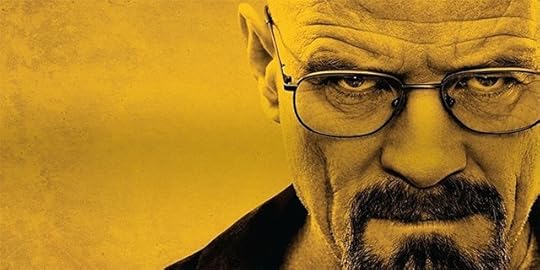
I was in awe of the writing in the television show Breaking Bad, a show about a terminally ill high school chemistry teacher named Walter who begins to manufacture and sell crystal meth in order to provide for his family after he is gone. As the story unfolds, Walter increasingly expresses his dark side. Intellectually brilliant and emboldened by his illness, he becomes a force to be reckoned with as he adapts to the violent world of drug lords and thugs.
He begins to enjoy raking in cash, and his illegal methods give him a powerful adrenaline rush. Enthralled by his thrilling new lifestyle, he ends up endangering the family he originally meant to protect.
One shocking misdeed follows another; his character drifts toward the dark side as he struggles to control his wildly unstable world. At one point he watches the girlfriend of his partner suffer from a grisly death during a heroin overdose, even though Walter has the power to save her. In one of the final episodes, we learn that he has poisoned a child. What fascinated me most about the show was the question, how far are the writers going to let him go? How far can the writers push the boundaries of morality without viewers losing all sympathy for Walter?
Incredibly, I never completely lost sympathy for the high school chemistry teacher turned drug lord. I constantly disapproved of what he did. I certainly did not always admire him, yet he remained a complex, realistic, and dynamic character that always compelled my interest. He never stopped seeming human or vulnerable. Perhaps this was a testament to the skill of the writers or maybe the boundaries between what makes a person good or evil is less clear than we like to think. I actually remember a quote by a writer I read long ago that even the most evil characters can draw sympathy if they only love someone.
Walter White did love his family above all else, however much he sometimes endangered them; maybe that is why the show worked. My character in Paw also loved someone. If my mom cannot forgive her, can I?
I can and I do. While cruelty should never be celebrated, to ignore the shadows that lurk to some extent within all of us is to write shallow fiction. I have no interest in writing a book in which everyone is happy and perfectly good. If I had could only write about saints enjoying themselves, I would not write at all.
Nor am I interested in chaperoning my characters like a stern parent, pulling them back from reckless and unwise behavior to shackle them with my own moral code. What a character does is not necessarily what I think they should do. Plausibility demands the illusion of autonomy. In my mind, my character did what she did because it was what she did, not because I told her to, or because I approved.
But here is the scary question: To what extent does the darkness of my character reflect my own darkness? Maybe more than I would like to think. Fiction wells up from the roiling, murky depths of my subconscious. My character is part of me.
Maybe that was my mom disapproved of most. Like a cruel god, I had allowed a sad injustice to take place in this fictional world where I could have made a different choice.
Nevertheless, I am not sorry for what I wrote. A book featuring slavery should be disturbing, even if the main character happens to be feline.
Slavery is not cute or heart-warming, which is why I have no intentions of pitching my story to Disney. While I hope that not everyone reacts to my character the way my mom did, my story was the story I had to write and the story that wanted to be written. I am standing by it.
If you enjoyed this post you might like my other writing. Take a moment and sign up for my free starter library. Click here. Also my story collection “Remembering the Future” is available for purchase on Amazon.
The post Unheroic Heroes appeared first on PASSIONATE REASON.